How to Choose a Heat Lamp for a Small Reptile Tank
For most small reptile tanks, the Zoo Med ReptiBasking Spot Lamp delivers reliable daytime heat across four wattages. The REPTI ZOO Dimmable Reptile Heat Lamp Fixture adds built-in temperature control for owners who want finer adjustment, and the Zilla Halogen Basking Spot Bulb gives budget-minded keepers a tighter, brighter basking spot.
Zoo Med’s ReptiBasking Spot Lamp is the top pick here for owners who need a dependable daytime basking spot across a range of tank sizes. It skips UVB output entirely, so species that need it still require a second bulb.
Species, tank size, and day-versus-night needs all pull the decision in different directions once bulb types start to overlap. So this comparison weighs bulb type, wattage range, socket compatibility, and owner feedback across seven listings.
What we recommend
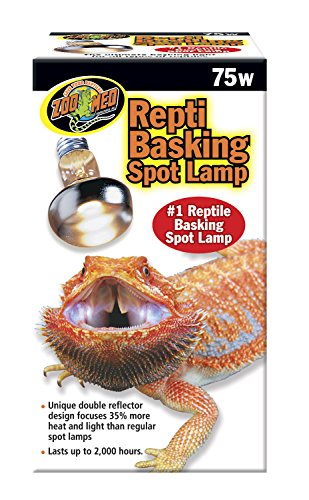
Zoo Med ReptiBasking Spot Lamp
This clear incandescent basking bulb comes in 50, 75, 100, and 150 watt versions, covering small terrariums through larger enclosures. It screws into any standard E26 dome fixture and throws a concentrated beam rather than diffuse light. No UVB output means it handles heat and a visible basking spot only.
Pros
- Concentrated beam creates a defined basking spot
- Four wattage options cover small to large tanks
- Widely stocked, so replacements are easy to find
Cons
- No UVB, so species that need it require a second bulb
- Glass surface gets hot enough to burn on contact

REPTI ZOO Dimmable Reptile Heat Lamp Fixture
A built-in dimmer knob on this clamp dome fixture lets owners fine tune tank temperature without swapping bulbs. Its ceramic socket handles bulbs up to 150 watts, covering most basking or ceramic emitter options. A roughly 5.5 inch aluminum reflector dome clamps onto tank rims or stands.
Pros
- Built-in dimmer adjusts heat without changing bulbs
- Ceramic socket handles higher wattages than plastic domes
- Spring clamp mounts to most tank rims and stands
Cons
- Dimmer knob position can drift and needs rechecking
- Sold as fixture only, with the bulb purchased separately

Zilla Halogen Basking Spot Bulb
Halogen filament technology gives this bulb a tighter, brighter basking spot than a standard incandescent at the same wattage. It comes in 50, 75, and 100 watt versions for small to medium tanks. Any standard E26 dome fixture already on hand will fit it.
Pros
- Lower price point than combo UVB bulbs
- Halogen filament runs brighter per watt than incandescent
- Fits standard fixtures without adapters
Cons
- No UVB output
- Glass surface runs hot, so clamp distance matters

Fluker’s Ceramic Heat Emitter
Infrared heat radiates from this ceramic emitter without any light, so it can run around the clock. It comes in 60, 100, and 150 watt versions and screws into any fixture with a ceramic or porcelain socket. The listing states a rated lifespan up to 15,000 hours.
Pros
- Provides heat 24 hours without disrupting day and night cycles
- Ceramic body tolerates humid enclosures better than glass
- Long rated lifespan cuts down on replacements
Cons
- Needs a ceramic rated socket, not a standard plastic dome
- No visible light, so owners need a separate day bulb for viewing

Exo Terra Solar Glo Mercury Vapor Bulb
UVA, UVB, visible light, and heat combine in this self ballasted mercury vapor bulb, cutting down the number of fixtures needed above a tank. It comes in 80, 100, and 125 watt versions depending on enclosure size. The listing recommends basking distances of 12 inches or more.
Pros
- Replaces separate UVB and heat bulbs with one fixture
- Broad spectrum output suits species like bearded dragons
- Self ballasted design needs no external transformer
Cons
- Runs hotter than single purpose basking bulbs in small tanks
- Costs more than a standard incandescent basking bulb

Evergreen Pet Supplies Ceramic Heat Emitter
Finer wattage control comes from this ceramic infrared emitter, offered from 50 up to 150 watts for smaller nocturnal terrariums such as leopard gecko or ball python setups. It produces no visible light, so nighttime activity goes undisturbed. A standard E26 socket rated for ceramic emitters accepts it directly.
Pros
- Wider wattage range makes matching small tanks easier
- Safe to run at night without disturbing nocturnal activity
- Simple screw-in installation with existing fixtures
Cons
- Requires a ceramic rated socket, since plastic domes can melt
- No light output means no visual cue it is switched on

Zoo Med Nocturnal Infrared Heat Lamp
Red tinted glass on this incandescent bulb provides nighttime heat while letting owners view the tank without disturbing nocturnal animals. It comes in 50, 75, and 100 watt versions for small to medium enclosures. According to the listing, the red spectrum falls outside the range most reptiles perceive well.
Pros
- Allows nighttime viewing without disrupting sleep cycles
- Wattage range covers most small tank setups
- Swaps easily into the same fixture used for day bulbs
Cons
- Some keepers report the red glow still disturbs light sensitive species
- Emits some visible light, unlike a true ceramic emitter
How to pick the right one
What to Look for in a Reptile Heat Lamp Bulb type comes first, since basking bulbs, ceramic emitters, and UVB combo bulbs each serve a different purpose. Wattage needs to match tank size, because a bulb rated too high can overheat a small enclosure. Socket type on the existing fixture matters too, since ceramic emitters need a porcelain rated socket rather than a plastic dome. Owner feedback on how evenly a bulb heats the basking area often says more than the wattage printed on the box.
Heat Only vs UVB Combo Bulbs Snakes, many geckos, and other species without strong UVB needs generally do fine on a heat only basking bulb or ceramic emitter. Bearded dragons, uromastyx, and other diurnal lizards that bask heavily in the wild typically need UVB, whether from a separate tube or a combo bulb like the Exo Terra Solar Glo. Combining UVB and heat into one bulb cuts down on fixtures over the tank but means replacing both functions at once if it fails. Species specific care sheets remain the most reliable way to confirm whether UVB is required.
Matching Wattage to Tank Size Tanks under 20 gallons usually only need a 50 to 75 watt bulb to reach a safe basking temperature. Enclosures in the 20 to 40 gallon range often call for 75 to 100 watts, while larger setups may need 100 to 150 watts or a higher output combo bulb. Basking distance affects the outcome too, since a bulb mounted closer to the substrate raises surface temperature faster than one mounted higher. A thermometer at the basking spot remains the only reliable way to confirm actual temperature, regardless of the wattage printed on the bulb.
Fixture and Clamp Lamp Safety Ceramic heat emitters and higher wattage halogen bulbs generate more heat at the socket, so they need a fixture with a ceramic or porcelain socket rather than a standard plastic dome. Clamp lamps should be secured to a stand or tank rim rather than left balanced loosely, since a fallen bulb near substrate or bedding is a fire risk. Pairing any heat lamp with a thermostat or dimmer, like the one built into the REPTI ZOO fixture, adds protection against overheating if room temperature shifts. A few inches of clearance between the bulb and any tank screen or mesh top avoids melting or discoloring it.
How they compare
| # | Model | Bulb Type | Best for | Score | Price |
|---|---|---|---|---|---|
| 1 | Zoo Med ReptiBasking Spot Lamp | Incandescent basking spot | Best overall | 9.4 | Check price |
| 2 | REPTI ZOO Dimmable Reptile Heat Lamp Fixture | Clamp dome with dimmer knob | Best value | 9.1 | Check price |
| 3 | Zilla Halogen Basking Spot Bulb | Halogen basking spot | Best budget | 8.8 | Check price |
| 4 | Fluker’s Ceramic Heat Emitter | Ceramic infrared emitter, no light | Best for ceramic non-light heat | 8.5 | Check price |
| 5 | Exo Terra Solar Glo Mercury Vapor Bulb | Self ballasted mercury vapor | Best for UVB and heat combo | 8.3 | Check price |
| 6 | Evergreen Pet Supplies Ceramic Heat Emitter | Ceramic infrared emitter, no light | Best for nocturnal species | 8.1 | Check price |
| 7 | Zoo Med Nocturnal Infrared Heat Lamp | Infrared incandescent, red tinted glass | Best for nighttime viewing | 8.0 | Check price |
Good to know
What wattage heat lamp does a small reptile tank need?
Tanks under 20 gallons typically need a 50 to 75 watt basking bulb, though the exact wattage depends on basking distance and room temperature. Checking the basking spot with a thermometer beats going by wattage alone.
Do all reptiles need a UVB heat lamp?
No. Diurnal baskers like bearded dragons generally need UVB, while nocturnal species such as leopard geckos or ball pythons can often be kept on heat only bulbs or ceramic emitters, based on species care sheets.
How is a ceramic heat emitter different from a basking bulb?
A ceramic heat emitter produces infrared heat with no visible light, so it can run continuously without disrupting day and night cycles. A basking bulb produces both light and heat and is generally used only during the day.
Can a reptile heat lamp stay on at night?
A standard basking bulb left on constantly can disrupt a reptile’s day and night cycle. Many owners switch to a ceramic emitter or a red tinted bulb like the Zoo Med Nocturnal Infrared Heat Lamp for nighttime heat instead.
Which heat lamp works best for a leopard gecko?
Leopard geckos are nocturnal and generally do not require UVB, so a ceramic heat emitter such as the Fluker’s or Evergreen Pet Supplies option, paired with an under tank heater, is a common setup.
Is a dimmable heat lamp fixture worth it over a fixed one?
A dimmable fixture like the REPTI ZOO Dimmable Reptile Heat Lamp Fixture gives finer control over basking temperature without changing bulbs, useful in rooms where ambient temperature shifts with the seasons.
Mercury vapor bulb vs ceramic heat emitter, which should I pick?
Pick a mercury vapor bulb such as the Exo Terra Solar Glo if your species needs both UVB and heat from one fixture. Pick a ceramic emitter if you only need heat, especially overnight.
How close should a basking bulb sit above the basking spot?
Distance varies by wattage and bulb type, but most listings suggest starting around 8 to 12 inches and adjusting based on a thermometer reading at the basking surface, not the air temperature.
What is the best reptile heat lamp for bearded dragons?
Bearded dragons need strong UVB alongside heat, making the Exo Terra Solar Glo Mercury Vapor Bulb a fit since it combines both in one fixture.
Our take
The Zoo Med ReptiBasking Spot Lamp remains the most versatile pick for small reptile tanks, based on its wide wattage range and simple standard base. Keepers with UVB dependent species like bearded dragons should look at the Exo Terra Solar Glo Mercury Vapor Bulb instead, since it combines UVB, UVA, and heat in one fixture. Owners of strictly nocturnal pets are better served by a ceramic emitter, which skips light output entirely.


