Reptile Thermometers That Track Heat and Humidity
The Zoo Med Digital Thermometer Humidity Gauge is the most practical vivarium gauge, with a remote probe that reads where the animal actually sits. The Etekcity Lasergrip 774 Infrared Thermometer is essential for checking basking surface temperatures, while the Govee H5075 adds phone logging and alerts.
The Zoo Med Digital Thermometer Humidity Gauge is the vivarium gauge that suits most keepers, alongside the Etekcity Lasergrip 774 Infrared Thermometer for surface readings and the Govee H5075 when you want humidity logged and alerted to a phone.
Measuring a vivarium properly is harder than it appears because air temperature, surface temperature and humidity all differ across the enclosure, and stick on analogue dials are notoriously inaccurate. We compared probe design, published measurement ranges, logging features and mounting options, weighting whether the gauge reads at the level the animal occupies rather than wherever the display happens to stick. Species specific temperature and humidity targets should come from a specialist reptile veterinarian or care sheet.
Our top picks
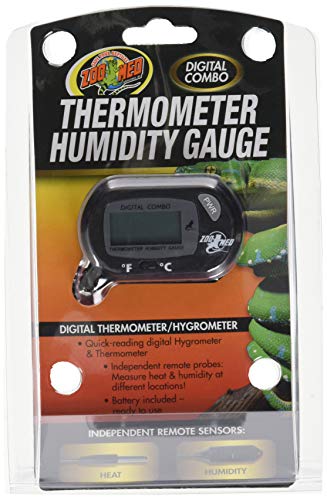
Zoo Med Digital Thermometer Humidity Gauge
The remote probe on a lead is what separates this from stick on dials, because it lets you place the sensor at substrate level while the display sits outside the enclosure. That single design choice makes readings far more meaningful. Owners report the display is easy to read at a glance and the probe lead is long enough for most tanks.
Pros
- Probe reads at animal level
- Display stays outside the enclosure
- Simple to reposition as setups change
Cons
- Probe lead can obstruct a tight lid seal
- Single point reading only

Etekcity Lasergrip 774 Infrared Thermometer
Air temperature tells you very little about whether a basking rock is safe, and this handheld infrared gun reads surface temperature instantly at any point. It is the tool for checking hot spots under heat lamps and mats before an animal sits on them. It complements rather than replaces a permanent gauge.
Pros
- Instant surface readings anywhere in the enclosure
- Ideal for checking basking spots and heat mats
- No installation needed
Cons
- Does not measure humidity
- Not a continuous monitoring device

Govee H5075 Hygrometer Thermometer
Bluetooth connectivity and historical logging turn spot checks into trends, which is how humidity problems are actually spotted. Alerts warn you when conditions drift outside a set band while you are out. Based on specifications the sensor is well regarded for stability, though the unit itself sits inside the enclosure.
Pros
- Logs trends rather than single readings
- Alerts when conditions drift
- Well regarded sensor stability
Cons
- Unit sits inside the enclosure
- Bluetooth range limits remote checking

Exo Terra Digital Thermometer Hygrometer
Designed around Exo Terra terrariums, it mounts neatly without blocking the mesh top or the front doors. It combines temperature and humidity in a compact unit with minimum and maximum memory. It is a tidy solution if you already run that ecosystem of equipment.
Pros
- Mounts cleanly in Exo Terra enclosures
- Minimum and maximum memory
- Compact and unobtrusive
Cons
- Reads at mounting height, not substrate level
- Small display is harder to read from a distance

REPTI ZOO Digital Thermometer Hygrometer
Dual probes let you monitor the warm and cool ends simultaneously, which is exactly what a thermal gradient setup requires. Reading both ends on one display makes it obvious when the gradient has collapsed. The probes need careful routing to keep the animal from disturbing them.
Pros
- Monitors warm and cool ends at once
- Makes gradient problems obvious
- One display for both zones
Cons
- Two leads to route tidily
- Probes can be dislodged by active animals
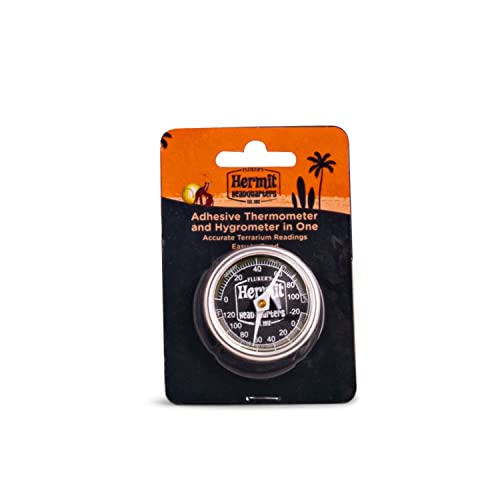
Fluker’s Digital Thermometer Hygrometer
A plain combined gauge with no app, no logging and no complications, aimed at keepers who just want a reliable current reading. It mounts inside the enclosure with adhesive and gets on with it. It is a sensible second unit for the cool end of a larger vivarium.
Pros
- Simple and inexpensive
- Useful as a second gauge
- No setup required
Cons
- No remote probe
- Reads only at its mounting point

ThermoPro TP49 Digital Hygrometer
Sold for general household use but widely adopted by keepers for its clear large display and comfort indicator. It gives a quick visual sense of whether humidity has drifted. It has no probe, so placement inside the enclosure determines what it actually measures.
Pros
- Very readable display
- Low cost for multiple placements
- Several mounting options
Cons
- No remote probe or logging
- Household calibration rather than vivarium specific
Compared at a glance
| # | Model | Measures | Best for | Score | Price |
|---|---|---|---|---|---|
| 1 | Zoo Med Digital Thermometer Humidity Gauge | Temperature and humidity | Best overall | 9.4 | Check price |
| 2 | Etekcity Lasergrip 774 Infrared Thermometer | Handheld infrared thermometer | Best for surface temperatures | 9.2 | Check price |
| 3 | Govee H5075 Hygrometer Thermometer | Bluetooth to phone app | Best for logging | 9.0 | Check price |
| 4 | Exo Terra Digital Thermometer Hygrometer | Temperature and humidity | Best for terrariums | 8.7 | Check price |
| 5 | REPTI ZOO Digital Thermometer Hygrometer | Two remote sensors | Best dual probe | 8.5 | Check price |
| 6 | Fluker’s Digital Thermometer Hygrometer | Temperature and humidity | Best simple gauge | 8.3 | Check price |
| 7 | ThermoPro TP49 Digital Hygrometer | Temperature and humidity | Best budget | 8.0 | Check price |
Before you buy
Air temperature and surface temperature are different numbers A basking lamp can leave the air at a comfortable level while the rock beneath it is far hotter, and it is the surface an animal actually contacts. This is why an infrared thermometer belongs in every keeper’s kit alongside a permanent gauge. Use the infrared gun to check every surface an animal can rest on, particularly under heat lamps and above heat mats, and use the fixed gauge to watch the ambient conditions over time.
Place the probe where the animal lives A gauge stuck high on the glass reports conditions the animal never experiences. Put the sensor at substrate level in the zone the animal uses most, and if you keep a species that burrows, consider a second reading under the substrate surface. Remote probe designs exist precisely so the display can stay outside where you can read it while the sensor sits where it matters. This is the single most common measurement mistake in vivarium setups.
Monitor the gradient, not one point Reptiles thermoregulate by moving between warm and cool zones, so a single reading tells you almost nothing about whether the enclosure works. Dual probe gauges, or two separate units at each end, show whether the gradient is intact. If the cool end has crept up to match the warm end, the animal has nowhere to retreat, and that is a problem no single sensor would reveal.
Analogue dials are not accurate enough The stick on dial gauges bundled with many starter kits are commonly out by a wide margin and respond very slowly to change. They are adequate for noticing that a heater has failed completely and useless for anything finer. Digital sensors cost little more and are far more trustworthy. If you want to sanity check any hygrometer, the salt test using a saturated salt solution in a sealed bag gives a known reference point.
Frequently asked questions
Are analogue reptile thermometers accurate?
Generally not. Dial gauges are frequently out by a wide margin and respond slowly. Digital sensors with a remote probe are far more reliable for husbandry decisions.
Where should I place a vivarium thermometer probe?
At substrate level in the area the animal uses most, with a second reading at the opposite end of the gradient if possible.
Do I need an infrared thermometer as well?
It is strongly recommended. Only an infrared gun tells you the surface temperature of a basking spot, which is what the animal actually contacts.
How do I check a hygrometer is accurate?
The saturated salt test gives a known humidity reference in a sealed bag. It is a simple way to confirm a sensor has not drifted.
How many gauges does one enclosure need?
At minimum one at each end of the thermal gradient. A single central reading hides whether the gradient has collapsed.
What humidity should my reptile have?
It varies enormously by species. Use a care sheet for your specific animal or ask a specialist reptile veterinarian rather than applying a general figure.
Can household hygrometers be used in vivariums?
Many keepers use them successfully. Just remember they have no probe, so the unit itself must sit where you want the reading taken.
Why does my humidity reading swing so much?
Misting, ventilation changes and water bowl placement all cause spikes. Logging units reveal these patterns far better than spot checks.
Our pick
The Zoo Med Digital Thermometer Humidity Gauge is the best single purchase because its remote probe reads where the animal actually lives rather than wherever the display sticks. Add the Etekcity Lasergrip 774 for surface checks under heat sources, and consider the Govee H5075 if you want humidity trends and alerts rather than one off readings.