Which RV Inverter Actually Handles Your Appliance Load?
The Renogy 3000W Pure Sine Wave Inverter tops this comparison, running a microwave and small AC together without tripping. Xantrex’s Freedom XC 2000 adds built-in charging for boondockers who shift between shore power and battery often. Need basics on a budget? Krieger’s 2000W covers a laptop, fridge and lights.
Three inverters stand apart here. Renogy’s 3000W Pure Sine Wave Inverter covers most travel trailer loads, from a coffee maker to a small AC unit, without nuisance shutdowns. Xantrex’s Freedom XC 2000 combines inverting and charging in one box, useful for rigs that switch often between shore power and battery. Smaller budgets fit the Krieger 2000W, which runs basic electronics without the extra cost of higher wattage.
An inverter that looks powerful on paper can still shut down mid use if its continuous rating sits below actual draw, especially once a compressor spikes demand at startup. Waveform matters too, since modified sine wave units run some electronics roughly or not at all. We compared continuous and surge wattage, waveform type, and charger integration, then checked owner reports of overheating under real RV loads.
The best picks, ranked

Renogy 3000W 12V Pure Sine Wave Inverter
Pure sine wave output runs sensitive electronics, including CPAP machines and variable speed fans, without the buzz modified sine wave units cause. A 6000W surge rating covers compressor startup on a small AC or fridge. Two cooling fans keep it running under sustained load, and remote on-off control comes standard.
Pros
- Handles compressor startup loads reliably
- Runs sensitive electronics cleanly
- Dual fans manage heat under sustained draw
Cons
- Draws standby power even when idle
- No built-in battery charger
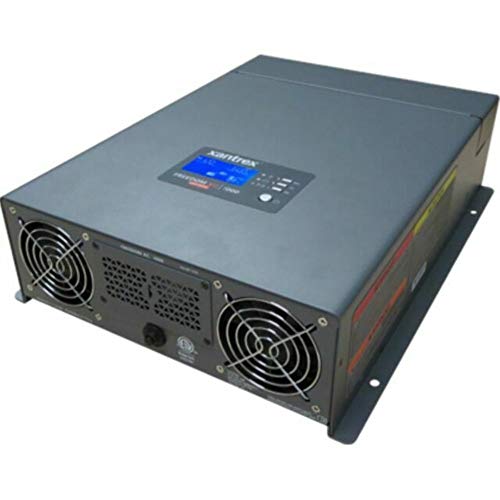
Xantrex Freedom XC 2000 Inverter/Charger
Inverting and charging share one unit, so shore power tops off the battery bank automatically, then the unit switches back to inverting once unplugged. That setup suits boondockers moving between campgrounds with hookups and dry camping. Pure sine wave output still covers sensitive electronics without issue.
Pros
- Automatic switching between shore power and battery
- Multi stage charging protects battery life
- Compact for a combined unit
Cons
- Lower continuous wattage than dedicated inverters
- Higher price than inverter only units

Victron Energy Phoenix 12/3000 Inverter
Bluetooth connectivity puts battery voltage and load on your phone, so checking power status skips a walk to the inverter compartment. Off grid installers running solar heavy systems favor Victron’s build quality. Its price runs higher than most competitors here, reflecting a professional grade position.
Pros
- Remote monitoring via Bluetooth app
- Strong reputation for off grid reliability
- Efficient conversion reduces battery drain
Cons
- Premium priced against similar wattage units
- App setup takes more time initially

Go Power! GP-SW3000-12 Pure Sine Wave Inverter
Go Power builds specifically for RV solar installs, and this inverter pairs cleanly with the brand’s charge controllers and panel kits. A hardwire kit ships included for a permanent setup rather than plug in use. Owners running solar heavy rigs report straightforward integration without extra adapters.
Pros
- Designed to pair with Go Power! solar kits
- Hardwire kit simplifies permanent install
- Solid continuous wattage for the price
Cons
- Less useful without a matching solar system
- Bulkier housing than some competitors

AIMS Power PWRI300012S 3000W Inverter
A 9000W surge rating handles demanding compressor startups, like a rooftop AC unit, better than many inverters at this price. Terminal block wiring suits a permanent install over plug and play use. AIMS backs it with a two year warranty, longer than several competitors in this wattage class.
Pros
- High surge rating for AC startup
- Two year warranty coverage
- Competitive price for the wattage
Cons
- Terminal wiring requires a permanent install
- Larger footprint than plug in units

Krieger 2000W 12V Pure Sine Wave Inverter
A smaller footprint suits rigs with limited storage, covering a laptop, fridge and lighting without issue. Pure sine wave output still keeps sensitive electronics safe despite the lower price. It isn’t built for AC units or heavy compressor loads, so match expectations to a smaller trailer or van build.
Pros
- Affordable pure sine wave option
- Compact size fits tight installs
- Handles everyday electronics reliably
Cons
- Not sized for AC or large compressor loads
- Fan noise increases under sustained draw

BESTEK 1000W Pure Sine Wave Inverter
At 1000W continuous, this suits small vans and teardrop trailers running phones, laptops and small kitchen appliances rather than full size RVs. Dual AC outlets and USB ports cover most day to day charging needs. Tight cabinetry that larger inverters can’t fit still has room for this one.
Pros
- Fits tight cabinetry in small rigs
- Covers phones, laptops, small appliances
- Lower cost entry into pure sine wave power
Cons
- Too small for AC units or power tools
- Limited surge capacity for compressor starts
Before you buy
How do you size an inverter to your actual RV loads? Add up the continuous wattage of everything you might run at once, then check the surge rating against your highest single startup load, usually an AC compressor or microwave. A rig running a coffee maker, laptop and residential fridge together typically needs 2000 to 3000W continuous. Undersizing causes nuisance shutdowns exactly when you need power most.
Pure sine wave vs modified sine wave, which does an RV need? Pure sine wave power mimics utility power closely enough to run CPAP machines, variable speed fans and sensitive electronics without buzzing or damage. Modified sine wave inverters cost less but can run some devices hot, hum audibly, or refuse to start. Any RV running medical equipment or modern appliances is safer on pure sine wave.
Inverter only or inverter charger combo, what fits your rig? A standalone inverter converts battery power to AC only, so a separate charger is needed to top off batteries from shore power. Combo units like the Xantrex Freedom XC 2000 handle both, switching automatically as shore power connects or disconnects. Combo units cost more but simplify wiring for rigs that switch power sources often.
What matters when matching an inverter to a solar or battery setup? Rigs built around solar charging benefit from inverters designed to pair with a specific charge controller ecosystem, cutting wiring complexity. Battery bank capacity needs to support the inverter’s draw too, since a large inverter on a small bank drains fast under real load. Check the battery bank’s amp hour rating against expected current draw before installing.
Side by side
| # | Model | Continuous power | Best for | Score | Price |
|---|---|---|---|---|---|
| 1 | Renogy 3000W 12V Pure Sine Wave Inverter | 3000W | Best overall | 9.3 | Check price |
| 2 | Xantrex Freedom XC 2000 Inverter/Charger | 2000W | Best inverter charger combo | 9.1 | Check price |
| 3 | Victron Energy Phoenix 12/3000 Inverter | 3000W | Best for off grid reliability | 9.0 | Check price |
| 4 | Go Power! GP-SW3000-12 Pure Sine Wave Inverter | 3000W | Best for solar setups | 8.8 | Check price |
| 5 | AIMS Power PWRI300012S 3000W Inverter | 3000W | Best value | 8.6 | Check price |
| 6 | Krieger 2000W 12V Pure Sine Wave Inverter | 2000W | Best budget | 8.3 | Check price |
| 7 | BESTEK 1000W Pure Sine Wave Inverter | 1000W | Best for compact rigs | 8.0 | Check price |
Common questions
What size inverter do you need to run an RV air conditioner?
Most RV AC units need 2000 to 3000W continuous, with a surge rating high enough to cover compressor startup, often double the continuous figure. Check your specific AC unit’s startup wattage before sizing an inverter around it.
Can you run a microwave off an RV inverter?
Yes, most 2000W and higher pure sine wave inverters run a standard RV microwave without issue. Check the microwave’s rated wattage against the inverter’s continuous capacity before running it alongside other appliances.
Is a pure sine wave inverter necessary for an RV?
It’s strongly recommended for any RV running sensitive electronics, medical devices, or appliances with variable speed motors. Modified sine wave units cost less but risk poor performance or damage to certain devices.
How do inverter and inverter charger combos differ?
An inverter only converts battery power into usable AC. A combo unit also charges the battery bank from shore power or a generator, switching automatically between the two jobs.
Do RV inverters drain the battery when nothing is plugged in?
Most inverters draw a small standby current even while idle, so switching the inverter off between uses preserves charge on longer trips without shore power or solar input.
What size battery bank pairs well with a 3000W inverter?
A 3000W inverter under sustained load draws roughly 250 amps at 12V, so a bank in the 200 to 400 amp hour range supports meaningful runtime without deep discharge on most trips.
Can an RV inverter be installed without an electrician?
Smaller plug in inverters under 2000W are often DIY friendly, but higher wattage hardwired units, like several 3000W models here, involve heavier gauge wiring and fusing best left to someone experienced with 12V systems.
How is inverter wattage different from generator wattage?
An inverter converts stored battery power to AC and is limited by battery capacity and wiring, while a generator produces power directly from fuel and sustains higher loads longer. Many RVs use both together for different situations.
The bottom line
For most mid size RVs, the Renogy 3000W Pure Sine Wave Inverter covers everyday appliances and AC compressor starts without nuisance shutdowns. Rigs that shift often between shore power and battery benefit from the Xantrex Freedom XC 2000, since one unit charges and inverts. Smaller vans and trailers running basic electronics can save with the Krieger 2000W without sacrificing clean sine wave power.