Sandpaper Sheets Compared by Grit and Durability
3M Pro Grade Precision leads this comparison for its anti-clog coating and consistent cut across grits. Norton 3X removes stock fastest on bare wood thanks to a self-sharpening mineral. Diablo SandNet suits dust extraction setups since its open mesh backing lets air pass through the entire sheet.
3M Pro Grade Precision earns the top spot here for balanced cut speed and clog resistance across dozens of grits. Norton 3X pulls ahead when raw stock removal on bare pine or oak matters more than finish quality. Diablo SandNet stands out for shops running dust collection, since its mesh backing clears debris instead of trapping it.
Grit number tells only part of the story, since two sheets rated 120 grit can behave very differently once loading begins. Mineral type, backing weight and any anti-clog treatment decide how fast a sheet dulls or glazes over. We compared abrasive minerals, grit availability, backing grades, clog resistance and wet-or-dry capability, then checked owner reports on wear rate for each range.
Before you buy
Abrasive Type and Backing Weight Explained Aluminium oxide, silicon carbide and ceramic blends behave differently on wood, metal and painted surfaces. Aluminium oxide handles general woodworking, silicon carbide suits hard finishes and wet sanding, and ceramic blends last longest under heavy use. Backing weight affects flexibility and tear resistance, with heavier paper standing up to folding and block wrapping. Grit range printed on the sheet only tells part of the story, since mineral quality determines how long that grit stays effective.
Matching Grit Range to the Job Coarse grits between 60 and 100 remove old finish or level rough stock quickly. Medium grits from 120 to 180 smooth surfaces before staining or priming. Fine grits above 220 handle between-coat sanding and final smoothing before topcoat. Jumping too many grit steps at once leaves visible scratches that later coats will highlight rather than hide.
Why Sheets Load Up and How Anti-Clog Coatings Help Loading happens when sanding dust and finish residue pack into the spaces between abrasive grains, which stops the sheet from cutting. Stearate coatings and anti-clog treatments act as dry lubricants that slow this buildup on paint and varnish. Open mesh backings avoid the problem differently, letting dust pass straight through instead of collecting on the surface. Wet sanding sidesteps loading entirely, since water carries swarf away as the sheet moves.
Dust Extraction and Finish-Specific Use Cases Shops running a vacuum-connected sander benefit most from mesh-backed sheets, which clear dust through the whole surface rather than a few punched holes. Cabinet and trim work calls for fine grits and stearate coatings to avoid balling up between coats. Automotive clear coat and metal polishing need silicon carbide on waterproof backing so wet sanding stays an option. Bare wood projects favor faster-cutting minerals like Norton’s premium aluminium oxide, since finish protection matters less at that stage.
What we recommend
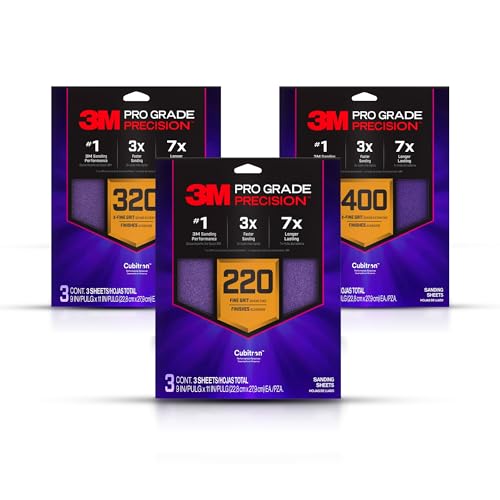
3M Pro Grade Precision Sanding Sheets
Precision-graded aluminium oxide mineral produces a more even scratch pattern than standard abrasives, cutting the number of passes needed between grits. NetGrip backing plus an anti-clog coating keep paint and varnish residue from packing the surface. Sheets measure 9 by 11 inches, sized for hand sanding or cutting down to fit a block.
Pros
- Even mineral grading leaves a consistent scratch pattern
- Anti-clog coating extends working life on painted surfaces
- Grit range from 80 to 320 covers stripping through final finishing
Cons
- Costs more per sheet than basic aluminium oxide paper
- Not rated for wet sanding applications
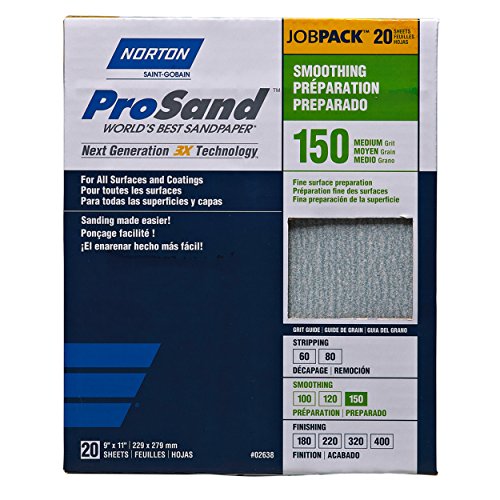
Norton 3X Sanding Sheets
Norton’s blocky mineral structure keeps fracturing during use, exposing fresh cutting edges instead of dulling flat. Cut rate on bare pine and oak stays noticeably higher than with standard aluminium oxide paper. A heavier paper backing resists tearing when wrapped tightly around a sanding block.
Pros
- Fastest cut rate in this comparison on bare timber
- Self-fracturing mineral keeps cutting edges sharp longer
- Heavy backing survives folding and block wrapping
Cons
- Loads quickly when used on paint or soft finishes
- Fewer fine grits available above 220

Diablo SandNet Sanding Sheets
An open mesh backing lets dust pass through the entire sheet rather than through a handful of punched holes. Vacuum-connected sanders stay cleaner, and the open structure resists clogging on its own. Ceramic blend grain holds an edge longer than paper-backed aluminium oxide sheets.
Pros
- Dust clears through the full sheet, not isolated holes
- Mesh structure can be rinsed or blown out and reused
- Ceramic mineral outlasts standard paper-backed abrasives
Cons
- Costs more per sheet than paper-backed alternatives
- Requires a hook-and-loop pad rather than clamp attachment

Mirka Gold Sanding Sheets
A stearate coating acts as a dry lubricant on the abrasive surface, stopping lacquer and primer dust from balling up mid-sand. Grits extend to 400, suited to between-coat sanding on cabinets and trim. Semi-open coat construction keeps the surface from clogging on softer woods.
Pros
- Stearate coating stops finish residue from balling up
- Fine grits up to 400 suit between-coat sanding
- Consistent grain quality across the full grit range
Cons
- Stearate residue can interfere with waterborne topcoat adhesion
- Not aggressive enough for heavy paint or varnish stripping
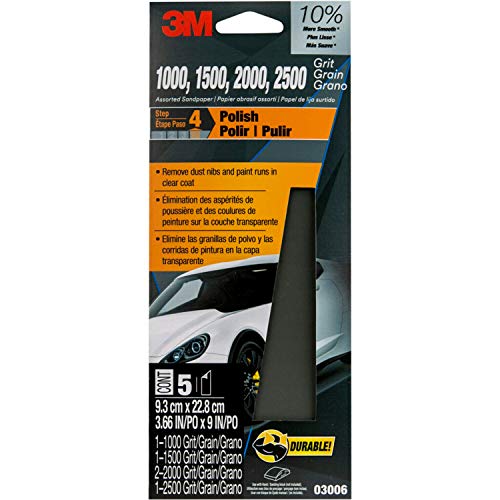
3M Wetordry Sandpaper Sheets
Silicon carbide mineral on a waterproof paper backing handles automotive clear coat, metal and cured finishes. Water carries swarf away during sanding, which keeps grit exposed and prevents stray debris from scratching the surface. Grits extend to 2000 for polishing preparation ahead of buffing.
Pros
- Waterproof backing holds up through extended wet sanding
- Grits reach 2000 for pre-polish surface preparation
- Silicon carbide cuts hard clear coat cleanly
Cons
- Silicon carbide dulls quickly when used on bare wood
- Thin backing tears easily if creased sharply

Gator Finishing Aluminum Oxide Sandpaper
Sold in large mixed-grit packs, this range covers general shop tasks at a low cost per sheet. Aluminium oxide mineral on a medium-weight backing works across wood, drywall and light metal deburring. Expect shorter life on painted surfaces than with premium coated ranges.
Pros
- Low cost per sheet suits high-volume shop work
- Mixed grit packs cover a full project sequence
- Backing weight works for both hand and block sanding
Cons
- Loads faster than coated premium sheets on finishes
- Grain consistency varies somewhat between batches

LotFancy Wet Dry Sandpaper Assortment
This assortment spans 120 through 3000 grit on a waterproof backing, covering touch-up sanding and polishing in a single box. Silicon carbide mineral handles metal, resin and cured paint without much fuss. Sheets measure 9 by 3.6 inches, sized for hand blocks rather than full-sheet power sanders.
Pros
- Grit spread reaches 3000 for polishing and touch-up work
- Waterproof backing allows wet sanding
- Compact sheet size suits hand blocks and detail sanding
Cons
- Too small to fit standard quarter-sheet power sanders
- Grain wears faster than premium silicon carbide sheets
How they compare
| # | Model | Mineral | Best for | Score | Price |
|---|---|---|---|---|---|
| 1 | 3M Pro Grade Precision Sanding Sheets | Precision graded aluminium oxide | Best overall | 9.4 | Check price |
| 2 | Norton 3X Sanding Sheets | Premium aluminium oxide | Best for fast stock removal | 9.2 | Check price |
| 3 | Diablo SandNet Sanding Sheets | Open mesh net | Best for dust extraction | 9.0 | Check price |
| 4 | Mirka Gold Sanding Sheets | Aluminium oxide | Best for finish sanding | 8.8 | Check price |
| 5 | 3M Wetordry Sandpaper Sheets | Silicon carbide | Best for wet sanding | 8.6 | Check price |
| 6 | Gator Finishing Aluminum Oxide Sandpaper | Aluminium oxide | Best value | 8.3 | Check price |
| 7 | LotFancy Wet Dry Sandpaper Assortment | Silicon carbide | Best budget assortment | 8.0 | Check price |
Frequently asked questions
What grit sandpaper should I use for bare wood?
Start around 80 to 100 grit for rough bare wood, then move through 120 and 180 before finishing near 220. Norton 3X removes material fastest at the coarse end thanks to its self-fracturing mineral.
Can sandpaper sheets be used for wet sanding?
Yes, but only sheets rated for it. 3M Wetordry uses silicon carbide on a waterproof backing so water can carry away swarf without damaging the paper.
Why does sandpaper clog so quickly on painted surfaces?
Paint and varnish residue packs between the abrasive grains, a process called loading, which stops the grit from cutting. Anti-clog coatings on ranges like 3M Pro Grade Precision slow this buildup considerably.
Is aluminium oxide or silicon carbide better for sanding?
Aluminium oxide generally cuts wood faster and lasts longer on bare timber. Silicon carbide handles harder materials like metal, resin and cured clear coat, and it works well wet or dry.
How many grits are needed to finish a woodworking project?
Most projects need three to four steps, such as 80, 120, 180 and 220, moving from stock removal to final smoothing. Skipping steps leaves visible scratches that show through stain or clear coat.
Do open mesh sanding sheets work with a shop vacuum?
Yes, mesh-backed sheets like Diablo SandNet let dust pass through the entire surface, not just a few holes, which keeps a vacuum-connected sander noticeably cleaner.
What is the difference between sandpaper sheets and sanding discs?
Sheets are flat rectangles meant for hand blocks, orbital sanders or cutting to custom sizes, while discs attach directly to a sander’s round pad. Sheets like the 9 by 11 inch options here can be trimmed to fit either use.
Which sandpaper sheet works best for cabinet and trim finishing?
Mirka Gold suits between-coat sanding on cabinets and trim, since its stearate coating and grits up to 400 avoid balling up on soft finishes.
How long should a sanding sheet last before it needs replacing?
Life varies by mineral and coating, but a sheet is done once it stops cutting and starts polishing or skating across the surface. Ceramic and anti-clog coated sheets typically outlast basic aluminium oxide paper on the same task.
Is stearate-coated sandpaper worth it for painted surfaces?
For finish work on paint, primer or lacquer, stearate coatings reduce clogging enough to extend usable sheet life noticeably. They matter less on bare wood, where standard aluminium oxide already cuts cleanly.
Our pick
3M Pro Grade Precision remains the safest all-around choice, balancing cut rate with resistance to clogging across a wide grit range. Norton 3X and Diablo SandNet cover the edge cases of raw stock removal and dust-controlled shops respectively. For wet sanding or finish work, 3M Wetordry and Mirka Gold each target a narrower but well-defined task.


