Santoku Knives Ranked by Edge, Balance and Comfort
The Mac Knife Professional Santoku MSK-65 is our top overall pick for its thin blade and long lasting edge. The Victorinox Fibrox Pro Santoku is the best budget choice for a busy kitchen, and the Shun Classic 7 inch Santoku is the pick if you want premium Japanese steel and finish.
For most home cooks the Mac Professional MSK-65 is the santoku to buy, the Victorinox Fibrox Pro is the value option that will not be babied, and the Shun Classic is the pick if you want the finest edge and finish. All three cut vegetables noticeably better than a general purpose chef knife.
Santoku shopping is confusing because the category spans Japanese knives at sixty plus Rockwell hardness and softer western knives shaped to look Japanese. Hardness, blade thickness and handle geometry change everything about how a knife feels and how often you sharpen it. We compared steel specifications, blade grinds, granton hollows and handle designs, and we weighed what long term owners report about chipping, edge retention and comfort during long prep sessions.
The shortlist, ranked
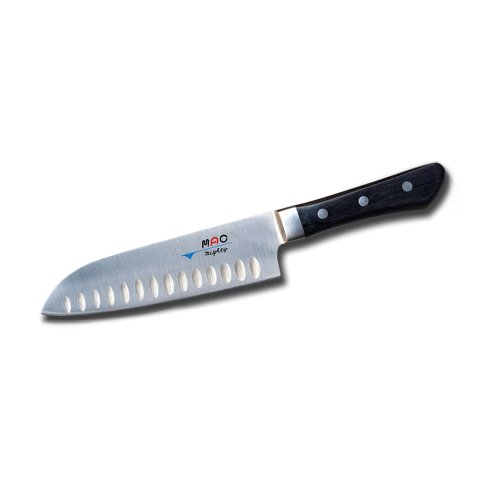
Mac Knife Professional Hollow Edge Santoku MSK-65
The MSK-65 is a favourite of professional cooks because its blade is unusually thin behind the edge, which is what makes food fall away cleanly instead of splitting. The steel sits at a hardness that holds an edge for a long time while still taking a fast touch up on a stone. Its slim western handle and light weight suit long prep sessions, though the thin blade means it should never be used on bone or frozen food.
Pros
- Exceptionally thin behind the edge for clean cuts
- Holds a working edge for a long time
- Light and well balanced for extended prep
Cons
- Thin edge chips if used on bone or frozen food
- Handle is plain compared with premium rivals

Victorinox Swiss Army Fibrox Pro Santoku Knife
The Fibrox Pro santoku is the knife commercial kitchens buy by the box, with a softer stainless blade that dulls sooner but sharpens back in seconds on a steel or stone. The textured Fibrox handle stays grippy with wet or oily hands, which is exactly what a home cook needs mid prep. It is dishwasher tolerant in a way premium Japanese knives are not, though hand washing still extends its life.
Pros
- Very low outlay for genuine kitchen quality
- Sharpens back to keen in moments
- Grippy handle in wet or greasy conditions
Cons
- Softer steel needs more frequent honing
- Utilitarian looks and plain finish

Shun Classic 7 inch Hollow Ground Santoku
The Shun Classic pairs a hard VG-MAX core with sixty eight layers of Damascus cladding and a D shaped pakkawood handle that fills the hand comfortably. The edge is ground to a very acute angle, which is why it glides through onions and tomatoes with almost no pressure. That hardness is also its weakness, since the edge chips if twisted, dropped or used against bone.
Pros
- Very acute factory edge cuts with little force
- Beautiful Damascus finish and comfortable handle
- Holds its edge far longer than softer steels
Cons
- Hard steel chips if misused or dropped
- Requires hand washing and careful storage

Wusthof Classic 7 inch Santoku Hollow Edge
Wusthof’s take on the santoku uses tougher German stainless in a fully forged, full tang design with a heavier feel than Japanese equivalents. That extra mass makes it more forgiving of rough handling and better suited to dense vegetables such as squash. It is thicker behind the edge, so it wedges slightly where the Mac and Shun slip through.
Pros
- Tough edge resists chipping
- Substantial forged feel with excellent balance
- Handles dense vegetables without flex
Cons
- Thicker behind the edge than Japanese rivals
- Heavier than a traditional santoku should feel

Global G-48 Hollow Ground Santoku Knife
The G-48 is made from a single piece of stainless steel with a dimpled hollow handle, so there are no joints or rivets for food to lodge in. The balance point sits right at the bolster, giving a distinctive light feel some cooks love and others find slippery. Its Cromova steel takes a very fine edge and resists staining well.
Pros
- Seamless construction is very hygienic
- Light, agile feel for detailed work
- Takes a very fine edge
Cons
- Round handle can feel slippery when wet
- Shorter blade limits large prep tasks

Zwilling Pro 7 inch Hollow Edge Santoku
The Zwilling Pro uses a curved bolster that leaves the full edge usable right to the heel, which matters if you sharpen on a stone and dislike an unsharpened heel section. Ice hardened German steel gives good toughness and reasonable retention. It is a heavier santoku, so cooks who want the light Japanese feel should look elsewhere.
Pros
- Full length edge is usable and sharpenable
- Comfortable knuckle clearance on a board
- Tough edge for everyday abuse
Cons
- Heavier than traditional santoku designs
- Thicker grind wedges in dense produce

Mercer Culinary Genesis 7 inch Santoku Knife
The Genesis santoku is a forged German steel knife with a Santoprene handle, sold at a price that makes it a standard in culinary school kits. It offers a full bolster, full tang and a durable edge that survives busy service. Fit and finish are a step below premium brands, and the edge needs honing more often than harder Japanese steels.
Pros
- Forged construction at a very reasonable outlay
- Grippy handle certified for commercial use
- Durable edge for heavy daily prep
Cons
- Needs honing more often than harder steel
- Finish is functional rather than refined
Side by side
| # | Model | Blade length | Best for | Score | Price |
|---|---|---|---|---|---|
| 1 | Mac Knife Professional Hollow Edge Santoku MSK-65 | 6.5 inches | Best overall | 9.4 | Check price |
| 2 | Victorinox Swiss Army Fibrox Pro Santoku Knife | 7 inches | Best budget | 9.2 | Check price |
| 3 | Shun Classic 7 inch Hollow Ground Santoku | 7 inches | Best premium pick | 9.0 | Check price |
| 4 | Wusthof Classic 7 inch Santoku Hollow Edge | 7 inches | Best German built option | 8.8 | Check price |
| 5 | Global G-48 Hollow Ground Santoku Knife | 5.5 inches | Best for a one piece design | 8.6 | Check price |
| 6 | Zwilling Pro 7 inch Hollow Edge Santoku | 7 inches | Best for knuckle clearance | 8.3 | Check price |
| 7 | Mercer Culinary Genesis 7 inch Santoku Knife | 7 inches | Best for culinary students | 8.0 | Check price |
Before you buy
What a santoku does differently from a chef knife A santoku has a flatter edge profile and a shorter blade than a western chef knife, usually between five and seven inches, with a sheepsfoot tip that curves down to meet the edge. That flat profile favours a straight up and down chopping motion rather than the rocking motion a curved chef knife encourages. The result is faster, more consistent slicing of vegetables and boneless proteins, and a knife that feels lighter and more controllable in smaller hands. It is not a replacement for a chef knife on large roasts or a cleaver on bone.
Steel hardness is the real trade off Japanese santoku steels typically run around sixty on the Rockwell scale, which lets them take an acute edge and hold it for months of home use. German steels sit closer to fifty eight, giving a tougher edge that resists chipping but dulls faster. Neither is better in the abstract. If you sharpen regularly, own a board that is not glass or stone, and never twist the blade in dense food, harder steel rewards you. If your knife lives a rougher life, choose the German option and enjoy how quickly it comes back on a steel.
Granton hollows, blade thickness and food release The dimples along a granton edge create small air pockets that reduce suction, which helps thin slices of potato or cucumber fall away rather than sticking. They help, but they matter far less than how thin the blade is behind the edge. A thin blade like the Mac’s parts food cleanly, while a thick one wedges and splits it regardless of dimples. When comparing knives, look at the grind and the reported thickness above the edge rather than the number of hollows.
Keeping a santoku sharp and undamaged Use a wooden or soft plastic board and never glass, stone, ceramic or a bare countertop. Hone softer steels on a rod before or after each use and sharpen on a whetstone when honing stops restoring bite. Hard Japanese steels do not respond well to steel rods, so use a ceramic rod or go straight to a stone at around fifteen degrees per side. Hand wash and dry immediately, since dishwashers dull edges, loosen handles and expose blades to knocks against other items.
Good to know
Is a santoku better than a chef knife?
It is better for straight chopping of vegetables and boneless proteins, and lighter to control. A chef knife has more length and a curved belly for rocking cuts and large items. Many kitchens keep both.
What size santoku should I buy?
Seven inches suits most home cooks and handles cabbages and squash comfortably. Five and a half to six and a half inch blades feel more agile and suit smaller hands or smaller boards.
Do the dimples on a granton edge really help?
They reduce suction on wet, starchy foods such as potato and cucumber, so slices release more readily. The effect is modest compared with how thin the blade is behind the edge.
Can a santoku cut through bone?
No. The thin blade, and especially hard Japanese steel, will chip. Use a heavier cleaver or a bone saw for bones and frozen food.
How often should a santoku be sharpened?
Hone softer steel knives every few uses and sharpen every few months. Harder Japanese steels can go longer between sharpenings but need a stone or ceramic rod rather than a steel.
Are Japanese or German santoku knives better?
Japanese steel is harder and takes a finer, longer lasting edge but chips more easily. German steel is tougher and quicker to resharpen. Choose based on how carefully you treat your knives.
Can I put a santoku in the dishwasher?
Only the Victorinox Fibrox Pro tolerates it reasonably well, and even that lasts longer hand washed. Premium knives such as the Shun should never go in a dishwasher.
What sharpening angle should I use?
Japanese santoku knives are usually ground at around fifteen degrees per side, while German models are closer to twenty. Match the factory angle rather than imposing a new one.
Final word
The Mac Professional MSK-65 is the santoku we would recommend to almost anyone, because its thin blade delivers the clean, effortless cutting that makes people fall in love with the shape. Cooks who want maximum performance and are willing to look after a knife should choose the Shun Classic, while the Victorinox Fibrox Pro is the honest answer for a busy kitchen that cannot promise gentle treatment.