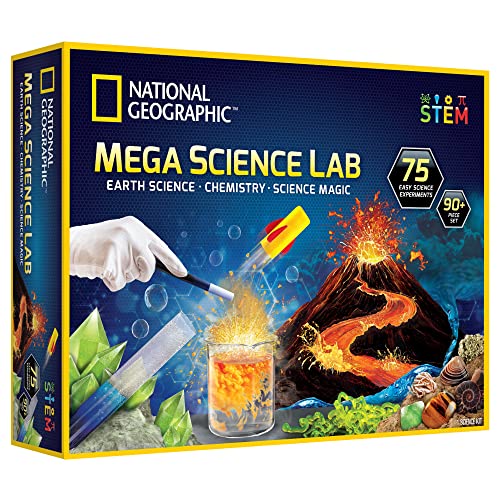
Top Science Kits for Travel That Keep Kids Curious
The best science kit for travel is the Thames & Kosmos Kids First Chemistry Set because it is compact, has 25 safe experiments, and comes with a sturdy case. Its main limitation is that it requires adult supervision for younger kids, but it offers a wide range of activities to keep children engaged on the go.
Traveling with kids can be challenging, but a science kit can turn downtime into an educational adventure. Whether you’re on a plane, in a hotel, or at grandma’s house, a portable science kit provides hours of screen-free entertainment.
We’ve rounded up the best science kits that are specifically designed for travel. These kits are compact, durable, and packed with experiments that are easy to do anywhere. From chemistry to physics, there’s a kit for every young scientist.
How to choose
Choosing the Right Science Kit Consider your child’s age and interests. For younger kids, look for kits with simple, safe experiments. For older kids, choose kits that offer more complex challenges. Think about the type of science they enjoy, whether it’s chemistry, physics, or biology.
Travel Considerations Check the size and weight of the kit. A compact kit is easier to pack. Look for kits with a carrying case or storage container. Also, consider the mess factor. Some kits require water or other materials that might not be available on the go.
Safety and Supervision Always check the recommended age. Some kits contain small parts or chemicals that are not suitable for young children. Always supervise younger kids during experiments. Read the instructions beforehand and pack any necessary safety gear, like goggles.
Making the Most of the Kit Encourage your child to read the instructions and follow the steps. Ask questions about what they observe. You can also supplement the kit with household items to expand the play. Most importantly, let your child lead the exploration.
The shortlist, ranked

Thames & Kosmos Kids First Chemistry Set
This kit includes 25 safe experiments that introduce basic chemistry concepts. The experiments use common household items, so you don’t need to pack extra supplies. It comes in a sturdy box that keeps everything organized, and the instruction manual is clear and colorful.
Pros
- Compact and sturdy case
- Experiments use household items
- Clear instructions for kids
Cons
- Requires adult supervision
- Some experiments need water

National Geographic Mega Crystal Growing Lab
Kids can grow three different crystals in just a few days. The kit includes crystal powder, a display stand, and a color poster with fun facts. It’s easy to pack and the results are impressive, making it a great travel companion for car trips or long weekends.
Pros
- Visual and rewarding results
- Compact packaging
- Educational poster included
Cons
- Takes a few days to grow
- Messy powder

Scientific Explorer My First Mind Blowing Science Kit
This kit is designed for young scientists aged 4 and up. It includes 20 colorful experiments that are safe and easy to do. The instructions are simple, and the kit comes in a portable box that fits easily in a backpack.
Pros
- Age-appropriate for preschoolers
- Non-messy experiments
- Low cost
Cons
- Some chemicals are single-use
- Adult help needed for reading

4M Kidzlabs Anti-Gravity Maglev Magnetic Levitation Kit
This kit teaches kids about magnetism and physics through a series of levitating experiments. It includes a maglev track, magnetic rings, and a pencil with a floating bolt. It’s compact and can be done on any flat surface, making it ideal for travel.
Pros
- Teaches core STEM concepts
- Durable components
- Self-contained activity
Cons
- Fewer experiments
- Might need flat surface

Playz Kaboom! Explosive Combat Science Kit
This kit is for kids who love action and excitement. It includes 25 explosive experiments that create fizzing, popping, and launching reactions. The kit is packed in a small box, and the experiments are designed to be done outdoors or in a well-ventilated area.
Pros
- High excitement factor
- Includes safety goggles
- Many experiments
Cons
- Requires outdoor space
- Messy and potentially messy

Snap Circuits Jr. SC-100 Electronics Exploration Kit
This kit allows kids to build over 100 electronic projects using snap-together parts. It’s perfect for travel because it doesn’t require any tools or mess. The pieces snap easily and the instruction manual guides kids through building circuits.
Pros
- No mess or tools needed
- Builds engineering skills
- Reusable components
Cons
- Requires batteries
- Manual can be complex
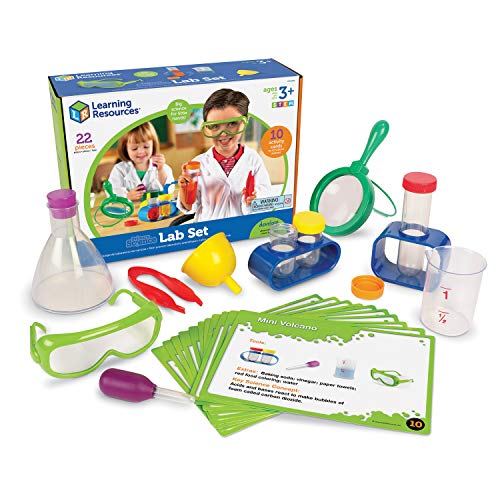
Learning Resources Primary Science Lab Set
Designed for preschoolers, this lab set includes 15 pieces like test tubes, tweezers, and a magnifying glass. It’s perfect for introducing science to young kids. The pieces are large and easy to handle, and the set comes in a convenient storage tub.
Pros
- Large, safe pieces
- Easy to clean
- Encourages observation
Cons
- No actual experiments
- Limited educational depth
The lineup, side by side
| # | Model | Number of experiments | Best for | Score | Price |
|---|---|---|---|---|---|
| 1 | Thames & Kosmos Kids First Chemistry Set | 25 | Best Overall | 9.4 | Check price |
| 2 | National Geographic Mega Crystal Growing Lab | 3 crystals | Best for Visual Learning | 9.1 | Check price |
| 3 | Scientific Explorer My First Mind Blowing Science Kit | 20 | Best for Younger Kids | 8.8 | Check price |
| 4 | 4M Kidzlabs Anti-Gravity Maglev Magnetic Levitation Kit | 7 | Best for STEM Learning | 8.6 | Check price |
| 5 | Playz Kaboom! Explosive Combat Science Kit | 25 | Best for Older Kids | 8.4 | Check price |
| 6 | Snap Circuits Jr. SC-100 Electronics Exploration Kit | 100+ | Best for Electronics | 9.0 | Check price |
| 7 | Learning Resources Primary Science Lab Set | 15 | Best for Toddlers | 8.2 | Check price |
Questions worth asking
What age is appropriate for a travel science kit?
Most travel science kits are designed for ages 4 and up. However, kits for younger children focus on sensory play and simple observations, while kits for older children involve more complex experiments. Always check the age recommendation on the package.
Can science kits be taken on an airplane?
Yes, but you should pack them in your checked luggage. Some kits contain liquids or powders that may be subject to TSA restrictions. It’s best to check with the airline and TSA guidelines before traveling.
Are travel science kits messy?
Some kits are messier than others. Kits that involve liquids or powders can be messy. Look for kits that use dry materials or require less cleanup. You can also protect surfaces with a plastic tablecloth or tray.
How do I choose the best science kit for travel?
Consider the age of your child, the number of experiments, and the size of the kit. Also, think about the type of science your child enjoys. If they like building, an electronics kit might be best. If they like chemistry, a chemistry set is a good choice.
Can travel science kits be used multiple times?
Many kits are reusable, but some experiments use consumable materials. Check the product description to see if refill packs are available. Snap Circuits and magnetic kits are fully reusable.
Are travel science kits educational?
Yes, these kits are designed to teach scientific concepts in a hands-on way. They encourage critical thinking, problem-solving, and curiosity. Many kits also include educational booklets with fun facts.
What is the best way to store a travel science kit?
Most kits come with a storage box or case. Keep the kit in a cool, dry place. Make sure all pieces are put back after each use to avoid losing small parts.
Can travel science kits be used without adult supervision?
For older kids, some kits can be used independently. However, for children under 8, adult supervision is recommended. Even older kids should be supervised when using chemicals or electronic components.
The bottom line
For most families, the Thames & Kosmos Kids First Chemistry Set is the best travel science kit because it offers a balanced mix of educational value and portability. If you have a toddler, the Learning Resources Primary Science Lab Set is a safer choice, while older kids who love action will enjoy the Playz Kaboom! set.