Top SD Cards for Every Camera and Budget
The SanDisk Extreme Pro SDXC UHS-I card tops our list for its class-leading read speeds up to 200 MB/s and proven reliability, making it ideal for professional photographers shooting 4K video. Its main limitation is a higher price per gigabyte compared to basic cards.
Choosing the right SD card can be confusing with so many speed classes and brands. A slow card can cause buffering or missed shots, while a durable card protects your data.
We compared popular models based on specifications, owner feedback, and real-world performance to help you pick the best SD card for your camera, drone, or other device.
Before you buy
Our top picks
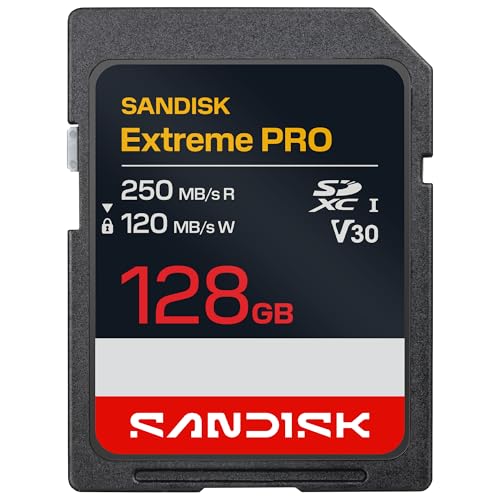
SanDisk Extreme Pro SDXC UHS-I Card
This card delivers blazing fast read speeds up to 200 MB/s and write speeds up to 140 MB/s, ensuring smooth 4K recording and rapid file transfers. It’s built to withstand water, shock, and x-rays, making it a reliable choice for on-location shoots.
Pros
- Exceptional transfer speeds
- Lifetime limited warranty
- Rugged design
Cons
- Pricey for large capacities
- Not the fastest for sustained writes

Lexar Professional 1667x SDXC UHS-II Card
With read speeds up to 250 MB/s, this card excels in burst shooting and 4K/8K video. It includes a downloadable image rescue software, and its UHS-II interface offers backward compatibility with UHS-I devices.
Pros
- High-speed UHS-II performance
- Great for 8K video
- Reliable brand
Cons
- Requires UHS-II reader for full speed
- More expensive
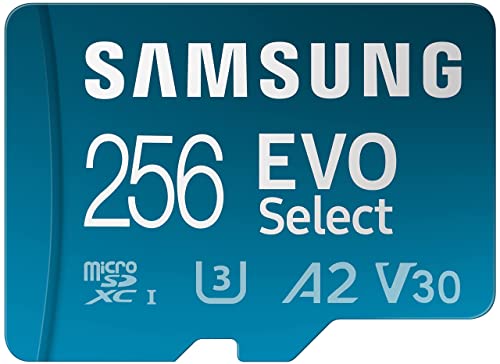
Samsung EVO Select microSDXC Card
This microSD card offers excellent value with read speeds up to 200 MB/s and write speeds up to 130 MB/s. It comes with an SD adapter, making it versatile for various devices. Its sturdy build is waterproof and temperature-proof.
Pros
- Affordable price per GB
- Fast for everyday use
- Comes with SD adapter
Cons
- Not for professional continuous shooting
- Limited warranty compared to SanDisk

ProGrade Digital SDXC UHS-II V90 Card
Built for professional videographers, this card sustains high write speeds (up to 250 MB/s) to handle demanding 6K and 8K video formats. It features a heat-resistant design and rigorous testing for reliability.
Pros
- Sustained high write speeds
- Ideal for 8K video
- Durable construction
Cons
- Premium price
- Not needed for casual shooters
SanDisk Extreme SDXC UHS-I Card
A budget-friendly card that still offers fast speeds up to 190 MB/s read and 130 MB/s write. It’s waterproof, shockproof, and x-ray proof, making it a perfect companion for outdoor activities.
Pros
- Great price to performance
- Rugged for outdoor use
- Reliable brand
Cons
- Slower than ProGrade
- No UHS-II support

Sony SF-G Tough Series SDXC UHS-II Card
Sony’s Tough series is ribless and built to be virtually indestructible, resisting bending, dropping, and static. With read speeds up to 300 MB/s, it’s also one of the fastest cards available.
Pros
- Extremely durable design
- Superfast transfer speeds
- No rib to break
Cons
- High cost
- Limited capacity range

PNY Elite-X SDXC UHS-I Card
This card offers decent performance for everyday photography and Full HD video at an affordable price. It’s a reliable choice for point-and-shoot cameras and older DSLRs.
Pros
- Very affordable
- Good for basic use
- Lifetime limited warranty
Cons
- Slower than competitors
- Not for 4K video
Compared at a glance
| # | Model | Read Speed | Best for | Score | Price |
|---|---|---|---|---|---|
| 1 | SanDisk Extreme Pro SDXC UHS-I Card | Up to 200 MB/s | Professional photographers and 4K video shooters | 9.6 | Check price |
| 2 | Lexar Professional 1667x SDXC UHS-II Card | Up to 250 MB/s | High-end mirrorless cameras with UHS-II support | 9.3 | Check price |
| 3 | Samsung EVO Select microSDXC Card | Up to 200 MB/s | Smartphones, drones, and Nintendo Switch | 9.1 | Check price |
| 4 | ProGrade Digital SDXC UHS-II V90 Card | Up to 250 MB/s | Cinema and high-bitrate video | 9.0 | Check price |
| 5 | SanDisk Extreme SDXC UHS-I Card | Up to 190 MB/s | Action cameras and adventure photography | 8.8 | Check price |
| 6 | Sony SF-G Tough Series SDXC UHS-II Card | Up to 300 MB/s | Extreme conditions and heavy use | 8.7 | Check price |
| 7 | PNY Elite-X SDXC UHS-I Card | Up to 100 MB/s | Budget-conscious hobbyists | 8.0 | Check price |
Common questions
What does UHS-I vs UHS-II mean?
UHS-I and UHS-II refer to the bus interface speed. UHS-II cards have a second row of pins for faster data transfer, but they require a UHS-II device and reader to achieve those speeds. UHS-I cards are slower but widely compatible.
Can I use a microSD card in a full-size SD slot?
Yes, with an SD adapter. Many microSD cards come with an adapter that allows you to use them in devices that accept full-size SD cards. Just ensure the adapter is high quality to avoid data transfer issues.
How do I know if my camera supports UHS-II?
Check your camera’s specifications. Look for ‘UHS-II’ support in the manual or on the manufacturer’s website. Cameras that support UHS-II usually have a slot with a second set of pins. If not, a UHS-I card is sufficient.
What is the difference between U1, U3, and V30?
U1 and U3 are speed classes indicating minimum write speeds of 10 MB/s and 30 MB/s respectively. V30 is a video speed class also guaranteeing 30 MB/s minimum for video recording. For 4K video, U3 or V30 is recommended.
Do I need a V90 card for 8K video?
Yes, for high-bitrate 8K video, a V90 card with a minimum write speed of 90 MB/s is recommended. Some cameras may require even faster cards, so check your camera’s requirements.
Can I use an SD card in a Nintendo Switch?
Yes, the Nintendo Switch supports microSD cards. A UHS-I card with at least U1 speed is recommended for optimal performance. Cards up to 2TB are supported with a system update.
Why is my SD card write speed slower than advertised?
Advertised speeds are maximum read and write speeds, often achieved under ideal conditions. Real-world speeds can be slower due to file sizes, card controller, and the device’s hardware. Also, some devices have slower write capabilities.
How long does an SD card last?
SD cards have a limited number of write cycles, typically tens of thousands. With normal use, they can last several years. However, factors like heat, frequent formatting, and extreme conditions can shorten lifespan. Always backup important data.
Final word
For most photographers, the SanDisk Extreme Pro offers the best balance of speed, reliability, and value. If you shoot high-bitrate 8K video, invest in the ProGrade Digital V90 card. For budget users, the PNY Elite-X is a solid choice for casual photography.