Seed Trays Compared: Cell Depth, Drainage and Reuse
Gardeners who want reusable, heavy duty cells season after season do well with the Bootstrap Farmer 1020 tray. Burpee’s biodegradable tray fits anyone avoiding plastic and transplant shock. The Epic 4 Cell tray covers large starts like squash and melons that need extra root room.
Gardeners who want cells that survive several seasons of stacking and watering should start with the Bootstrap Farmer 1020, since its thick walls resist the cracking thinner trays show. Its higher upfront cost is the tradeoff for that durability. Anyone starting squash, cucumbers or melons needs the deeper cells in the Epic 4 Cell tray instead, and gardeners avoiding plastic altogether reach for Burpee’s biodegradable peat tray.
A tray built for petunias struggles once tomatoes need a deeper root run, so cell count alone never tells the full story. We compared stated cell depth and volume, drainage hole design and owner reports on cracking, warping and how cleanly seedlings pop out at transplant time.
The top picks, ranked

Bootstrap Farmer 1020 Trays with 72 Cell Inserts
Thick walled plastic survives repeated seasons of stacking, watering and transplant without the cracking thinner nursery trays show. Deep two and a quarter inch cells give tomato and pepper roots more room than shallow bedding trays. Owners running several seed starting rounds per season report the same set lasting for years.
Pros
- Survives repeated seasons without cracking or warping
- Deep cells suit tomatoes and peppers well
- Fits the standard 1020 tray footprint
Cons
- Costs more upfront than disposable trays
- Heavier to stack once fully watered

Burpee Eco-Friendly Biodegradable Seed Starting Tray
Peat based cells go straight into the garden bed, roots included, which skips the transplant shock of pulling a seedling from plastic. The material breaks down naturally once buried and adds organic matter to the soil. Gardeners starting cucumbers and squash, crops that dislike root disturbance, favor this over any plastic cell.
Pros
- Plants directly into soil without transplant shock
- Breaks down naturally and adds organic matter
- Suits root sensitive crops especially well
Cons
- Dries out faster than plastic cells
- Cannot be reused across multiple seasons
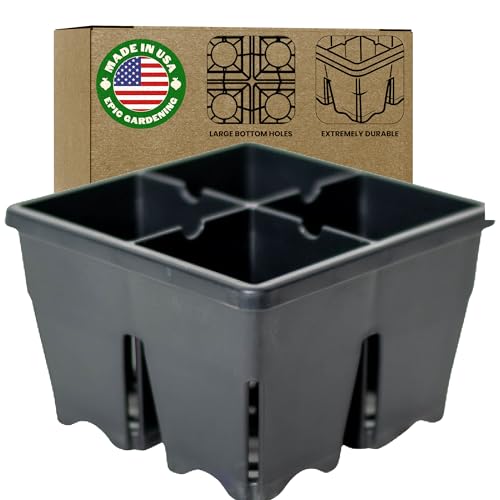
Epic 4 Cell Seed Starting Tray
Only four large cells per tray give squash, melon and cucumber seedlings enough soil volume to build a real root ball before transplant. Thick walls resist the warping thinner trays show once fully soaked. Owners starting vining crops report noticeably less transplant stress than with standard 72 cell trays.
Pros
- Deep cells suit large vining crop roots
- Thick plastic resists warping when soaked
- Reusable across multiple growing seasons
Cons
- Low cell count means more trays for volume
- More depth than small flower or herb starts need

Growneer 10 Pack Seed Starting Trays with Humidity Domes
A clear dome traps moisture around freshly sown seeds, which speeds germination for slower starting varieties like peppers. Ten tray and dome sets in one pack cover a full season of successive starts. Owners in dry, heated indoor climates report better germination with the dome than trays left uncovered.
Pros
- Dome improves germination in dry indoor conditions
- Ten sets cover successive starts through a season
- Stacks compactly for storage between uses
Cons
- Shallower cells than dedicated deep trays
- Domes need daily venting to avoid mold

Gardzen 10 Set Garden Seedling Starter Tray
Bundled trays, domes and plant labels cover a first seed starting season without piecing together separate purchases. Standard 72 cell inserts suit most common vegetable and flower starts. New indoor growers cite the all in one kit as an easy entry point before upgrading to specialized trays.
Pros
- Complete kit skips extra accessory purchases
- Solid entry point for first time seed starters
- Ten sets cover a full season of starts
Cons
- Standard depth limits larger seedling varieties
- Thinner plastic than dedicated heavy duty trays
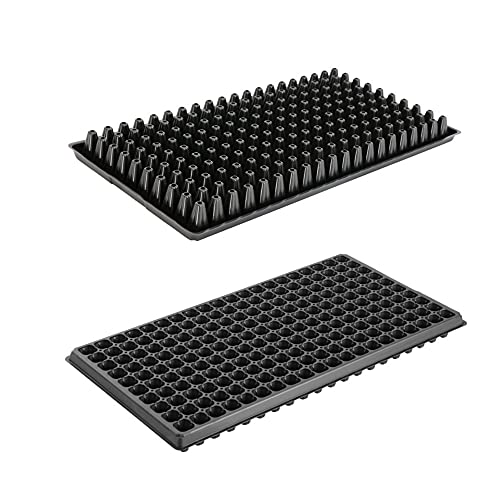
Viagrow Seedling Tray Insert 200 Cell
A 200 cell layout suits lettuce, herbs and other crops that get transplanted young and in bulk. Small cell size dries out faster, so daily watering becomes part of the routine. Market gardeners and anyone starting large batches of herbs favor the higher count over fewer, larger cells.
Pros
- High cell count suits bulk transplant crops
- Reusable across multiple seasons
- Fits the standard 1020 tray footprint
Cons
- Small cells dry out faster and need daily checks
- Too shallow for tomatoes or peppers

Jiffy Peat Pellets Seed Starting Greenhouse Kit
Compressed peat pellets expand once watered, which skips the need to buy and fill separate potting soil for each cell. A tray base and clear dome come included for a low overall cost. Gardeners starting a handful of seeds for a windowsill garden find this the simplest low commitment option.
Pros
- Skips buying separate potting soil for each cell
- Low cost for a complete small kit
- Pellets expand and hold shape once watered
Cons
- Small pellet size limits root room before transplant
- Not suited for starting large seed volumes
How to choose
What to look for in a seed tray Cell depth needs to match the crop, since shallow cells cramp tomato and squash roots quickly. Drainage holes stop standing water that rots roots before they establish. Material thickness decides whether a tray survives one season or several. Humidity domes help slow germinating seeds but need daily venting to avoid mold.
Reusable plastic vs biodegradable trays Reusable plastic trays cost more upfront but save money across multiple seasons when stored properly. Biodegradable peat trays skip transplant shock entirely, since the whole cell goes into the ground. Cucumbers and squash, both root sensitive, benefit most from the biodegradable option, while sturdier tomato transplants handle plastic cells fine.
Which cell size fits common vegetables? Lettuce, herbs and brassicas do fine in smaller, shallower cells since they transplant young. Tomatoes and peppers need moderate depth, close to two inches, to develop before their first move. Squash, melons and cucumbers need the deepest cells here, since a cramped taproot resents disturbance.
Best seed trays for first time growers A complete kit bundling trays, domes and labels removes the guesswork of assembling separate pieces. Standard 72 cell trays cover the widest range of common vegetables and flowers for a first attempt. Specialized deep or biodegradable trays can wait until a second season clarifies what gets grown regularly.
The lineup, side by side
| # | Model | Cell count | Best for | Score | Price |
|---|---|---|---|---|---|
| 1 | Bootstrap Farmer 1020 Trays with 72 Cell Inserts | 72 cells per insert | Best overall | 9.3 | Check price |
| 2 | Burpee Eco-Friendly Biodegradable Seed Starting Tray | 12 cells per tray | Best for plastic-free planting | 9.0 | Check price |
| 3 | Epic 4 Cell Seed Starting Tray | 4 cells per tray | Best for large seedlings | 8.8 | Check price |
| 4 | Growneer 10 Pack Seed Starting Trays with Humidity Domes | 72 cells per tray | Best for germination humidity | 8.5 | Check price |
| 5 | Gardzen 10 Set Garden Seedling Starter Tray | 72 cells per tray | Best value | 8.3 | Check price |
| 6 | Viagrow Seedling Tray Insert 200 Cell | 200 cells per tray | Best for high volume starts | 8.1 | Check price |
| 7 | Jiffy Peat Pellets Seed Starting Greenhouse Kit | 12 pellets per kit | Best budget | 8.0 | Check price |
Common questions
How many cells does a seed tray need?
Standard 72 cell trays suit most vegetables and flowers started for later transplant. Crops like squash and melons do better with only 4 to 6 larger cells for deeper root development.
Do seed trays need drainage holes?
Yes, standing water in a cell without drainage rots roots quickly. Every tray listed here includes drainage holes in each individual cell rather than relying on the tray base alone.
Can plastic seed trays be reused?
Thicker walled trays like the Bootstrap Farmer 1020 are built for multiple seasons of reuse if rinsed and dried between uses. Thinner disposable trays often crack or warp after one or two seasons.
Are biodegradable seed trays better than plastic ones?
Biodegradable trays avoid transplant shock for root sensitive crops since the whole cell goes into the soil. Plastic trays last longer and cost less per use across several seasons if reused properly.
How deep should a seed tray cell be for tomatoes?
Around 2 to 2.5 inches gives tomato seedlings enough root room before their first transplant. Shallower cells under 1.5 inches often stunt growth or force an earlier than ideal transplant.
Is a humidity dome necessary to start seeds indoors?
A dome speeds germination for slower starting seeds like peppers by trapping moisture. Fast germinating crops like lettuce often do fine without one, provided the tray stays consistently moist.
Can seed starting trays be used outdoors?
Most seed trays are designed for indoor or greenhouse use during germination and early growth. Move seedlings to individual pots or the garden bed once they outgrow the cells, rather than leaving the tray outdoors long term.
What size seed tray fits under a standard grow light?
Most seed trays follow the standard 1020 footprint, around 10 by 20 inches, which fits common grow light fixtures and heat mats sized for that standard.
Seed trays vs peat pellets: which starts seeds better?
Trays with soil filled cells suit gardeners starting a wide range of crops in bulk. Peat pellets work well for smaller, low commitment batches since they skip mixing and filling potting soil.
Our pick
Gardeners starting tomatoes, peppers or flowers for later transplant should invest in the Bootstrap Farmer 1020, since it survives repeated seasons of use. Squash, melon and cucumber growers who want to avoid root disturbance should pick the Epic 4 Cell tray or Burpee’s biodegradable option instead. First time seed starters on a tight budget should grab the Gardzen complete kit and figure out specific needs before upgrading.


