How to Pick a Sewing Table for Your Space and Machine
Arrow Sewing Cabinets Judy Sewing Cabinet leads this lineup with an electric lift and enclosed storage. Studio Designs Sew Ready Comet Sewing Machine Table offers strong value with a steel frame. Sauder Craft Pro Series Sewing Machine Cart is the budget pick, with locking casters and two storage bins.
Arrow Sewing Cabinets’ Judy Sewing Cabinet stands out for owners who want an electric lift platform and enclosed storage in one piece of furniture. Its main advantage is a motorized lift that raises and lowers the machine bed flush with the tabletop. A larger footprint is the tradeoff, needing a dedicated corner of a room.
Sewing furniture ranges from fixed cabinets to rolling carts to folding tables, and each style trades surface area for portability differently. Listed dimensions, machine weight capacity, storage configuration, and patterns in owner reviews shaped how we ranked these seven picks.
The shortlist, ranked
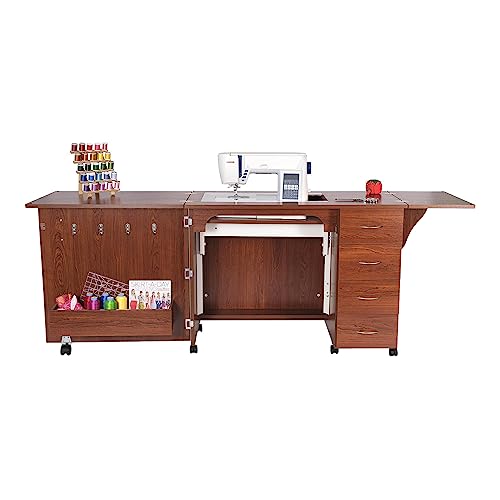
Arrow Sewing Cabinets Judy Sewing Cabinet
This cabinet uses an electric lift to raise the sewing machine platform flush with the tabletop, then lowers it for flat storage when idle. Two side cabinets and a drop leaf extend the work surface for larger projects. Owners report the laminate finish resists pin and scissor scratches better than painted particleboard alternatives.
Pros
- Electric lift raises and lowers the machine platform automatically
- Two enclosed side cabinets keep notions out of sight
- Drop leaf extension adds surface area for cutting fabric
Cons
- Assembly typically needs two people due to cabinet weight
- Footprint is too large for rooms under roughly 60 square feet

Studio Designs Sew Ready Comet Sewing Machine Table
An MDF worktop pairs with a steel frame here, keeping the table stable during machine vibration. A cord grommet routes power and foot pedal cables away from the floor, and an open lower shelf holds a project bin. Studio Designs sells it in several top colors to match a craft room.
Pros
- Steel frame resists wobble better than all-wood folding legs
- Cord grommet keeps foot pedal cables organized
- Lower shelf fits a standard project bin or serger
Cons
- Open shelf leaves supplies visible rather than enclosed
- No leaf extension for wide quilting projects
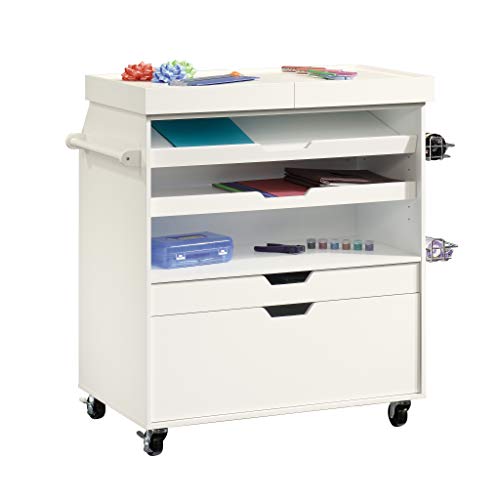
Sauder Craft Pro Series Sewing Machine Cart
Sauder builds this cart from engineered wood with a laminate finish and mounts it on locking casters, so it rolls between a sewing room and shared space. A drop leaf and two storage bins hold a machine cover, bobbins, and thread spools. Its compact footprint suits sewers without a dedicated room.
Pros
- Locking casters let it roll between rooms and lock in place
- Two bins organize small notions without extra baskets
- Drop leaf folds down when the cart needs to move through doorways
Cons
- Laminate top shows scuffs from metal scissors over time
- Smaller surface than dedicated sewing cabinets limits large projects
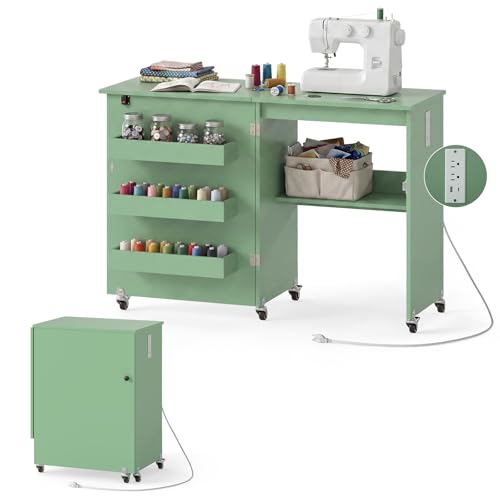
Tangkula Multifunctional Folding Sewing Craft Table
Setup takes under a minute with this folding table, which then folds flat against a wall or closet door when the sewing session ends. Two open shelves under the tabletop hold a machine case and fabric bins, and locking wheels keep it steady while sewing. A particleboard top pairs with metal folding legs rated for a stated 110 pound load.
Pros
- Folds flat in seconds for closet or under-bed storage
- Locking wheels keep the table from shifting while stitching
- Two shelves hold a machine case plus fabric bins
Cons
- Particleboard top can absorb moisture near a humid laundry room
- Folding legs feel less rigid than a fixed cabinet under heavy machines

Kangaroo Wallaby II Sewing Cabinet
A crank handle adjusts the machine platform height on the Wallaby II, so quilters can match the table to a chair or standing position. The open storage well below the platform fits a machine case, and a side shelf holds a serger or overlock machine. Solid wood side panels add weight that keeps the cabinet steady during long quilting sessions.
Pros
- Crank adjustable platform matches table height to any chair
- Open well fits a second machine like a serger
- Solid wood panels add stability during long quilting runs
Cons
- Heavier cabinet weight makes it harder to move between rooms
- Crank mechanism needs occasional lubrication per owner reports
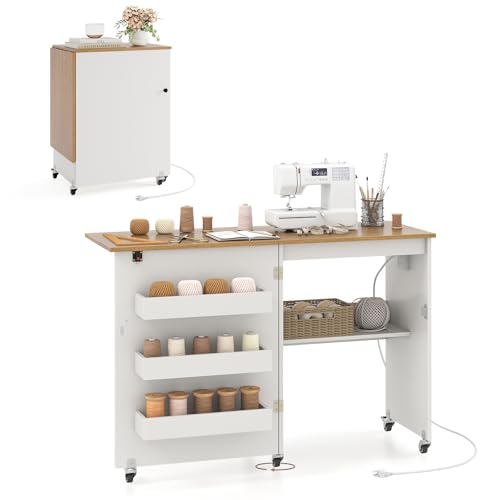
Costway Multifunctional Folding Sewing Craft Table
Two fabric storage baskets slide onto side rails on this folding table, plus a lower shelf holds a machine case. Locking wheels hold the table in place, and hinged legs fold the tabletop flat for closet storage. Its MDF top is rated to hold up to 110 pounds of combined machine and fabric weight.
Pros
- Fabric baskets separate notions from bulkier fabric bolts
- Legs fold flat for slim closet storage
- Locking wheels prevent drift on hardwood or tile floors
Cons
- Basket rails require periodic tightening after repeated folding
- Table height is fixed with no adjustment for standing sewing

Suncast Modern Craft Armoire
Vertical storage replaces tabletop surface on this armoire, using fold out shelves and an interior cabinet to organize fabric, thread, and tools. Resin construction resists moisture better than particleboard cabinets stored in a garage or basement. Owners typically pair it with a separate folding table rather than use it as the primary sewing surface.
Pros
- Resin body resists moisture in garages and basements
- Fold out shelves expand workspace temporarily without a permanent table
- Adjustable interior shelving fits bins of different sizes
Cons
- Not a standalone sewing surface, best paired with a folding table
- Fold out shelves hold less weight than a solid wood tabletop
How they compare
| # | Model | Material | Best for | Score | Price |
|---|---|---|---|---|---|
| 1 | Arrow Sewing Cabinets Judy Sewing Cabinet | Laminate over engineered wood | Best overall | 9.4 | Check price |
| 2 | Studio Designs Sew Ready Comet Sewing Machine Table | MDF top with steel frame | Best value | 9.1 | Check price |
| 3 | Sauder Craft Pro Series Sewing Machine Cart | Engineered wood with laminate finish | Best budget | 8.8 | Check price |
| 4 | Tangkula Multifunctional Folding Sewing Craft Table | Particleboard with metal folding legs | Best for small spaces | 8.5 | Check price |
| 5 | Kangaroo Wallaby II Sewing Cabinet | Solid wood and engineered wood panels | Best for quilting | 8.3 | Check price |
| 6 | Costway Multifunctional Folding Sewing Craft Table | MDF board with metal frame | Best for portable folding | 8.1 | Check price |
| 7 | Suncast Modern Craft Armoire | Resin construction with steel hardware | Best for storage-heavy setups | 8.0 | Check price |
What to look for
What to look for in a sewing table Machine weight capacity matters more than overall table size, since a heavy embroidery machine can strain a folding leg rated for light use. Surface material affects durability too: laminate and MDF resist pin scratches better than raw particleboard. Storage style splits into enclosed cabinets, open shelves, and add on baskets, each suited to a different clutter tolerance. Casters help when a table needs to move between a craft room and shared living space.
Best options for small apartments Folding tables like the Tangkula model collapse flat against a wall once a sewing session ends, freeing floor space in a studio apartment. A rolling cart such as the Sauder Craft Pro Series works well when a closet or corner is the only available storage spot. Renters often prefer these lighter options, since they avoid drilling into walls and move easily during a lease change. Fixed cabinets like the Judy still fit a small room if a household sews often enough to justify a dedicated corner.
Setting up a table for quilting versus casual sewing Quilters generally need more surface area to support a large quilt top while stitching, favoring cabinets with drop leaves or extension wings like the Wallaby II. Casual sewers who mend clothes or make small projects can rely on a smaller table such as the Comet without missing extra surface. Height adjustment matters more for quilters who sew in long sessions and want to switch between sitting and standing. A serger placed next to a sewing machine also needs a wider storage well than a single machine setup.
How assembly and portability differ across styles Cabinets with electric lifts, including the Judy, generally ship in multiple panels and take longer to assemble than a folding table with preattached legs. Two people make cabinet assembly faster, since side panels and the lift mechanism are heavy to align solo. Folding and rolling options like the Costway and Tangkula tables set up in minutes with fewer tools. Households that rearrange furniture often should weigh a cabinet’s assembly time against how rarely it will move once in place.
Good to know
What is the best sewing table for a small apartment?
A folding table such as the Tangkula Multifunctional Folding Sewing Craft Table works well, since it collapses flat and stores in a closet between sessions. A rolling cart like the Sauder Craft Pro Series Sewing Machine Cart also suits tight layouts, since it moves out of the way when not in use.
How much weight can a sewing table hold?
Listed capacities range from about 35 pounds on lighter machine platforms, such as the Sew Ready Comet, up to 110 pounds of combined machine and fabric weight on sturdier folding tables like the Costway model.
Can a folding sewing table support a heavy embroidery machine?
Check the stated weight capacity first, since embroidery machines often weigh more than standard sewing machines. Tables rated near 110 pounds, like the Tangkula and Costway models, handle heavier machines better than lighter frames.
Is a sewing cabinet better than a folding table for quilting?
Cabinets with drop leaves or extension wings, such as the Kangaroo Wallaby II, give quilters more surface area for large quilt tops. Folding tables work fine for smaller projects but can feel cramped once a full size quilt spreads out.
What height should a sewing table be?
Most fixed sewing tables sit around 29 to 30 inches tall, matching a standard desk chair. Cabinets with a crank adjustable platform, like the Wallaby II, let sewers raise or lower the machine bed to match their own chair height.
Do sewing tables come with storage for thread and notions?
Many do, though the style varies. Enclosed cabinets like the Judy hide notions behind cabinet doors, while folding tables such as the Comet rely on an open shelf or add on fabric baskets instead.
Sewing cabinet vs sewing table, which one holds its value longer?
Solid wood cabinets, such as the Judy or Wallaby II, tend to hold up longer under daily use than particleboard folding tables. Folding tables cost less upfront but may need replacing sooner if the top absorbs moisture or the folding legs loosen.
How do you assemble a folding sewing table?
Folding models like the Tangkula and Costway tables typically arrive with preattached legs that unfold and lock into place, needing no tools. Cabinets with electric lifts take longer, often requiring two people to align side panels and the lift mechanism during assembly.
What is the difference between a sewing cabinet and a sewing table?
A sewing cabinet usually encloses storage behind doors and may include a lift for the machine bed, like the Judy. A sewing table is a simpler flat surface, sometimes with an open shelf, like the Sew Ready Comet.
Which sewing table works best for a serger next to a machine?
The Kangaroo Wallaby II Sewing Cabinet includes a side shelf sized for a serger or overlock machine next to the main platform. Its open storage well also fits a machine case underneath.
The verdict
Anyone with a dedicated sewing corner who wants enclosed storage plus an electric lift should choose the Arrow Sewing Cabinets Judy Sewing Cabinet. Renters or apartment dwellers get more from the Tangkula Multifunctional Folding Sewing Craft Table instead, since it folds flat and needs no dedicated floor space. Quilters working with large projects get more usable surface from the Kangaroo Wallaby II Sewing Cabinet than from any folding table in this lineup.