Wet/Dry Shop Vacuums for Big Messes and Fine Dust
The RIDGID 16 Gallon is the best shop vacuum overall, pairing a large tank with strong airflow and a durable build. The Craftsman CMXEVBE17595 is the best value, while the compact Armor All AA255 is the pick for cars and quick cleanups where a big drum gets in the way.
For the quick answer, the RIDGID 16 Gallon is our best overall shop vacuum, the Craftsman CMXEVBE17595 offers the best value, and the compact Armor All AA255 is the one to grab for car interiors and small spills.
Shop vacuums are harder to compare than they seem because the headline peak-horsepower figure is measured under lab conditions you will never repeat, and a huge tank is useless if the hose is too narrow to move debris. To cut through it we compared each model on real tank capacity, airflow and sealed suction where published, hose diameter, filtration options and how easy the unit is to move and store, leaning on manufacturer specifications and what long-term owners report.
The shortlist, ranked

RIDGID HD1600 16 Gallon Wet/Dry Shop Vacuum
The RIDGID 16 Gallon combines a large drum with strong airflow and a wide 2.5-inch hose that resists clogging on bulky debris, which is why it is a workshop favorite. Owners consistently praise its build quality and easy-glide caster base, though at this size it is not something you carry up a ladder.
Pros
- Large tank handles big cleanups without emptying
- Wide 2.5-inch hose resists clogs
- Sturdy build and smooth-rolling casters
Cons
- Bulky and heavy to move up stairs
- Loud at full power like most large vacs

Craftsman CMXEVBE17595 16 Gallon Wet/Dry Shop Vacuum
The Craftsman CMXEVBE17595 delivers a full 16-gallon drum and strong airflow at a price that undercuts many rivals, making it a lot of vacuum for the money. Based on specifications it covers the same core jobs as pricier units, with accessory storage built onto the body.
Pros
- Large capacity for a modest price
- Onboard storage for hose and attachments
- Wide hose for construction debris
Cons
- Filter must be bought separately for fine dust
- Casters feel less refined than premium models

Shop-Vac 5981 5 Gallon Wet/Dry Vacuum
The Shop-Vac 5981 is a mid-size 5-gallon unit that hits a practical balance between capacity and portability for everyday garage and basement duty. Owners like that it is light enough to carry yet big enough for routine spills and sawdust, though it will fill quickly on major jobs.
Pros
- Easy to lift and reposition
- Right size for routine home cleanups
- Long-standing, widely supported brand
Cons
- Narrow hose clogs on larger debris
- Small tank fills fast on big jobs

DeWalt DXV10P 10 Gallon Wet/Dry Vacuum
The DeWalt DXV10P pairs a 10-gallon stainless steel tank with rugged casters aimed at contractors who move a vac around a site. Owners value the durable drum and strong pull, though the stainless body adds weight compared with plastic tanks.
Pros
- Rugged stainless tank shrugs off abuse
- Strong suction for construction messes
- Rear caster design tips for easy emptying
Cons
- Heavier than plastic-tank rivals
- Fewer bundled accessories

Vacmaster VBV1210 12 Gallon Wet/Dry Vacuum with Blower
The Vacmaster VBV1210 adds a detachable blower function to a 12-gallon wet/dry vacuum, so one unit clears sawdust indoors and leaves off the porch. It is a versatile all-rounder, though the blower is best for light debris rather than heavy yard work.
Pros
- Built-in blower adds real versatility
- Wide 2.5-inch hose for bulky debris
- Good capacity for the price
Cons
- Blower suits light debris only
- Attachment swaps take a moment
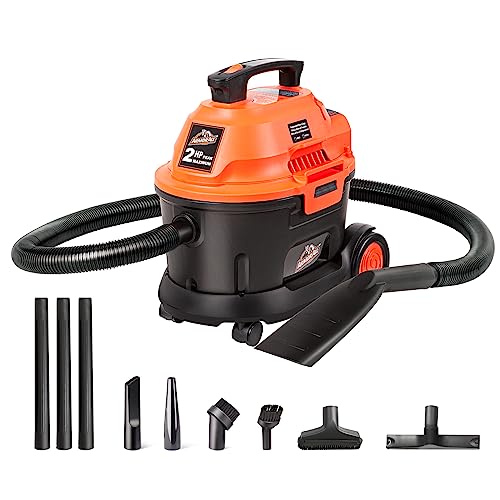
Armor All AA255 2.5 Gallon Wet/Dry Vacuum
The Armor All AA255 is a small 2.5-gallon vac built for detailing cars and tackling quick indoor spills without wrestling a big drum. Owners find it genuinely handy for tight spaces, but its little tank means frequent emptying on anything larger.
Pros
- Light and easy to carry anywhere
- Great for car interiors and tight spots
- Simple to store on a shelf
Cons
- Small tank empties often
- Short cord limits reach

Stanley SL18116P 6 Gallon Wet/Dry Vacuum
The Stanley SL18116P offers a 6-gallon stainless drum at a wallet-friendly price, making it a sensible entry point for a first shop vac. It handles everyday garage duty well, though its airflow and accessories are more basic than higher-end units.
Pros
- Affordable stainless-tank vacuum
- Manageable size for most garages
- Includes basic wet and dry attachments
Cons
- Narrow hose can clog on debris
- Basic filtration for fine dust
The lineup, side by side
| # | Model | Tank capacity | Best for | Score | Price |
|---|---|---|---|---|---|
| 1 | RIDGID HD1600 16 Gallon Wet/Dry Shop Vacuum | 16 gallon | Best overall | 9.4 | Check price |
| 2 | Craftsman CMXEVBE17595 16 Gallon Wet/Dry Shop Vacuum | 16 gallon | Best value | 9.1 | Check price |
| 3 | Shop-Vac 5981 5 Gallon Wet/Dry Vacuum | 5 gallon | Best for general cleanup | 8.9 | Check price |
| 4 | DeWalt DXV10P 10 Gallon Wet/Dry Vacuum | 10 gallon | Best for the jobsite | 8.7 | Check price |
| 5 | Vacmaster VBV1210 12 Gallon Wet/Dry Vacuum with Blower | 12 gallon | Best 3-in-1 with blower | 8.5 | Check price |
| 6 | Armor All AA255 2.5 Gallon Wet/Dry Vacuum | 2.5 gallon | Best compact and portable | 8.3 | Check price |
| 7 | Stanley SL18116P 6 Gallon Wet/Dry Vacuum | 6 gallon | Best budget mid-size | 8.1 | Check price |
What to look for
Ignore peak horsepower, look at airflow Peak horsepower is measured for a split second under lab conditions, so it tells you little about real cleaning power. What actually moves debris is airflow, often given in cubic feet per minute, combined with sealed suction. When two vacs quote similar tanks, the one with better airflow and a wider hose will clear a pile of sawdust faster.
Match tank size to your typical mess A 16-gallon drum like the RIDGID means fewer trips to empty during a big job, but it is heavy and hard to store. A 2.5 to 6-gallon unit such as the Armor All AA255 or Stanley SL18116P is far easier to carry and park on a shelf. Be honest about the messes you make most often and buy for those, not the rare worst case.
Hose diameter decides what you can pick up A wide 2.5-inch hose swallows drywall chunks, wood offcuts and leaves that would jam a 1.25-inch hose. If you clean up after remodeling or woodworking, prioritize hose diameter, which is why the RIDGID and Vacmaster picks earn their spots. For fine dust and car detailing, a narrower hose is fine and reaches into tighter gaps.
Plan for filtration and wet pickup Standard cartridge filters handle general debris, but fine drywall or sanding dust needs a fine-dust or HEPA-rated filter to avoid a cloud out the exhaust. For wet pickup, remember you usually remove the dry filter first. Check which filters are included versus sold separately, since that adds to the real cost, as it does with the value-focused Craftsman.
Questions worth asking
What size shop vacuum do I need?
For general garage and home use a 5 to 6-gallon unit balances capacity and portability well. If you regularly clean up after remodeling or woodworking, a 12 to 16-gallon model like the RIDGID 16 Gallon means fewer stops to empty. For cars and small spills, a compact 2.5-gallon vac is easier to handle.
Does peak horsepower actually matter?
Not as much as the marketing suggests. Peak horsepower is a brief lab figure that does not reflect steady cleaning power. Airflow, sealed suction and hose diameter are far better indicators of how quickly a vacuum will clear real debris, so compare those specs when you can find them.
Can a shop vacuum pick up water?
Yes, wet/dry models are designed for it, which includes every pick on this list. You typically remove the paper or cloth dry filter before vacuuming liquid so it does not clog or tear. Always check the manual, and never exceed the tank’s rated liquid capacity.
What is the difference between a shop vac and a household vacuum?
A shop vacuum uses a large rugged canister, a wide hose and a motor built to handle bulky debris, water and heavy dust that would clog or damage a household vacuum. Household vacuums are lighter and better for carpets and fine everyday dust, while shop vacs excel at garage, jobsite and cleanup duty.
Do I need a HEPA filter for a shop vacuum?
If you vacuum fine drywall dust, sanding residue or allergens, a fine-dust or HEPA-rated filter is worth it to keep particles from blowing back into the air. For general debris like wood chips and leaves, a standard cartridge filter is usually enough. Check whether the filter you need comes included.
How wide should the hose be?
A 2.5-inch hose handles bulky construction debris without clogging, while a 1.25-inch hose is better for detailing and fine dust in tight spaces. Match the hose to your typical mess, and note that many vacs accept adapters so you can fit standard shop attachments.
Can I use a shop vacuum for dust collection on power tools?
Many shop vacuums can connect to a tool’s dust port with the right adapter, which greatly reduces airborne dust. For heavy, continuous chip collection a dedicated dust collector moves more air, but a shop vac paired with a fine-dust filter works well for occasional tool use.
How often should I clean the filter?
Clean or tap out the filter whenever suction noticeably drops, and more often when vacuuming fine dust that clogs the pleats quickly. Rinsing reusable filters and letting them fully dry extends their life, while heavily loaded filters should be replaced to keep airflow strong.
Are stainless steel tanks better than plastic?
Stainless tanks like those on the DeWalt DXV10P and Stanley SL18116P resist dents and rust and shrug off jobsite abuse, but they add weight. Plastic tanks are lighter and cheaper and hold up fine for home use. The right choice depends on how rough your environment is.
Our take
The RIDGID 16 Gallon is our top overall shop vacuum thanks to its large tank, strong airflow and clog-resistant wide hose. Pick the Craftsman CMXEVBE17595 for the best value in a full-size unit, and choose the compact Armor All AA255 when portability for cars and quick spills matters most.


