How to Pick Ski Goggles for Sun, Fog and Glasses
Most skiers get the best balance of interchangeable lenses and anti-fog performance from the Smith Squad. Budget shoppers can rely on the OutdoorMaster Ski Pro for the same core protection at a lower cost, while eyeglass wearers should pick the Dragon Alliance DX3 OTG for its over-the-glasses frame and secure seal.
Most skiers and snowboarders do best with the Smith Squad, thanks to a quick-release interchangeable lens system and a double anti-fog lens built for shifting mountain light. Its main tradeoff is a higher cost than single-lens budget models.
Lens curvature, OTG fit, photochromic range and helmet compatibility all vary across current listings, which rules out one universal pick. We compared lens technology, frame fit, anti-fog construction and owner feedback on fogging and glasses compatibility to narrow seven current Amazon listings.
What matters most
What to look for in ski goggles for outdoor use Lens shape marks the first fork in the decision. Cylindrical lenses curve on one axis and cost less. Spherical lenses curve on two axes, cutting glare and distortion at the edges. A double lens with anti-fog coating matters more than tint color outdoors, since fogging from body heat is the most common complaint among owners. UV protection should appear explicitly on the listing, either as UV400 or full UV protection. A wide adjustable strap keeps the seal steady in wind.
Interchangeable lenses vs photochromic lenses Interchangeable-lens goggles, like the Smith Squad or Anon M4, let riders carry a spare tint and swap by hand between sunny and flat-light runs. Photochromic goggles, like the Julbo Aerospace, adjust automatically as clouds move in. That suits riders who skip carrying a second lens or fumbling with a swap in cold hands. Photochromic lenses cost more and react a few seconds slower than a manual swap. Racers who need instant clarity often prefer a fixed interchangeable system instead.
Choosing goggles that fit over prescription glasses Eyeglass wearers need a frame built with a deeper foam channel and extra internal width, sold as OTG or over-the-glasses. The Dragon Alliance DX3 OTG is a common example of this build. Standard goggles compress regular glasses frames against the temples, which causes pressure headaches on long runs. Riders who wear glasses should avoid ultra-slim rimless designs, since those frames leave little room for a glasses arm to sit flat against the head.
Wide field of view and helmet compatibility for backcountry visibility A frameless or rimless build, like the Oakley Flight Deck, increases peripheral vision because less plastic blocks the edges of the lens. That extra visibility matters most for backcountry or steep terrain, where spotting hazards early counts. Resort skiers who mostly stay on groomed runs get less benefit from the wider field of view and can save money with a cylindrical-lens goggle instead. Nearly every current goggle, regardless of lens shape, now ships with a helmet-compatible strap, so fit around a specific helmet brand rarely narrows the choice on its own.
The top picks, ranked

Smith Squad Snow Goggle
A quick-release mount swaps lens tints in seconds without tools. Double-layer construction and wide frame vents fight fog during hard exertion. Owners report a snug seal that blocks wind on chairlifts.
Pros
- Fast lens swaps handle changing light conditions
- Double lens construction resists fogging under exertion
- Wide strap fits most helmet brands
Cons
- Costs more than single-lens goggles
- Spare lenses sell separately

Anon M4 Toric Goggle
A magnetic system releases the lens with a light tug, no buckles involved. It ships with a spherical sun lens and a low-light lens for flat conditions. The frame doubles as an MFI-compatible base for face masks in extreme cold.
Pros
- Magnetic lens swap beats clip-based systems for speed
- Spherical shape cuts distortion at the edges
- Two included lenses cover sun and flat light
Cons
- Frame fits large, better suited to bigger faces
- Magnetic mount adds weight versus basic frames

Julbo Aerospace Photochromic Goggle
A Reactiv photochromic lens pairs with a mechanical airflow adjuster on the frame. The lens darkens or lightens as clouds move in, skipping the need for spare lenses. A manual vent slider controls airflow on climbs or lift lines.
Pros
- Photochromic lens removes the need to swap lenses by hand
- Adjustable venting helps during high-exertion climbs
- Wide light transmission range spans sun to flat light
Cons
- Photochromic lenses cost more than fixed-tint options
- Transition speed lags behind sudden light changes
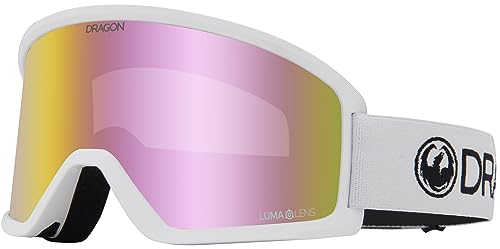
Dragon Alliance DX3 OTG Goggle
A deeper foam channel and wider frame fit over most prescription glasses. Double-lens construction with anti-fog coating and a silicone-backed strap keep the seal secure during falls. Cylindrical lens shape keeps peripheral distortion low.
Pros
- Deep foam channel fits most eyeglass frames
- Silicone strap grip stays put under a helmet
- Anti-fog coating holds up on lift rides
Cons
- Bulkier profile than non-OTG goggles
- Field of view narrower than frameless designs

Oakley Flight Deck Goggle
A rimless, frameless-style build pairs with an oversized lens for a wider field of view. Switchlock hardware lets riders change lenses without removing the strap. Owners note the extra lens height helps peripheral vision on steep terrain.
Pros
- Rimless design widens peripheral vision
- Lens swap skips removing the strap entirely
- Frame flexes to fit a range of helmets
Cons
- Costs more than cylindrical-lens goggles
- Large lens looks bulky on narrower faces

Zionor Lagopus X Ski Goggle
A double spherical lens with anti-fog coating pairs with foam-lined ventilation channels. UV400 protection and a wide strap make it a common resort-day pick. Reviewers note the anti-fog layer keeps up during moderate exertion.
Pros
- Anti-fog coating handles moderate exertion well
- UV400 protection comes at a lower cost than premium brands
- Foam vent channels cut down lens fogging on lifts
Cons
- Lens swap requires extra tools
- Strap padding wears faster than premium models

OutdoorMaster Ski Pro Goggle
A double anti-fog lens and full UV protection come at an entry price point. Cylindrical shape fits a range of face sizes with an adjustable strap. It works as a reasonable first pair for occasional resort skiers.
Pros
- Lowest cost option in this comparison
- Anti-fog coating performs adequately for casual use
- Adjustable strap fits most helmet sizes
Cons
- Lens does not swap without extra hardware
- Field of view narrower than spherical lenses
How they compare
| # | Model | Lens shape | Best for | Score | Price |
|---|---|---|---|---|---|
| 1 | Smith Squad Snow Goggle | Cylindrical | Best overall | 9.4 | Check price |
| 2 | Anon M4 Toric Goggle | Spherical (toric) | Best value | 9.1 | Check price |
| 3 | Julbo Aerospace Photochromic Goggle | Spherical | Best for variable light | 8.8 | Check price |
| 4 | Dragon Alliance DX3 OTG Goggle | Over-the-glasses (OTG) frame | Best for glasses wearers | 8.5 | Check price |
| 5 | Oakley Flight Deck Goggle | Spherical, rimless frame | Best for wide field of view | 8.3 | Check price |
| 6 | Zionor Lagopus X Ski Goggle | Spherical | Best for anti-fog performance | 8.1 | Check price |
| 7 | OutdoorMaster Ski Pro Goggle | Cylindrical | Best budget | 8.0 | Check price |
Frequently asked questions
What lens color works best for ski goggles outdoors?
Darker mirrored lenses suit bright, sunny days, while lighter rose or yellow lenses work better for overcast or flat-light conditions. A photochromic lens or an interchangeable two-lens goggle covers both without buying two separate goggles.
Are photochromic ski goggle lenses worth the extra cost?
Photochromic lenses are worth it for riders who move between sun and shade often and do not want to swap lenses by hand. They cost more than fixed-tint lenses and adjust with a short delay rather than instantly.
Can ski goggles fit over glasses?
Yes, but only goggles labeled OTG (over-the-glasses) are built with the extra internal depth and width needed. Standard goggles usually press regular eyeglass frames uncomfortably against the head.
How do you stop ski goggles from fogging up?
Choose a goggle with a double lens and built-in anti-fog coating, keep the vents unobstructed, and avoid storing goggles inside a warm jacket where condensation can form. Wiping the inside of the lens can strip the anti-fog coating over time.
What does OTG mean on a ski goggle listing?
OTG stands for over-the-glasses, describing a goggle frame built with a deeper foam channel so it fits comfortably over prescription eyeglasses. The Dragon Alliance DX3 OTG is a common example.
Which ski goggles work best with a helmet?
Most current ski goggles are built with an adjustable strap sized for helmet compatibility, including the Smith Squad, Oakley Flight Deck and Zionor Lagopus X. Checking the strap width against a specific helmet brand is more useful than relying on the listing alone.
Do budget ski goggles perform as well as expensive ones?
Budget goggles like the OutdoorMaster Ski Pro still offer double anti-fog lenses and UV protection, covering the core function for casual resort days. Premium models add faster lens-swap systems, wider fields of view and photochromic lenses that budget goggles skip.
Is a wider field of view worth it in snow goggles?
A wider field of view, found in frameless designs like the Oakley Flight Deck, matters most for backcountry riders who need to spot terrain hazards early. Resort skiers on groomed runs notice less practical benefit from the extra peripheral vision.
Can the same ski goggles work for snowboarding?
Yes, lens technology and OTG fit matter more than the sport itself, so any goggle on this list works for snowboarding as well as skiing. Wider field-of-view models like the Oakley Flight Deck can help riders spot terrain features on either board.
Our pick
The Smith Squad remains the strongest overall pick, since its tool-free lens swap and double anti-fog lens handle both sunny and flat-light days without a second goggle. Eyeglass wearers should skip it for the Dragon Alliance DX3 OTG, which fits a deeper foam channel over most frames. Riders watching their budget can still get solid anti-fog performance from the OutdoorMaster Ski Pro.