Smart Archive Storage: Top Picks for Secure Data
The Synology DiskStation DS923+ leads as the top pick for smart archive storage, offering a versatile 4-bay NAS with robust data protection and scalability. It excels for home offices and small businesses that need reliable, centralized storage with advanced features like snapshot replication and cloud sync. Its main limitation is that it lacks built-in M.2 SSD slots for caching, requiring an expansion card for that functionality.
In the digital age, archiving data securely and intelligently is crucial for both individuals and organizations. Smart archive storage goes beyond simple external drives, offering features like automated backups, data integrity checks, and scalable capacity. This roundup compares seven leading solutions to help you choose the best for your archival needs.
We compared specifications, user feedback, and value to highlight the strengths and limitations of each product. Whether you need a compact NAS for home use or a robust rackmount system for a data center, our guide covers diverse options. Read on to find the best smart archive storage for your data.
Before you buy
The best picks, ranked

Synology DiskStation DS923+
The Synology DS923+ is a 4-bay NAS that excels as a smart archive storage solution. It runs on Synology DiskStation Manager (DSM), which offers robust data management features including snapshot replication, hyper backup, and advanced security. Users praise its reliability and extensive app ecosystem.
Pros
- Excellent DSM software with comprehensive backup and archiving tools
- Expandable storage via eSATA expansion units
- Strong performance for file transfers and archival tasks
Cons
- No built-in M.2 SSD slots for caching (requires add-in card)
- Limited to 1GbE ports by default; 10GbE costs extra
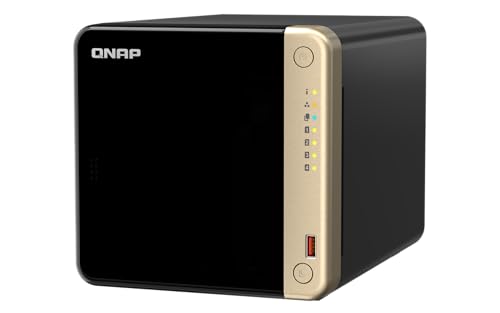
QNAP TS-464-8G
The QNAP TS-464-8G is a 4-bay NAS with a powerful Intel Celeron N5095 processor and 8GB RAM. It offers excellent performance for archiving and can be expanded with PCIe cards for 10GbE or M.2 SSDs. QNAP’s QTS operating system provides extensive apps for backup and sync.
Pros
- PCIe slot for adding 10GbE or M.2 SSD caching
- High-speed 2.5GbE ports
- Versatile QTS apps for archival and cloud integration
Cons
- User interface can be daunting for beginners
- Some advanced features require add-on licenses

WD My Cloud Pro Series PR2100
The WD My Cloud Pro Series PR2100 comes preconfigured with 4TB or 8TB of storage. It is designed for professionals who need a reliable network storage solution without the complexity of DIY NAS. It offers automatic backup and supports RAID 1 for data redundancy.
Pros
- Comes with drives preinstalled, ready to use out of the box
- User-friendly interface for basic archival tasks
- Reliable WD drives with good warranty
Cons
- Limited expandability compared to other NAS
- Software ecosystem less extensive than Synology or QNAP

TerraMaster F4-423
The TerraMaster F4-423 offers a cost-effective entry into 4-bay NAS storage. It features an Intel Celeron N5105 processor, 4GB RAM, and two 2.5GbE ports. While its operating system, TOS, is not as polished as competitors, it provides essential archiving features at a lower price point.
Pros
- Attractive price for a 4-bay NAS
- Modern processor with AES-NI encryption
- Dual 2.5GbE ports for faster transfers
Cons
- TOS software has limited app selection and occasional bugs
- Build quality feels less premium than Synology or QNAP

Asustor AS5304T
The Asustor AS5304T is a 4-bay NAS with an Intel Celeron J4125 processor and 4GB RAM. It features HDMI output and the ability to run Plex Media Server, making it ideal for archiving and streaming media collections. It also supports 2.5GbE networking.
Pros
- HDMI output for direct media playback
- Great for running Plex and other media servers
- Good value for media-centric users
Cons
- Memory is not upgradeable beyond 8GB
- ADM software is less intuitive than DSM
iStorage Pro AS710T
The iStorage Pro AS710T is a 4-bay NAS built on the Asustor AS7104T platform but with added security features such as hardware encryption and a tamper-proof design. It is designed for professionals who require high levels of data protection, including military-grade encryption.
Pros
- Hardware encryption and tamper-resistant casing
- Rugged build for harsh environments
- Includes secure erase and compliance features
Cons
- Higher price due to security features
- Limited performance compared to newer models

Buffalo TeraStation 5010
The Buffalo TeraStation 5010 is a rackmountable network storage solution with 4 drive bays, ideal for enterprise environments. It offers redundant power supplies, hot-swappable drives, and robust RAID support. It is designed for large-scale archival and compliance needs.
Pros
- Rackmount form factor with redundant PSU
- Includes 10GbE SFP+ ports
- Enterprise-grade stability and support
Cons
- Expensive per bay
- Software interface is dated compared to Synology or QNAP
How they stack up
| # | Model | Drive Bays | Best for | Score | Price |
|---|---|---|---|---|---|
| 1 | Synology DiskStation DS923+ | 4 (expandable to 9 with DX517) | Best overall for small business and prosumers | 9.4 | Check price |
| 2 | QNAP TS-464-8G | 4 (hot-swappable) | Best for expandability and performance | 9.2 | Check price |
| 3 | WD My Cloud Pro Series PR2100 | 2 (preconfigured capacity) | Best for simple plug-and-play archival | 8.8 | Check price |
| 4 | TerraMaster F4-423 | 4 | Best budget-friendly 4-bay NAS | 8.6 | Check price |
| 5 | Asustor AS5304T | 4 | Best for media archiving | 8.4 | Check price |
| 6 | iStorage Pro AS710T | 4 | Best for rugged and secure archiving | 8.2 | Check price |
| 7 | Buffalo TeraStation 5010 | 4 (hot-swappable) | Best for enterprise rackmount archival | 8.0 | Check price |
Good to know
How much storage capacity do I need for archiving?
It depends on the volume of data you plan to store. Start with at least 4TB for a home office, and for small businesses, 8TB or more is common. Consider future growth and use RAID to protect against drive failure. A 4-bay NAS with 16TB drives can provide up to 48TB usable with RAID 5.
Can I use cloud storage in conjunction with an archive NAS?
Yes, most NAS systems support cloud sync with services like Amazon S3, Google Drive, or Backblaze. This allows you to create off-site backups of your archives for extra safety.
What is the difference between NAS and DAS for archiving?
NAS (Network Attached Storage) connects to your network, allowing multiple devices to access it. DAS (Direct Attached Storage) connects directly to a single computer via USB or Thunderbolt. For archiving, NAS is generally preferred because of its accessibility and data management features.
Do I need ECC RAM for archive storage?
ECC RAM detects and corrects data corruption, which is beneficial for long-term archival integrity. However, it is typically found in enterprise models. For most users, non-ECC RAM is sufficient, but if absolute data integrity is critical, consider a system that supports ECC.
How often should I back up my archive storage?
It is recommended to follow the 3-2-1 rule: keep at least three copies of your data, on two different types of media, with one copy off-site. You can schedule regular backups to another NAS or cloud service, depending on how frequently your archives change.
Can I archive data from my computer automatically?
Yes, most NAS systems have agents that run on your computer to automatically back up selected folders. You can set schedules for continuous backups or at specific times.
What is the lifespan of a NAS drive?
NAS drives are designed for 24/7 operation and typically last 3 to 5 years, but actual lifespan varies. Using drives with higher workload ratings, like WD Red Pro or Seagate IronWolf Pro, can increase reliability. Always monitor drive health and replace failing drives promptly.
Are there subscription costs for using archive storage?
Most NAS devices do not require a subscription for basic functionality. However, some advanced features, such as certain backup target support or cloud storage, may incur costs. For example, Synology’s Active Backup for Business is free, but cloud storage services have their own fees.
Can I access my archive storage remotely?
Yes, most NAS systems offer remote access through mobile apps or web portals. You can securely access your files over the internet using encrypted connections. Ensure you enable security features like two-factor authentication.
What is the best RAID configuration for archive storage?
For archiving, RAID 5 or RAID 6 is often recommended because they provide redundancy and efficient use of capacity. RAID 6 can tolerate two drive failures, offering higher data protection. If you have only two bays, RAID 1 is the only redundancy option.
The verdict
For most users seeking a smart archive storage solution, the Synology DiskStation DS923+ is the clear winner. Its combination of powerful software, expandability, and reliability makes it ideal for both home and small business archival needs. If you need a preconfigured system with minimal setup, the WD My Cloud Pro Series PR2100 is a solid choice. For those on a budget, the TerraMaster F4-423 delivers essential features without breaking the bank. Ultimately, prioritize a system that fits your capacity, performance, and budget requirements, but the DS923+ is the benchmark to beat.