Which Smart Garden Sensor Tells You When to Water?
The ECOWITT WH51 Soil Moisture Sensor is our top smart garden sensor because it reports real root zone moisture over long range. The Netro Whisperer is the pick for individual plants, and the AcuRite Iris covers whole garden weather conditions instead.
If the question you want answered is whether the soil actually needs water, the ECOWITT WH51 Soil Moisture Sensor gives you the most dependable reading at useful range, while the Netro Whisperer suits monitoring specific plants including light and temperature. Gardeners who want the bigger picture should look at the AcuRite Iris weather station instead.
Smart garden sensors are confusing because they measure very different things and all get marketed the same way, and some need a separate hub before they report anything at all. We compared seven currently sold sensors based on published specifications, measured parameters, range, power and hub requirements, alongside what owners report about outdoor durability and app reliability.
How to pick the right one
Work out which question you want answered Soil moisture sensors tell you whether the root zone is dry. Weather stations tell you what fell from the sky and how hot it got. Flow meters tell you what you delivered. They are complementary, not competing, and buying the wrong category is the most common disappointment. Watering decisions are best served by a soil sensor such as the ECOWITT WH51.
Range and hubs decide whether the sensor is usable Bluetooth sensors need you within a short distance to collect readings, which defeats the point for anything beyond a patio. Long range radio sensors and Wi-Fi devices report continuously, but the radio ones usually need a gateway. Factor the gateway into your plans, since a sensor without one may report nothing at all.
Check the weather rating honestly Products described as weather resistant are often intended for sheltered placement rather than full year exposure. Buried probes, pole mounted stations and units rated for direct rain are the ones that survive a winter. Cheaper indoor style sensors placed outdoors typically fail after the first prolonged wet spell.
Placement changes the data more than the sensor does A moisture probe pushed in near a downpipe or at the edge of a bed reports conditions your plants never experience. Place probes in the root zone of representative plants, at a depth that matches where the roots sit. Weather stations need clear sky and airflow, away from walls that radiate heat.
The shortlist, ranked

ECOWITT WH51 Wireless Soil Moisture Sensor
This buries a probe in the root zone and reports moisture back over a long range radio link rather than Bluetooth, which is why it works from the far end of a garden. Multiple sensors can report into one gateway, so beds can be monitored separately. Battery life runs into many months.
Pros
- Works at real garden distances
- Several sensors feed one gateway
- Long battery life between changes
Cons
- Needs a gateway bought separately
- Setup is more technical than app only sensors

Netro Whisperer Smart Plant Sensor
Rather than a single moisture figure, this reports moisture, temperature and sunlight for one plant or bed, which is useful when you are trying to work out why something is struggling. It is solar powered, so there are no batteries to change. It pairs with Netro’s watering controllers if you go further.
Pros
- Three useful readings from one unit
- Solar power means no battery changes
- Integrates with automated watering
Cons
- Covers a small area per sensor
- Ties you into one manufacturer’s app
AcuRite Iris 5-in-1 Weather Station
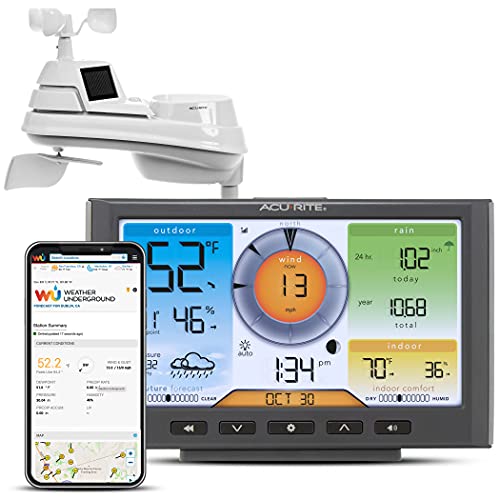
This measures the conditions acting on your garden rather than the soil itself, covering rainfall, temperature, humidity, wind speed and direction. Knowing it rained a certain amount overnight often answers the watering question outright. It is the broadest data source here.
Pros
- Rainfall data answers most watering questions
- Indoor display works without a phone
- Well proven outdoor durability
Cons
- Does not measure soil directly
- Needs an open, unobstructed mounting spot

SwitchBot Outdoor Meter
A weather sealed temperature and humidity sensor that slots into an existing SwitchBot setup and can trigger automations. It is the sensor to choose if you already run other devices from the same app. It does not measure soil moisture, so it answers frost and humidity questions rather than watering ones.
Pros
- Slots into an existing smart home
- Can trigger automations and alerts
- Simple pairing process
Cons
- No soil measurement
- Hub needed for away from home access
SensorPush HT.w Wireless Thermometer Hygrometer
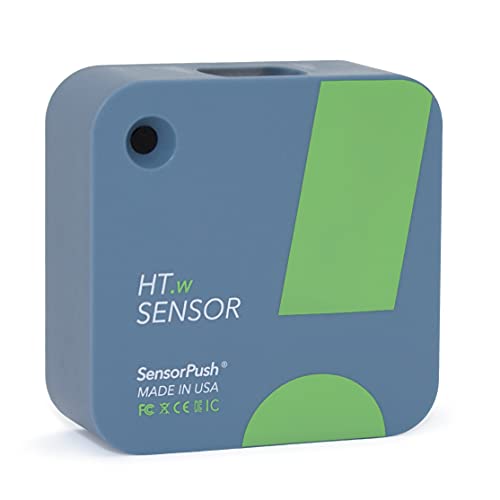
Accuracy is the selling point, which matters in a greenhouse or cold frame where a couple of degrees decides whether seedlings survive. Data logging builds a history rather than just a current reading. Range is limited unless you add the manufacturer’s gateway.
Pros
- Very accurate and well calibrated
- Detailed logging and alerts
- Compact and weather resistant
Cons
- Bluetooth range is short without a gateway
- No soil or light measurement

Govee WiFi Thermo-Hygrometer H5179
An inexpensive way to get temperature and humidity alerts from a sheltered spot such as a greenhouse or potting shed. It connects directly to Wi-Fi with no hub, which keeps setup simple. It is not designed for full outdoor exposure.
Pros
- No hub required
- Frost and heat alerts to your phone
- Very low cost to add several
Cons
- Not fully weatherproof
- Needs Wi-Fi coverage where it sits

Rachio Smart Hose Timer with Wireless Flow Meter
This measures the other half of the equation, how much water you are actually delivering, and lets you schedule or stop watering from a phone. Weather skip features use local forecasts to cancel unnecessary cycles. It complements a soil sensor rather than replacing one.
Pros
- Shows how much water you actually used
- Skips watering when rain is forecast
- Simple hose bib installation
Cons
- Requires the manufacturer’s hub
- Not a soil condition sensor
How they stack up
| # | Model | Measures | Best for | Score | Price |
|---|---|---|---|---|---|
| 1 | ECOWITT WH51 Wireless Soil Moisture Sensor | Soil moisture percentage | Best overall | 9.4 | Check price |
| 2 | Netro Whisperer Smart Plant Sensor | Moisture, temperature, sunlight | Best for individual plants | 9.2 | Check price |
| 3 | AcuRite Iris 5-in-1 Weather Station | Rain, temperature, humidity, wind | Best whole garden picture | 9.0 | Check price |
| 4 | SwitchBot Outdoor Meter | Temperature and humidity | Best for smart home users | 8.7 | Check price |
| 5 | SensorPush HT.w Wireless Thermometer Hygrometer | Temperature and humidity | Best for greenhouses | 8.5 | Check price |
| 6 | Govee WiFi Thermo-Hygrometer H5179 | Temperature and humidity | Best budget monitoring | 8.2 | Check price |
| 7 | Rachio Smart Hose Timer with Wireless Flow Meter | Water flow and usage | Best for watering control | 8.0 | Check price |
Questions worth asking
Do smart garden sensors need Wi-Fi?
Some connect directly to Wi-Fi, others use Bluetooth or a proprietary radio link to a gateway that has the network connection. Check which model you are buying, since Wi-Fi rarely reaches the far corners of a garden.
How accurate are soil moisture sensors?
Capacitive probes such as the ECOWITT WH51 give consistent relative readings that are reliable for spotting trends. Absolute percentages vary with soil type, so most gardeners learn what a dry and wet reading looks like in their own beds.
Can I leave sensors outside all winter?
Purpose built outdoor units are designed for it, though battery performance drops in cold weather. Sensors marketed as weather resistant rather than weatherproof are safer brought under cover.
How many sensors does a garden need?
One per distinct watering zone is the usual approach, since a shaded bed and a sunny border dry at completely different rates. Systems like Ecowitt that support several sensors on one gateway make this affordable.
Will a sensor water my plants automatically?
Not by itself. You need a controller or smart hose timer, such as the Rachio unit, to act on the data. Some ecosystems link their own sensors and controllers directly.
How long do the batteries last?
Long range soil sensors commonly run many months on a set of batteries. Wi-Fi connected sensors drain faster because maintaining a network connection costs more power.
Do I need a full weather station?
Only if rainfall, wind and humidity influence your gardening decisions. For pure watering decisions, a soil probe gives a more direct answer at lower cost.
Are these sensors useful for houseplants?
Individual plant sensors like the Netro Whisperer work indoors, though solar powered models need reasonable light. For a few houseplants, a simple probe is often enough.
The bottom line
The ECOWITT WH51 is the smart garden sensor we would install first, because root zone moisture is the reading that actually changes what you do, and the radio range covers a real garden. Add the Netro Whisperer where individual plants need closer attention. If you want context rather than soil data, the AcuRite Iris covers the whole picture.