Smart LED Strips Matched to Wifi, Zigbee, and Thread Homes
Govee’s RGBIC LED Strip Lights M1 leads for segmented multi-color zones and music sync. Philips Hue Lightstrip Plus wins for smart home integration through Matter and HomeKit. Nanoleaf Essentials Light Strip stands out for native Thread connectivity without a separate hub in most rooms.
Govee’s RGBIC LED Strip Lights M1 suits anyone who wants one strip showing several colors at once, using 15 segmented zones inside the Govee Home app. Its wifi and Bluetooth link needs a stable router, unlike hub-free strips such as the LIFX Z.
Choosing between wifi, Bluetooth, Zigbee, and Thread strips gets confusing fast, since each protocol changes setup steps and voice assistant support. We compared specifications, mounting styles, and app ecosystems across seven current listings to sort out which strip fits which home.
Our top picks

Govee RGBIC LED Strip Lights M1
RGBIC segmented control lets one strip display multiple colors at once across 15 zones. Wifi and Bluetooth connect to the Govee Home app for scheduling and music sync through a built in microphone. Adhesive backing with corner clips handles most ceiling and cabinet layouts.
Pros
- RGBIC segmented color on a single strip
- Govee Home app includes a large scene library
- Works with Alexa and Google Assistant
Cons
- Some advanced automations need a separate Govee hub
- Wifi module can drop connection after router changes

Philips Hue Lightstrip Plus
Pairing with the Hue Bridge unlocks Matter, Apple HomeKit, and SmartThings support alongside Alexa and Google. Cuttable, extendable sections route the strip around corners without extra connectors. Zigbee mesh keeps response times steady even with many bulbs sharing the network.
Pros
- Broadest smart home ecosystem support including Matter
- Zigbee mesh avoids wifi network congestion
- Hue Sync adds gaming and movie color matching
Cons
- Full feature set needs the separate Hue Bridge
- Costs more per foot than wifi only strips

Nanoleaf Essentials Light Strip
Thread connectivity links directly to a border router such as an Apple TV or HomePod mini, skipping a proprietary hub. Matter certification means it shows up natively in Apple Home and Google Home. Circadian lighting presets shift color temperature through the day on the adhesive strip.
Pros
- Native Thread and Matter support without a proprietary hub
- Circadian presets follow local sunrise and sunset
- Shows up directly in Apple Home and Google Home
Cons
- Fewer color zones than RGBIC competitors
- Needs a Thread border router if none is already owned
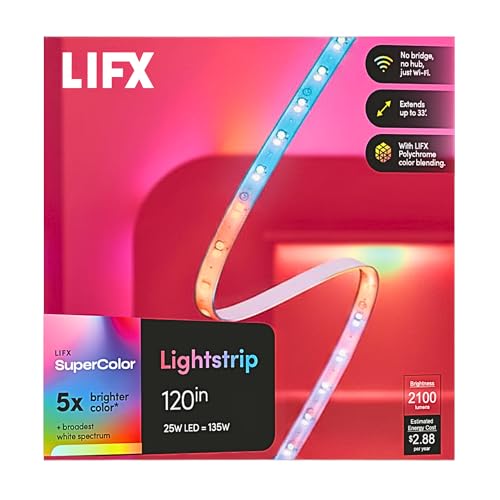
LIFX Z LED Light Strip
A direct wifi connection skips any bridge or hub, controlled through the LIFX app or Alexa and Google Assistant. Eight physical color zones let separate sections show different colors during Polychrome effects. Extension cables, sold separately, allow runs past the base 16.4 foot kit.
Pros
- No hub or bridge required for full app control
- Bright output near 1000 lumens per meter
- Polychrome effects add motion across zones
Cons
- Wifi only design can strain congested home networks
- Extension pieces sold separately for longer runs

Twinkly Line
A flexible silicone tube shapes onto walls in custom letters or patterns rather than hiding behind furniture. The Twinkly app includes a drawing effects generator that maps animations to the exact shape mounted. Bluetooth handles setup while wifi keeps it connected for remote scheduling.
Pros
- Silicone tube built for visible wall art, not just concealment
- Custom animation effects mapped to the mounted shape
- Simple Bluetooth pairing before switching to wifi
Cons
- Shorter base length than most ceiling or cabinet strips
- Limited to Twinkly’s own app without Matter support

Lepro LED Strip Lights Smart Wifi
A single 32.8 foot roll costs less per foot than RGBIC competitors. Preset scenes and music sync run through the Lepro app, using the phone microphone instead of a built in one. Strip sections cut every 3 LEDs for tighter corner and cabinet fitting.
Pros
- Lower price per foot than most RGBIC strips
- Full 32.8 foot roll covers larger rooms in one piece
- Alexa and Google Assistant voice control included
Cons
- Single color per strip instead of segmented RGBIC zones
- Music sync relies on the phone microphone, not a built in one

Govee DreamView TV RGBIC LED Backlight
A small camera mounted above the TV reads on screen colors and mirrors them across the backlight in real time. RGBIC zones show gradient transitions during fast scene changes instead of a single flat color. Adhesive clips route the strip around bezels on 55 to 65 inch screens.
Pros
- Camera based real time color matching for movies and games
- RGBIC zones show gradients during fast scene changes
- Adhesive clips sized for common TV bezel widths
Cons
- Camera needs careful positioning above the TV for accurate reading
- Sized specifically for 55 to 65 inch screens, poor fit elsewhere
Before you buy
What to check before buying a smart LED strip Connection protocol matters more than color count. Wifi strips connect directly to a router but can crowd a busy network, while Zigbee and Thread strips route through a hub or border router for steadier response times. Segmented RGBIC strips show several colors on one run, where standard RGB strips show a single color at a time. Cutting points and adhesive strength against the mounting surface matter before ordering.
Which strip works best for renters and small apartments? Hub free options like the LIFX Z or Govee’s M1 suit renters who want full app control without extra hardware. Adhesive backing pulls away cleanly from most painted walls and cabinets when it is time to move. Shorter runs, such as the 6.5 foot Twinkly Line, fit accent walls in smaller rooms without leftover strip to hide.
Best options for a home theater or gaming setup Camera synced kits like Govee’s DreamView TV read on screen colors and mirror them across the backlight during movies and games. Hue Lightstrip Plus offers a similar effect through Hue Sync software paired with the Hue Bridge. Neither introduces the flicker some cheaper sync boxes add during fast action scenes.
What happens when wifi gets crowded with strip lights? Adding several wifi strips alongside smart plugs and cameras can slow a router, especially on older 2.4GHz only networks. Zigbee based Hue Lightstrip Plus and Thread based Nanoleaf Essentials avoid this by routing through their own mesh instead of home wifi. Anyone planning multiple strips across a house should weigh Zigbee or Thread options before adding more wifi devices to one router.
The lineup, side by side
| # | Model | Length | Best for | Score | Price |
|---|---|---|---|---|---|
| 1 | Govee RGBIC LED Strip Lights M1 | 65.6 feet across two 32.8 foot rolls | Best overall | 9.4 | Check price |
| 2 | Philips Hue Lightstrip Plus | 6.6 feet, extendable to 32.8 feet | Best for smart home integration | 9.1 | Check price |
| 3 | Nanoleaf Essentials Light Strip | 16.4 feet starter kit | Best for Matter and Thread compatibility | 8.8 | Check price |
| 4 | LIFX Z LED Light Strip | 16.4 feet base kit, extendable to 32.8 feet | Best for hub free wifi setup | 8.5 | Check price |
| 5 | Twinkly Line | 6.5 feet flexible silicone line | Best for wall art and design accents | 8.3 | Check price |
| 6 | Lepro LED Strip Lights Smart Wifi | 32.8 feet single roll | Best budget | 8.1 | Check price |
| 7 | Govee DreamView TV RGBIC LED Backlight | 55 to 65 inch screens | Best for TV and gaming backlight | 8.0 | Check price |
Good to know
What is the difference between RGB and RGBIC LED strips?
Standard RGB strips display one color across the entire run at a time. RGBIC strips, used in Govee’s M1 and DreamView kits, divide the strip into independent zones so different sections show different colors at once.
Do smart LED light strips work without wifi?
Twinkly Line and Nanoleaf Essentials pair over Bluetooth or Thread for local control, though remote scheduling and voice assistant features typically still need an internet connection at some point.
Which smart LED strip works best for TV backlighting?
Govee’s DreamView TV kit uses a camera to match backlight colors to on screen content in real time and is sized for 55 to 65 inch screens. Hue Lightstrip Plus offers a similar effect through Hue Sync for owners already using Philips Hue.
Can Govee and Philips Hue strips work together in one app?
Not natively. Each brand runs its own app, though both can appear together inside a third party smart home app like Google Home or Apple Home once Matter or a compatible skill is set up.
Is Matter compatibility important for LED light strips?
Matter lets a strip work across Apple Home, Google Home, and Amazon ecosystems without separate brand apps for basic control. Hue Lightstrip Plus and Nanoleaf Essentials both support Matter, while Govee and Lepro rely on their own apps plus Alexa or Google Assistant skills.
How long do smart LED light strips last?
Manufacturer listings commonly rate LED strips in this category for tens of thousands of hours of use. Actual lifespan depends on daily usage hours, brightness settings, and adhesive quality on the mounting surface.
What is the best smart LED strip for small apartments?
Hub free strips such as the LIFX Z or Govee’s M1 suit apartments since they need no extra bridge hardware, and the adhesive removes cleanly when moving out.
Philips Hue Lightstrip vs Govee RGBIC, which is better?
Hue Lightstrip Plus wins on smart home ecosystem breadth through Matter, HomeKit, and SmartThings, but needs the separate Hue Bridge for full features. Govee’s RGBIC M1 costs less per foot and adds more segmented color zones, but leans on wifi and its own app rather than a broad ecosystem.
The verdict
Govee’s RGBIC LED Strip Lights M1 remains the strongest pick for most rooms, pairing segmented color zones with wifi and Bluetooth control at a lower cost than Hue. Buyers already invested in Apple Home, Google Home, or Matter should choose the Nanoleaf Essentials Light Strip instead, since it skips Govee’s proprietary hub requirement for advanced scenes. Home theater owners should skip general purpose strips entirely and go with the Govee DreamView TV kit for camera based color matching.


