Smart Soil Moisture Meters for Every Plant Parent
The XLUX T10 is our top pick for most gardeners because it requires no batteries, offers instant readings, and is built to last. Its main limitation is that it only measures moisture, not pH or light, but for simple watering guidance it is hard to beat.
Overwatering kills more houseplants than underwatering. A reliable soil moisture meter takes the guesswork out of your watering routine. With one simple probe, you can know exactly when your plants need a drink.
We compared the most popular models on the market, from budget-friendly analog tools to high-tech sensors. Our goal is to help you choose the right one for your indoor jungle or outdoor garden.
How to choose
The best picks, ranked
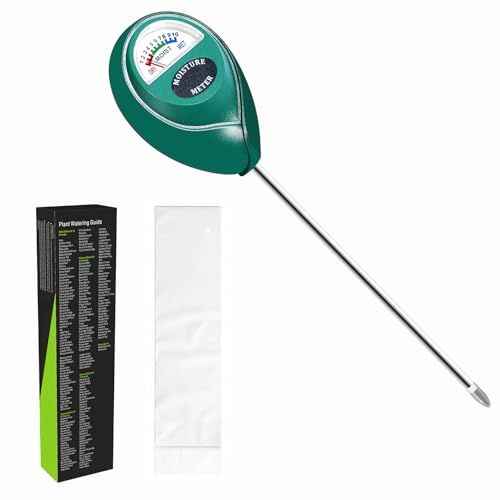
XLUX T10 Soil Moisture Meter
The XLUX T10 is a no-frills analog meter that gives instant readings without batteries. Its single probe is long enough for deep pots, and the color-coded dial makes it easy to read. Owners report it lasts for years with proper care.
Pros
- No batteries required
- Durable and simple to use
- Accurate for most houseplants
Cons
- No pH or light measurement
- Not suitable for very hard soil
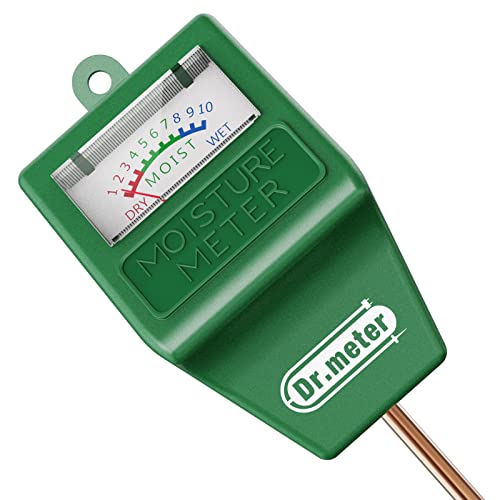
Dr.meter Soil Moisture Meter
The Dr.meter meter features a 10-inch probe that reaches deep into large pots. Its single-probe design minimizes soil disturbance. The analog display is clear, and the moisture range is marked with a color scale for quick checks.
Pros
- Long probe for deep pots
- No batteries needed
- Simple one-touch operation
Cons
- No pH or light sensor
- Probe can bend if forced into hard soil

KETOTEK Soil Moisture Meter
The KETOTEK digital meter provides precise moisture, pH, and light readings on an easy-to-read LCD screen. It switches between modes with a button, and the probe is sturdy enough for outdoor use. Gardeners appreciate the backlit display for low-light conditions.
Pros
- Three-in-one measurement
- Backlit screen
- Accurate digital readout
Cons
- Requires batteries (included)
- pH accuracy can drift over time

Luster Leaf 1820 Rapitest Digital Moisture Meter
This Luster Leaf meter offers a large dial with clear moisture levels from dry to wet. It is a simple, no-frills tool that gets the job done. The probe is long enough for most potted plants, and the price is easy on the wallet.
Pros
- Very affordable
- Simple to read
- Works well for general use
Cons
- No extra features
- Shorter probe for larger pots

Sonkir Soil pH Meter, MS02
The Sonkir MS02 measures moisture, pH, and sunlight level with an analog dial. It is popular for indoor plants and outdoor gardens. The probe is double-pronged, which can disturb soil more but provides stable readings.
Pros
- Three functions in one
- No batteries required
- Good for both indoor and outdoor
Cons
- Dual probe may harm delicate roots
- pH readings are not highly precise
iGrowtek Soil Moisture Meter
The iGrowtek is a smart sensor that connects to your phone via Bluetooth. It tracks moisture, temperature, and light, and sends alerts when your plants need water. It is small enough to stay in the pot permanently, but it requires charging.
Pros
- Real-time data on your phone
- Tracks plant environment over time
- Sends watering reminders
Cons
- Needs charging
- More expensive than analog meters
Gardener’s Supply Company Moisture Meter
This rugged meter from Gardener’s Supply is designed for outdoor use with a long 15-inch probe. The analog dial has a clear moisture scale, and the probe is strong enough to penetrate garden soil. It is a favorite among vegetable growers.
Pros
- Long probe for deep soil
- Sturdy construction
- Ideal for raised beds and ground
Cons
- Not suitable for small pots
- No pH or light measurement
How they compare
| # | Model | Type | Best for | Score | Price |
|---|---|---|---|---|---|
| 1 | XLUX T10 Soil Moisture Meter | Analog (no battery needed) | Most gardeners | 9.4 | Check price |
| 2 | Dr.meter Soil Moisture Meter | Analog (no battery needed) | Indoor plant lovers | 9.1 | Check price |
| 3 | KETOTEK Soil Moisture Meter | Digital | Digital accuracy | 9.0 | Check price |
| 4 | Luster Leaf 1820 Rapitest Digital Moisture Meter | Analog | Value seekers | 8.7 | Check price |
| 5 | Sonkir Soil pH Meter, MS02 | Analog | Three-in-one convenience | 8.9 | Check price |
| 6 | iGrowtek Soil Moisture Meter | Smart (Bluetooth) | Tech-savvy gardeners | 8.5 | Check price |
| 7 | Gardener’s Supply Company Moisture Meter | Analog | Outdoor gardens | 8.4 | Check price |
Good to know
How do I use a soil moisture meter?
Insert the probe into the soil near the plant’s roots, about halfway down the pot. Wait for the needle to stop moving, then read the moisture level. For most houseplants, a reading of 3 to 4 indicates it’s time to water. Clean the probe after each use.
Do soil moisture meters work in all soil types?
Yes, but readings can be less accurate in very sandy or very clay-heavy soils. For best results, test in multiple spots and get to know how your specific soil behaves. Organic soils with high peat content may hold more water and give higher readings.
Can I leave the meter in the soil permanently?
It is not recommended to leave analog meters in the soil for long periods because the probe can corrode. Some smart sensors are designed for continuous placement, but they are the exception. For regular checks, insert, read, and remove.
What is the ideal moisture level for most houseplants?
Most common houseplants prefer a moisture reading between 4 and 6 on an analog scale. Succulents and cacti like drier soil, closer to 2 or 3. Plants like ferns and peace lilies prefer consistently moist soil, around 6 to 7. Always check specific plant care guides.
Do I need a pH meter as well?
Not necessarily. Many soil moisture meters also measure pH, but for most gardeners, pH is less critical. If you grow acid-loving plants like blueberries or azaleas, a pH reading can be helpful. Otherwise, a simple moisture meter may suffice.
How accurate are cheap soil moisture meters?
Budget analog meters are accurate enough for basic watering decisions. They give a general idea of moisture levels, but not exact percentages. For more precise readings, invest in a digital meter. However, even the simplest meter is better than guessing.
Can soil moisture meters be used for outdoor gardens?
Yes, many meters are suitable for outdoor use. Look for models with a longer probe, such as 8 inches or more, to reach the root zone of vegetables and flowers. Some meters are marketed specifically for outdoor use and have more durable construction.
Why does my meter always read dry?
If your meter always shows dry, the probe may not be making good contact with the soil. Try moistening the soil before testing, or push the probe in deeper. Also, clean the probe to ensure proper electrical conductivity. If the problem persists, the meter may be faulty.
What is the difference between a moisture meter and a moisture sensor?
A meter is a handheld device you insert manually for a reading. A sensor is often left in the soil and sends data to a display or smartphone. Sensors are more convenient for continuous monitoring but are typically more expensive and require power.
Are there any plants that should not be tested with a moisture meter?
Plants with very delicate root systems, like some orchids, can be damaged by repeated probing. In such cases, use a meter with a single thin probe and insert it gently near the edge of the pot. Alternatively, use a wooden skewer or lift the pot to judge moisture.
The bottom line
For most gardeners, the XLUX T10 offers the best balance of simplicity, durability, and accuracy. It is especially great for houseplants and requires no batteries. If you want digital precision and extra features like pH and light, the KETOTEK is a solid upgrade. For those who want the latest smart technology, the iGrowtek provides real-time data but at a higher cost. Choose the meter that matches your gardening style and budget.