Solar Motion Lights That Still Trigger After Dark in Winter
For most driveways and yards, the URPOWER 2-in-1 balances brightness and price. The Mpow Solar Motion Sensor Light wins on value. The Gemwon 214 LED covers the widest area for larger properties needing longer range.
The URPOWER 2-in-1 Solar Motion Light suits most homeowners, pairing a 2200mAh battery with an adjustable panel angle. Mpow costs less for buyers on a tighter budget. Larger yards reach farther with the Gemwon 214 LED.
Panel size, battery chemistry and sensor placement all interact, so a unit that thrives on a sunny porch can underperform on a shaded wall. We compared listed lumens, detection angles and IP ratings against owner feedback to separate reliable performers from units that dim fast.
How to pick the right one
What to Look for in a Solar Motion Sensor Light Lumen output, sensor range, and battery capacity determine how well a light performs after dark. A unit rated above 800 lumens with a detachable lithium battery tends to outlast cheaper built-in packs. Check the IP rating too, since IP44 units should stay under an overhang while IP65 or higher tolerates direct rain.
How Does Solar Panel Placement Affect Performance? A built-in panel only works well facing true south in the northern hemisphere with minimal shade. Models with a separate panel on a cable, like the URPOWER, let installers mount the panel in full sun while the light sits under an eave. Winter days with fewer sun hours reduce charge across every brand, so northern buyers should favor larger panels or bigger battery capacity.
Best Solar Motion Lights for Large Yards and Driveways Wider properties need either a longer sensor range or a wider detection angle to avoid dead zones near the edge of a driveway. The Gemwon 214 LED’s 270-degree sensor and high lumen output suit these open spaces better than compact single-panel units. Pole-mounted options like the Sunforce 82156 also work well when there is no wall near the area needing coverage.
Solar Motion Lights for Small Spaces and Tight Budgets Compact porches, side doors, and shed entrances rarely need a 270-degree sensor or maximum lumen output. A single-piece unit like the Mpow or Baxia Technology model installs faster and costs less, matching lower-traffic areas. For metal doors or gutters, a magnetic-mount option such as the JACKYLED avoids drilling altogether.
The shortlist, ranked
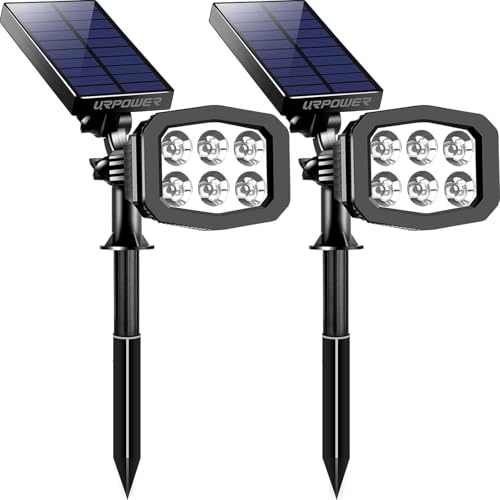
URPOWER 2-in-1 Solar Motion Sensor Light
This fixture switches between a dim always-on mode and a bright motion-triggered burst, drawing from a detachable 2200mAh battery pack. A separate solar panel on a 16-foot cable lets installers mount the panel in direct sun while the light sits in shade.
Pros
- Detachable battery pack simplifies replacement
- Separate solar panel allows flexible placement
- Three-mode switch for dim, motion, or off
Cons
- Mounting screws feel thin for masonry walls
- Panel cable can fray if not weatherproofed
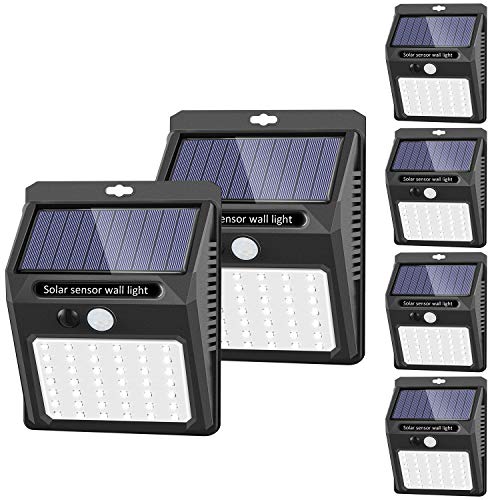
Mpow Solar Motion Sensor Light
Mpow packs 30 LEDs into a single wall-mounted unit without a separate panel, keeping installation to one drilled hole. A built-in 1200mAh lithium battery charges through an integrated panel on the light’s face.
Pros
- Single-piece design installs in minutes
- Lower price point than two-panel kits
- Adjustable head tilts 90 degrees
Cons
- Built-in battery cannot be swapped
- IP44 rating means it should avoid direct rain exposure

Gemwon 214 LED Solar Motion Light
214 LEDs spread across a wide panel cover driveways and open lawns that smaller units leave dim at the edges. Three adjustable panels let installers aim light and sensor independently toward the widest approach path.
Pros
- 270-degree sensor catches motion from multiple directions
- High lumen output suits large driveways
- Three-panel design allows independent aiming
Cons
- Larger housing looks bulky on smaller porches
- Runs down faster on cloudy weeks without a big panel

LITOM Solar Motion Sensor Light
An arc-shaped panel spreads 42 LEDs across a 270-degree field, useful for corners where two walls meet. IPX7 waterproofing lets it handle direct rain better than many flat-panel competitors.
Pros
- IPX7 rating handles heavy rain
- Arc shape lights corners evenly
- Three working modes for different needs
Cons
- Curved shape complicates flush wall mounting
- Motion sensitivity dial is not clearly labeled

Sunforce 82156 Solar Motion Light
Sunforce ships with a freestanding pole mount, suited to sheds, barns, or fence lines far from any wall. A larger 6V solar panel compensates for locations with only partial daily sun.
Pros
- Pole mount works away from buildings
- Long 40-foot detection range
- Larger panel tolerates partial shade
Cons
- Lead-acid battery is heavier than lithium packs
- Halogen bulb output feels dimmer than LED rivals
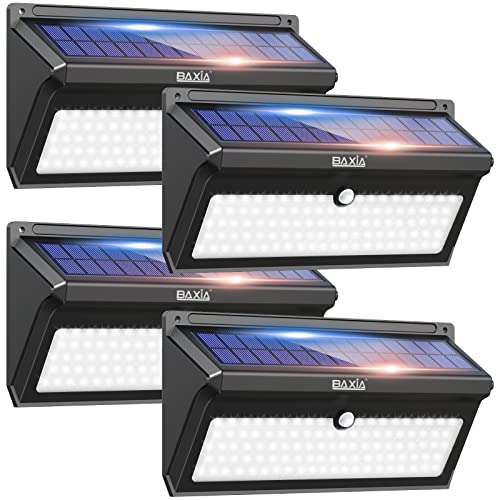
Baxia Technology Solar Motion Sensor Light
Baxia keeps things simple with a compact single-unit design and 36 LEDs, aimed at buyers wanting basic security lighting without extra features. The panel and light sit in one housing for a five-minute install.
Pros
- Lowest price among compared units
- Simple one-piece mounting
- IP65 rated for outdoor exposure
Cons
- Shorter 10-foot sensor range limits early detection
- Lower lumen count struggles in large open areas

JACKYLED Solar Motion Sensor Light
A narrow bar shape fits under eaves and garage overhangs where round fixtures look out of place. A magnetic base variant lets it stick to metal doors or gutters without drilling.
Pros
- Slim profile fits tight eave spaces
- Magnetic mount option needs no screws
- Compact size suits small sheds
Cons
- Lower lumens than full-size competitors
- Small panel charges slowly in winter
How they stack up
| # | Model | Lumens | Best for | Score | Price |
|---|---|---|---|---|---|
| 1 | URPOWER 2-in-1 Solar Motion Sensor Light | 1000 (motion mode) | Best overall | 9.4 | Check price |
| 2 | Mpow Solar Motion Sensor Light | 800 | Best value | 9.0 | Check price |
| 3 | Gemwon 214 LED Solar Motion Light | 2000 | Best for large yards | 8.9 | Check price |
| 4 | LITOM Solar Motion Sensor Light | 1200 | Best for wide-angle coverage | 8.7 | Check price |
| 5 | Sunforce 82156 Solar Motion Light | 80 (halogen equivalent) | Best for remote locations | 8.5 | Check price |
| 6 | Baxia Technology Solar Motion Sensor Light | 600 | Best budget | 8.2 | Check price |
| 7 | JACKYLED Solar Motion Sensor Light | 500 | Best for garages and sheds | 8.0 | Check price |
Questions worth asking
How many lumens do I need for a solar motion sensor light?
Small porches and side doors work fine with 500 to 800 lumens, while driveways and large yards benefit from 1000 lumens or more. Higher lumen counts draw more from the battery, so pair them with a larger panel or detachable pack.
Do solar motion lights work in winter?
They still work, but shorter days and lower sun angles mean less daily charge. Owners in northern climates report dimmer output or shorter run times from November through February, especially with built-in panels that cannot be repositioned.
What is a good detection range for a motion sensor light?
Most residential units detect motion between 10 and 26 feet, with a 120-degree field being standard. Wider 180 to 270-degree sensors catch movement from multiple directions, useful for corners or open driveways.
Can solar motion lights be mounted without drilling?
Some models, like the JACKYLED, offer a magnetic base that attaches to metal surfaces such as gutters or garage doors. Most others require screws through a bracket, though adhesive tape works as a temporary alternative on smooth walls.
Are solar motion lights waterproof?
Ratings vary by model. IP65 units handle direct rain and dust, while IP44 units suit a covered porch better. Checking the specific IP rating before buying prevents water damage in exposed locations.
Solar motion lights vs wired security lights, which is better?
Solar units skip wiring and electrician costs, making them faster to install anywhere with sun exposure. Wired lights offer more consistent brightness regardless of weather but need an outlet or professional installation.
How long does the battery last on a solar motion light?
Detachable lithium batteries in the 2200mAh range typically run several nights on a full charge, even with limited sun. Smaller built-in batteries around 1000 to 1200mAh may need daily sun exposure to stay charged.
Is a detachable battery better than a built-in one?
Detachable batteries, like the pack used in the URPOWER, can be replaced after a few years of degraded capacity. Built-in batteries are simpler to install but require replacing the entire fixture once the battery wears out.
Best solar motion light for a shaded yard?
A model with a separate panel on a cable, such as the URPOWER or LITOM, works better in shade since the panel can be mounted away from the light in direct sun.
Our take
Most homes get the best balance of brightness and battery life from the URPOWER 2-in-1, thanks to its detachable battery and separate solar panel. Buyers on a tighter budget can rely on the Mpow without giving up core motion-sensing performance, while larger properties benefit from the Gemwon 214 LED’s wider coverage.