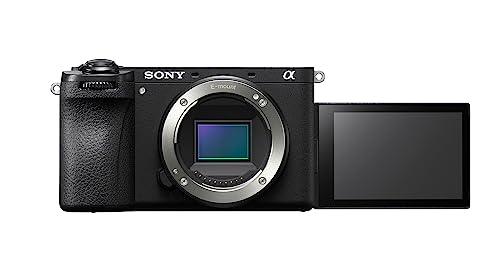
Sony Alpha 1 Review: One Body to Do Everything?
The Sony Alpha 1 is a rare do-everything flagship, combining 50MP resolution, 30 frames per second bursts, 8K video and a stacked sensor that all but eliminates rolling shutter. It is expensive and its menus are dense, but few cameras match its blend of speed and detail. The Nikon Z9 offers a bigger body with a built-in grip and no shutter, while the Canon EOS R5 Mark II is a lighter, lower-cost alternative that covers most of the same ground.
The Sony Alpha 1 is Sony’s no-compromise flagship, uniting 50MP resolution, 30fps bursts and 8K video in one stacked-sensor body, which makes it one of the few cameras that genuinely handles sports, wildlife, studio and high-end video without choosing a specialty.
Flagships usually force a trade between speed and resolution, but the Alpha 1 set out to erase that line. Years on it remains a benchmark, though rivals from Nikon and Canon have arrived with their own flagship tricks. The question is whether the Alpha 1’s all-round brilliance still justifies its price, or whether a more focused rival fits your work better.
The shortlist, ranked

Sony Alpha 1
The Sony Alpha 1 is built for professionals and demanding enthusiasts who refuse to own separate cameras for speed and resolution. Its standout strengths are a 50MP stacked sensor that shoots 30 frames per second with almost no rolling shutter, 8K video, and a bright 9.44 million dot blackout-free viewfinder that makes tracking action effortless. The real weaknesses are the high price, a dense menu system that takes time to master and a body some find small for large telephoto lenses. For those who need one camera to do everything at the top level, nothing else quite matches it.
Pros
- 50MP resolution with 30fps speed
- Minimal rolling shutter and 8K video
- Bright, blackout-free viewfinder
Cons
- Very high price
- Dense menus and compact grip for big lenses

Nikon Z9
The Z9 is Nikon’s flagship and the Alpha 1’s closest all-rounder, with a 45MP stacked sensor, no mechanical shutter and a large integrated vertical grip. Compared with the Sony it is bigger and heavier but offers pro ergonomics, exceptional battery life and 8K video, making it a favourite for sports and wildlife shooters who prefer a built-in grip. Its size is the main reason buyers choose the smaller Alpha 1 instead.
Pros
- Rugged pro body with built-in grip
- No mechanical shutter
- Outstanding battery life
Cons
- Large and heavy
- Lower resolution than the Alpha 1

Canon EOS R5 Mark II
The R5 Mark II delivers much of the Alpha 1’s do-everything appeal for less money, with a 45MP stacked sensor, fast bursts and 8K video in a lighter body. It cross-shops with the Alpha 1 for hybrid shooters who want flagship features without the flagship price. Against the Sony it offers a friendlier menu and Canon’s colour, though sustained high-speed shooting can raise heat management concerns.
Pros
- Flagship features at a lower price
- Lighter than the Nikon Z9
- Approachable menus and colour
Cons
- Heat limits in long high-speed use
- Lower-resolution viewfinder than the Alpha 1

Sony A9 III
The A9 III is Sony’s speed specialist, built around a global-shutter sensor that eliminates rolling shutter entirely and shoots up to 120 frames per second. It cross-shops with the Alpha 1 for sports and action pros who value freezing motion over resolution. The trade-off is its lower 24MP count, so photographers who also need large prints or heavy cropping still lean toward the Alpha 1.
Pros
- Global shutter with zero distortion
- Blistering 120fps bursts
- Flash sync at any shutter speed
Cons
- Lower 24MP resolution
- Very high price

Nikon Z8
The Z8 packs almost all of the Z9’s flagship technology, including the same 45MP stacked sensor and 8K video, into a smaller body without the built-in grip. It cross-shops with the Alpha 1 for buyers who want top-tier speed and detail in a more travel-friendly size. Against the Sony it trades a little resolution for lower cost and Nikon’s ergonomics, and it shares the Z9’s shutterless design.
Pros
- Z9 features in a smaller body
- No mechanical shutter
- Lower cost than top flagships
Cons
- Battery life shorter than the Z9
- Slightly lower resolution than the Alpha 1

Sony A7R V
The A7R V pushes resolution to 61MP for landscape, studio and commercial work where detail matters most. It shares the Alpha 1’s E-mount and AI autofocus but is not built for high-speed action, with slower bursts and a non-stacked sensor. It cross-shops for photographers who prioritise outright detail over the Alpha 1’s speed and 8K video capabilities.
Pros
- Class-leading 61MP resolution
- Excellent AI autofocus
- Superb detail for landscape and studio
Cons
- Slower bursts than the Alpha 1
- Non-stacked sensor shows more rolling shutter

Canon EOS R3
The EOS R3 is Canon’s speed-focused flagship with a 24MP stacked sensor, integrated vertical grip and eye-control autofocus that places the focus point where you look. It cross-shops with the Alpha 1 for sports and news pros who want a rugged grip-in body. Against the Sony it offers lower resolution but strong speed and ergonomics, making the choice largely about resolution needs and system preference.
Pros
- Rugged body with built-in grip
- Eye-control autofocus
- Fast 30fps shooting
Cons
- Lower 24MP resolution
- Large and heavy
How they compare
| # | Model | Sensor | Best for | Score | Price |
|---|---|---|---|---|---|
| 1 | Sony Alpha 1 | Full-frame 50MP stacked Exmor RS | The camera reviewed | 9.6 | Check price |
| 2 | Nikon Z9 | Full-frame 45MP stacked CMOS | Best for durability and grip | 9.5 | Check price |
| 3 | Canon EOS R5 Mark II | Full-frame 45MP stacked CMOS | Best value flagship alternative | 9.4 | Check price |
| 4 | Sony A9 III | Full-frame 24MP global-shutter CMOS | Best for pure speed | 9.3 | Check price |
| 5 | Nikon Z8 | Full-frame 45MP stacked CMOS | Best flagship features in a smaller body | 9.4 | Check price |
| 6 | Sony A7R V | Full-frame 61MP CMOS | Best for maximum resolution | 9.3 | Check price |
| 7 | Canon EOS R3 | Full-frame 24MP stacked CMOS | Best for pro sports ergonomics | 9.2 | Check price |
Before you buy
Who should buy the Sony Alpha 1 The Alpha 1 is for professionals and serious enthusiasts who need one body to cover many disciplines at the highest level, from sports and wildlife to weddings, studio and 8K video. It is ideal if you cannot justify separate speed and resolution cameras. It is overkill, and hard to justify on price, if you shoot a single genre, where a focused tool like the A9 III for speed or the A7R V for resolution makes more sense.
Key features that matter Three things set the Alpha 1 apart. Its 50MP stacked sensor reads out fast enough to shoot 30 frames per second while nearly eliminating rolling shutter, so distortion and banding rarely appear. It records 8K video for the most demanding productions. And its 9.44 million dot blackout-free viewfinder lets you track fast subjects without interruption, which is a genuine advantage for action photography.
How it compares to rivals Against the Nikon Z9 and Canon EOS R3, the Alpha 1 offers higher resolution in a smaller body but gives up an integrated grip and some battery life. The Canon EOS R5 Mark II and Nikon Z8 deliver most of its capability for less. Within Sony’s lineup, the A9 III trades resolution for a global shutter and 120fps, while the A7R V trades speed for 61MP of detail.
Verdict on value and system The Alpha 1 sits at the top of Sony’s price ladder, and its value depends on whether you truly need every strength at once. Its saving grace is the mature E-mount system, with an enormous range of native lenses from wide primes to long telephotos. If you already shoot Sony and want the ultimate all-rounder, it is the clear pick; if budget is a concern, the R5 Mark II or Z8 cover most needs for less.
Good to know
Is the Sony Alpha 1 worth the high price?
For professionals who need one body to handle speed, resolution and 8K video at the top level, yes. It removes the usual compromise between high frame rates and high megapixels. If you shoot a single genre, a focused camera like the A9 III for speed or A7R V for resolution offers better value.
Does the Sony Alpha 1 shoot 8K video?
Yes. The Alpha 1 records 8K at up to 30p and 4K at up to 120p, both in 10-bit, making it capable for high-end video as well as stills. Long 8K clips generate heat, so plan recording times and airflow for extended shoots.
How fast can the Alpha 1 shoot?
It shoots up to 30 frames per second using the electronic shutter with full autofocus and auto-exposure tracking. Its stacked sensor reads out quickly enough that rolling shutter distortion is minimal, which is why it works so well for fast sports and wildlife.
How does the Alpha 1 compare to the Nikon Z9?
The Alpha 1 has higher resolution at 50MP versus 45MP and a smaller, lighter body. The Z9 counters with an integrated vertical grip, longer battery life and a rugged pro build. The choice often comes down to whether you prefer Sony’s compact form or Nikon’s grip-in ergonomics and system.
How does the Alpha 1 compare to the Canon EOS R5 Mark II?
The R5 Mark II offers similar flagship features, including a 45MP stacked sensor, 30fps bursts and 8K video, for less money. The Alpha 1 has higher resolution and a brighter viewfinder, while the Canon is lighter with friendlier menus. Heavy sustained high-speed shooting can raise heat concerns on the Canon.
Does the Sony Alpha 1 have in-body stabilisation?
Yes, it includes 5-axis in-body image stabilisation, which steadies handheld stills and helps smooth video. Combined with stabilised lenses it allows sharp results at slower shutter speeds, useful across the wide range of work the camera targets.
How many card slots does the Alpha 1 have?
It has two card slots that each accept CFexpress Type A and UHS-II SD cards. That dual-format flexibility lets professionals back up in camera and use the fast CFexpress cards for high-speed bursts and 8K video, or fall back to SD when needed.
Is the Sony Alpha 1 good for wildlife and sports?
Yes, it is one of the best options, combining 30fps bursts, a blackout-free viewfinder and AI subject-recognition autofocus that tracks animals, birds and vehicles. Its 50MP resolution also allows heavy cropping. Buyers who want a built-in grip for big lenses may also consider the Nikon Z9 or Canon EOS R3.
Our pick
The Sony Alpha 1 remains a benchmark do-everything flagship, uniting 50MP resolution, 30fps bursts, 8K video and a class-leading viewfinder in one body, with only its high price and dense menus counting against it. If you want an integrated grip and rugged build, the Nikon Z9 is the alternative, while the Canon EOS R5 Mark II delivers most of the same capability for less.