Fujifilm X-T5 Review: The Stills First APS-C Camera
The Fujifilm X-T5 is the enthusiast photographer’s camera in Fujifilm’s lineup, pairing a 40 megapixel APS-C sensor with tactile shutter, ISO and exposure dials, in body stabilization and Fujifilm’s beloved film simulations in a compact weather sealed body. It is worth it for travel, street, portrait and landscape shooters who want a stills focused camera with character, but the pixel dense sensor demands good lenses and the video and autofocus trail the best rivals. If you want the same sensor with a video and vlog focus consider the Fujifilm X-S20 or X-H2, and if you shoot mostly action the Sony a6700 tracks better.
The Fujifilm X-T5 is the camera to buy if you love photography as a tactile craft and want a stills focused APS-C body with 40 megapixels of detail, physical dials and Fujifilm’s film simulations that get colours right in camera. It is not the best pick if video or fast action tracking is your priority, where the X-H2 or Sony a6700 do more. Owners describe it as a camera that makes them shoot more, though the dense sensor rewards good lenses and careful technique to see its full detail.
The X-T5 matters because Fujifilm returned to a stills first design after the video leaning X-T4, adding a three way tilting screen photographers prefer, keeping the classic dial layout and pairing it with the 40 megapixel X-Trans 5 sensor. That gives class leading APS-C resolution, roughly seven stops of in body stabilization and excellent colour, in a body lighter and cheaper than full frame rivals. The trade off is that 40 megapixels on APS-C is demanding on lenses and technique, and autofocus and video lag the leaders, so this review weighs its stills strengths against those limits.
Our top picks
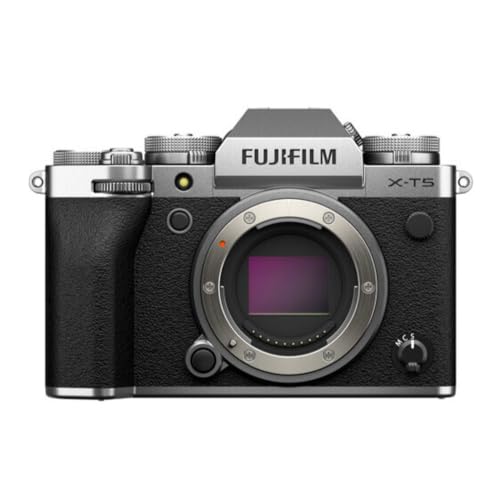
Fujifilm X-T5
The X-T5 is made for enthusiast and travel photographers who want a compact, weather sealed stills camera with real dials and outstanding colour straight out of camera, and for that shooter it is a joy to use. Its 40 megapixel X-Trans 5 sensor resolves more detail than any other APS-C camera, in body stabilization gives around seven stops, and the film simulations deliver JPEGs many people never edit. The weaknesses are that the dense sensor needs sharp lenses and steady technique to shine, autofocus tracking still trails Sony and Canon on erratic action, and while video is capable it is not the camera’s focus. It rewards deliberate shooting more than run and gun.
Pros
- 40 megapixels, the most detail in APS-C
- Tactile shutter, ISO and exposure dials
- Excellent film simulations and in body stabilization
Cons
- Dense sensor demands sharp lenses and technique
- Autofocus tracking trails Sony and Canon on action

Fujifilm X-H2
The X-H2 shares the same 40 megapixel sensor but wraps it in a deeper DSLR style grip with a fully articulating screen, a top status display and stronger video including 8K up to 30p. It suits photographers who want the same resolution but shoot more video or prefer a chunkier grip and command dials over the retro layout. It is larger and drops the dedicated shutter and ISO dials of the X-T5.
Pros
- Same 40 megapixels with 8K video
- Deeper grip and fully articulating screen
- Top status display for run and gun
Cons
- Larger and heavier than the X-T5
- Drops the classic dedicated dials

Fujifilm X-S20
The X-S20 uses the previous 26 megapixel sensor in a compact body with a mode dial, deep grip, big battery and a fully articulating screen aimed at hybrid shooters and vloggers. Resolution is lower than the X-T5 but autofocus, battery life and video ergonomics are strong, and it costs noticeably less. It is the natural choice for someone who wants Fujifilm colour with a video lean and a friendlier price.
Pros
- Excellent value with strong autofocus
- Big battery and articulating screen for video
- Compact and beginner friendly
Cons
- 26 megapixels resolves less than the X-T5
- Mode dial rather than classic exposure dials
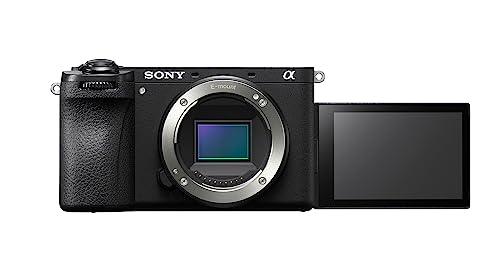
Sony a6700
The a6700 pairs a 26 megapixel APS-C sensor with Sony’s class leading subject recognition autofocus, making it the better pick for erratic action, wildlife and video subjects that need reliable tracking. It has in body stabilization and strong 4K video in a compact body. Resolution and the tactile shooting experience trail the X-T5, and its colour science is more neutral than Fujifilm’s film simulations.
Pros
- Class leading subject tracking autofocus
- Strong 4K video with good rolling shutter control
- Compact with a large native lens range
Cons
- 26 megapixels resolves less than the X-T5
- Neutral colour lacks Fujifilm’s film character

Fujifilm X-T50
The X-T50 puts the same 40 megapixel sensor and in body stabilization into a smaller, lighter and cheaper body, adding a dedicated film simulation dial for quick colour changes. It suits photographers who want the X-T5’s detail in the most portable form and do not need the twin card slots, larger viewfinder or full weather sealing. Handling is more compact and the grip is shallower.
Pros
- Same 40 megapixel detail in a smaller body
- Dedicated film simulation dial
- Lighter and cheaper than the X-T5
Cons
- Single card slot and smaller viewfinder
- Shallower grip and lighter build quality

Canon EOS R7
The R7 is Canon’s enthusiast APS-C body, with a 32.5 megapixel sensor, fast 15 fps mechanical bursts, in body stabilization and strong autofocus that make it excellent for wildlife and sports on a budget. Its crop sensor gives extra reach with telephoto lenses. Resolution and the shooting experience differ from the X-T5, and Canon’s native APS-C lens range is smaller than Fujifilm’s.
Pros
- Fast bursts and strong autofocus for action
- Extra telephoto reach from the crop sensor
- In body stabilization and dual card slots
Cons
- Smaller native APS-C lens selection
- Colour and handling less distinctive than Fujifilm

Fujifilm X-T30 II
The X-T30 II offers Fujifilm’s dial led handling and film simulations with a proven 26 megapixel sensor in a small, affordable body, making it a strong entry point into the system. It lacks in body stabilization, weather sealing and the twin card slots of the X-T5, and resolution is lower, but for a photographer on a budget who wants the Fujifilm experience it delivers most of the character for far less.
Pros
- Classic dials and film simulations for less
- Compact and light for travel
- Strong image quality from the 26 MP sensor
Cons
- No in body stabilization or weather sealing
- Single card slot and lower resolution
What matters most
Who should buy the Fujifilm X-T5 The X-T5 suits enthusiast and travel photographers who treat shooting as a tactile craft and want the most detailed APS-C files available in a compact, weather sealed body. Street, portrait, landscape and documentary shooters who value physical dials, excellent in camera colour and a lighter kit than full frame will feel at home. It is less ideal for those whose priority is video, vlogging or tracking fast erratic action, where the X-H2’s stronger video or the Sony a6700’s autofocus make more sense.
The standout features that define it Three things define the X-T5: the 40 megapixel X-Trans 5 sensor that out resolves every other APS-C camera, the classic shutter speed, ISO and exposure compensation dials that let you set exposure without menus, and Fujifilm’s film simulations that produce finished looking JPEGs in camera. Around those sit roughly seven stops of in body stabilization, a three way tilting screen photographers prefer over fully articulating designs, twin card slots and full weather sealing in a body lighter than most full frame rivals.
How it compares with the alternatives Within Fujifilm, the X-H2 offers the same sensor with better video and a deeper grip, the X-T50 and X-T30 II give more compact and affordable routes, and the X-S20 leans toward video and value. Against other brands, the Sony a6700 and Canon EOS R7 beat it on autofocus tracking and, in the R7’s case, burst speed for action, but neither matches its resolution or the tactile, colour led shooting experience. The X-T5 wins for photographers who prioritise detail, handling and in camera colour over tracking and video.
The verdict on value The X-T5 is priced above entry APS-C bodies but well below full frame, and it delivers resolution, handling and colour that punch above its class, which is why enthusiasts rate it so highly. You are paying for the shooting experience and the 40 megapixel detail as much as the specification sheet. If you want that character and shoot mostly stills it is excellent value, but if video or action tracking dominate your work, the money is better spent on a body built around those strengths.
Compared at a glance
| # | Model | Sensor | Best for | Score | Price |
|---|---|---|---|---|---|
| 1 | Fujifilm X-T5 | 40.2 MP APS-C X-Trans 5 HR | The camera reviewed | 9.2 | Check price |
| 2 | Fujifilm X-H2 | 40.2 MP APS-C X-Trans 5 HR | Best hybrid alternative | 9.1 | Check price |
| 3 | Fujifilm X-S20 | 26.1 MP APS-C X-Trans 4 | Best value and vlogging alternative | 9.0 | Check price |
| 4 | Sony a6700 | 26 MP APS-C | Best autofocus and action rival | 9.0 | Check price |
| 5 | Fujifilm X-T50 | 40.2 MP APS-C X-Trans 5 HR | Best compact same sensor pick | 8.9 | Check price |
| 6 | Canon EOS R7 | 32.5 MP APS-C | Best Canon APS-C rival | 8.8 | Check price |
| 7 | Fujifilm X-T30 II | 26.1 MP APS-C X-Trans 4 | Best budget Fujifilm alternative | 8.4 | Check price |
Common questions
Is 40 megapixels too much for an APS-C sensor?
It packs the pixels tightly, so you need sharp lenses and steady technique to see the full detail, and high ISO noise is marginally higher than lower resolution APS-C sensors. In good light with good glass it resolves beautifully and gives real cropping room, but with soft kit lenses or shaky handling the extra resolution is wasted.
What is the difference between the X-T5 and X-H2?
They use the same 40 megapixel sensor. The X-T5 is a stills focused body with classic shutter, ISO and exposure dials and a three way tilting screen, while the X-H2 has a deeper grip, a top status display, a fully articulating screen and stronger video including 8K. Choose the X-T5 for handling and stills, the X-H2 for video and grip.
Are Fujifilm film simulations worth it?
For many owners they are the main reason to buy the camera. They apply Fujifilm’s colour profiles in camera, so JPEGs often look finished without editing, saving time and giving a distinctive look. You still get raw files for full flexibility, so you lose nothing by relying on them for quick, good looking results straight out of camera.
Is the X-T5 good for video?
It is capable, recording 6.2K up to 30p and 4K up to 60p with good quality, but video is not its focus. There is no fully articulating screen and the ergonomics favour stills. If video or vlogging is a priority, the X-H2 or X-S20 with their articulating screens and stronger video features are the better Fujifilm choices.
How good is the X-T5 autofocus?
It has subject detection for people, animals, birds and vehicles and is reliable for portraits, street and general use. For fast, erratic action and wildlife it has improved but still trails Sony and Canon’s best tracking systems. If your work is dominated by unpredictable moving subjects, the Sony a6700 will give a higher keeper rate.
Does the X-T5 have image stabilization?
Yes, it has in body image stabilization rated at around seven stops, which helps considerably for handheld shooting in low light and for steadier video. Combined with the resolution of the sensor it lets you shoot sharp images at slower shutter speeds than you could handhold on a body without stabilization.
Is the X-T5 weather sealed?
Yes, it has weather sealing at multiple points in the body, so paired with a weather resistant lens it handles rain, dust and cold well. This makes it a dependable travel and outdoor camera, and it is one of the features that separates it from cheaper bodies like the X-T30 II, which is not sealed.
Should I buy the X-T5 or the smaller X-T50?
Both use the same 40 megapixel sensor and in body stabilization. The X-T5 adds twin card slots, a larger viewfinder, full weather sealing, a deeper grip and the classic dials, while the X-T50 is smaller, lighter, cheaper and has a film simulation dial. Choose the X-T5 for handling and durability, the X-T50 for maximum portability and value.
Final word
The Fujifilm X-T5 is the enthusiast’s stills camera, delivering the most detailed APS-C files available, tactile dial led handling and in camera colour that many owners never feel the need to edit, all in a compact weather sealed body. For travel, street, portrait and landscape photographers who value the craft of shooting it is excellent and fairly priced. If video, vlogging or fast action tracking lead your work, the Fujifilm X-H2 or X-S20 for video, or the Sony a6700 for autofocus, will serve you better.