Nikon Z9 Review: The Flagship That Dropped the Shutter
The Nikon Z9 is Nikon’s professional flagship and one of the most complete cameras made, combining a 45.7 megapixel stacked sensor, 20 fps raw bursts, 8K video and an integrated grip in a body with no mechanical shutter at all. It is worth it for sports, wildlife, wedding and commercial professionals who want one body for everything, but its size, weight and price make it more than most enthusiasts need. If you want the same sensor and speed in a smaller cheaper body look at the Nikon Z8, and if flash sync and distortion free motion matter more than resolution the Sony a9 III is the alternative.
The Nikon Z9 is the camera to buy if you want a single professional body that shoots high resolution stills, blistering action and 8K video without compromise, and you value the durability and battery life of an integrated grip. It is not the right pick if you want something light to carry all day or you shoot only one genre, because the Z8 delivers the same core performance in a smaller cheaper form. Owners describe it as a workhorse that rarely gets in the way, but the size and cost are real commitments.
The Z9 matters because Nikon removed the mechanical shutter entirely and relied on a stacked sensor fast enough that rolling shutter is negligible for most subjects. That gives a durable, vibration free camera that shoots up to 20 fps in raw, 120 fps at reduced resolution and 8K video up to 60p, all backed by deep learning autofocus. The trade off is a large gripped body and stacked sensor limits at base ISO, so this review weighs that completeness against its bulk and price.
Before you buy
Who should buy the Nikon Z9 The Z9 is aimed at working professionals who want a single flagship for everything: sports and wildlife shooters who need speed and reach, wedding and event photographers who value reliability and battery life, and commercial and video professionals who want 8K in the same body. Its integrated grip, weather sealing and huge buffer are built for long demanding shifts. Enthusiasts, travellers and single genre shooters will usually be happier with the smaller Z8, which delivers the same core performance without the bulk and cost.
The standout features that define it The Z9 has no mechanical shutter at all, relying on a stacked 45.7 megapixel sensor whose readout is fast enough to make rolling shutter negligible for most work, which also means no shutter wear and silent shooting. It shoots 20 fps in raw, up to 120 fps at 11 megapixels, and records 8K up to 60p and 4K up to 120p internally. Deep learning autofocus recognises people, animals, birds and vehicles, and the integrated grip delivers battery life far beyond most mirrorless bodies.
How it compares with the alternatives The Nikon Z8 is the key comparison, offering the identical sensor and speed in a smaller cheaper body, so choose the Z9 only if you specifically want the integrated grip and battery life. The Sony a1 II and Canon EOS R5 Mark II are the cross brand rivals, matching or beating it on burst speed and portability, while the Sony a9 III trades resolution for a distortion free global shutter. The Z6 III and D850 are the value and DSLR routes for those who do not need everything the Z9 offers.
The verdict on value The Z9 is expensive but it consolidates several specialist cameras into one exceptionally durable body, which is why so many professionals rate it as the best value flagship for high volume work. Its combination of resolution, speed, video and battery life is hard to fault, and the integrated grip earns its place for anyone shooting all day. The only real reason to look elsewhere in the Nikon range is size, and that is exactly what the Z8 exists to solve.
The shortlist, ranked

Nikon Z9
The Z9 is built for working professionals who want one flagship that handles sports, wildlife, weddings and commercial video without swapping bodies, and it delivers on nearly every front. Its 45.7 megapixel stacked sensor shoots 20 fps raw and 120 fps at 11 megapixels, records 8K up to 60p and pairs with excellent subject detection autofocus and huge battery life from the integrated grip. The weaknesses are its size and weight, which make it tiring for travel and street work, its price, and a stacked sensor that shows minor rolling shutter and slightly reduced base dynamic range against the best non stacked designs. It is a professional tool rather than an everyday carry.
Pros
- 45.7 megapixels with pro speed in one body
- 8K video and enormous buffer and battery life
- Rugged integrated grip built for heavy use
Cons
- Large and heavy, tiring for travel and street
- Stacked sensor shows minor rolling shutter

Nikon Z8
The Z8 is effectively a Z9 with the integrated grip removed, carrying the same 45.7 megapixel stacked sensor, 20 fps raw bursts and 8K video in a body around a third smaller and noticeably cheaper. For most photographers it is the smarter buy, giving nearly identical results in a more portable form. You give up the built in vertical grip and some battery life, both of which an add on grip and spare batteries recover.
Pros
- Identical sensor and speed in a smaller body
- Noticeably cheaper than the Z9
- Easier to travel with and hold all day
Cons
- No integrated grip, shorter battery life
- Needs an add on grip for portrait comfort

Sony a1 II
The Sony a1 II is the closest cross brand rival, with a 50.1 megapixel stacked sensor, 30 fps bursts and 8K video, making it a genuine do everything flagship. It edges the Z9 on burst speed and resolution and is smaller without an integrated grip, though it costs more and its ergonomics divide opinion against Nikon’s deep grip. For a Sony native shooter it is the natural equivalent.
Pros
- 50 megapixels and 30 fps bursts
- Smaller than the gripped Z9
- Strong hybrid stills and video ability
Cons
- More expensive than the Z9
- Smaller grip and battery than the Z9

Canon EOS R5 Mark II
The R5 Mark II is Canon’s high resolution hybrid flagship, with a 45 megapixel stacked sensor, 30 fps bursts and 8K video in a body far smaller than the Z9. It matches the Z9 closely on resolution and beats it on burst speed while being much more portable, though it lacks the integrated grip, battery life and outright ruggedness of Nikon’s flagship. It suits a photographer who wants flagship features in a compact form.
Pros
- Flagship features in a compact body
- 30 fps bursts and 8K 60p video
- Eye Control autofocus for fast subjects
Cons
- No integrated grip or Z9 level battery life
- Can overheat in extended 8K recording

Sony a9 III
The a9 III is the only full frame camera with a global shutter, removing rolling shutter entirely and enabling flash sync at any speed plus 120 fps raw bursts. It suits action specialists who battle skew and flash limits, but its 24.6 megapixel sensor gives far less detail than the Z9. Choose it over the Z9 only when distortion free capture matters more than resolution.
Pros
- Global shutter removes all rolling shutter
- Flash sync at any shutter speed
- 120 fps blackout free raw bursts
Cons
- Only 24.6 megapixels against the Z9’s 45.7
- Base ISO 250 slightly limits dynamic range

Nikon Z6 III
The Z6 III uses a partially stacked 24.5 megapixel sensor to deliver fast readout, 20 fps raw bursts, 6K raw video and strong autofocus for far less than the Z9. It is a superb all rounder for enthusiasts and hybrid shooters who do not need 45 megapixels or an integrated grip. Resolution and outright burst buffer trail the Z9, but the value is excellent.
Pros
- Fast readout and strong autofocus for the price
- 6K raw video in a compact body
- Excellent value against the flagship line
Cons
- 24.5 megapixels limits large crops and prints
- Smaller buffer and battery than the Z9
Nikon D850
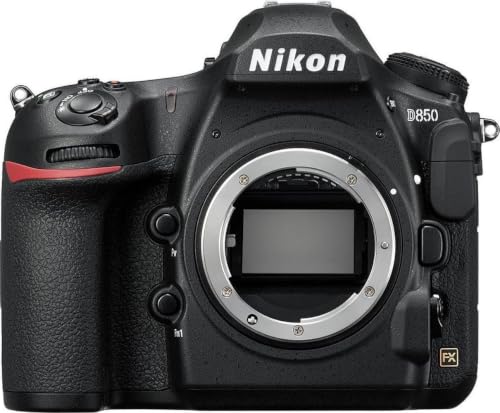
The D850 remains a benchmark 45.7 megapixel DSLR with an optical viewfinder, superb dynamic range and a huge selection of affordable F mount lenses. It shoots 7 fps, or 9 with a grip, and lacks the Z9’s mirrorless autofocus and video, but for photographers who prefer an optical finder and already own F mount glass it is still a serious high resolution tool at a lower price.
Pros
- 45.7 megapixels with excellent dynamic range
- Optical viewfinder and long battery life
- Large affordable F mount lens ecosystem
Cons
- Slower bursts and dated autofocus for action
- Larger, heavier and no in body stabilization
Side by side
| # | Model | Sensor | Best for | Score | Price |
|---|---|---|---|---|---|
| 1 | Nikon Z9 | 45.7 MP full frame stacked | The camera reviewed | 9.4 | Check price |
| 2 | Nikon Z8 | 45.7 MP full frame stacked | Best smaller alternative | 9.3 | Check price |
| 3 | Sony a1 II | 50.1 MP full frame stacked | Best all rounder rival | 9.2 | Check price |
| 4 | Canon EOS R5 Mark II | 45 MP full frame stacked | Best Canon rival | 9.2 | Check price |
| 5 | Sony a9 III | 24.6 MP full frame global shutter | Best for distortion free motion | 9.1 | Check price |
| 6 | Nikon Z6 III | 24.5 MP partially stacked | Best value Nikon alternative | 8.8 | Check price |
| 7 | Nikon D850 | 45.7 MP full frame | Best DSLR alternative | 8.5 | Check price |
Common questions
Does the Nikon Z9 really have no mechanical shutter?
Correct. Nikon removed the mechanical shutter entirely and relies on the stacked sensor’s fast electronic readout. This means no shutter wear, completely silent shooting and no shutter vibration, with rolling shutter kept low enough to be a non issue for the vast majority of subjects the camera is designed for.
What is the difference between the Nikon Z9 and Z8?
They share the same 45.7 megapixel stacked sensor, 20 fps raw bursts, 8K video and autofocus. The Z9 adds an integrated vertical grip, a larger battery and a slightly more rugged build, while the Z8 is around a third smaller and cheaper. If you do not need the grip and extra battery life, the Z8 gives you the same results for less.
Is the Nikon Z9 good for wildlife and sports?
Yes, it is one of the best cameras for both. The 20 fps raw bursts, deep buffer, subject detection autofocus and 45.7 megapixel sensor give speed and cropping room together, and the integrated grip provides the battery life and handling long field sessions demand. Its main rival for this work is the Sony a1 II.
Can the Z9 shoot 8K video?
Yes, it records 8K up to 60p and 4K up to 120p internally, with raw video options, making it a serious hybrid tool for professional video as well as stills. Recording times are long thanks to good heat management and the large battery, which is one advantage the gripped body has over smaller rivals.
How is the battery life on the Nikon Z9?
Excellent for a mirrorless camera, thanks to the large EN EL18d battery in the integrated grip. Real world use easily runs into thousands of frames per charge, well beyond most gripless mirrorless bodies, which is a major reason event and wildlife professionals choose it over the smaller Z8.
Does the Z9 show rolling shutter distortion?
Very little for its intended subjects. The stacked sensor readout is fast enough that skew is negligible in most sports and wildlife work, though extremely fast rotating objects can still show a trace. If eliminating rolling shutter entirely is critical, the Sony a9 III with its global shutter is the only camera that does so completely.
Is the Nikon Z9 too big for everyday use?
For travel, street and casual carry, many find it too large and heavy because of the integrated grip. It is designed for professional shooting where handling, battery life and durability matter more than compactness. Anyone who wants the same image quality in a lighter package should choose the Nikon Z8 instead.
Can I use my old Nikon F mount lenses on the Z9?
Yes, with the Nikon FTZ adapter most F mount lenses work well on the Z9, including autofocus on compatible models. This lets photographers moving from DSLRs such as the D850 keep their existing glass while gaining the Z9’s speed, autofocus and video, which softens the cost of switching systems.
Our take
The Nikon Z9 is one of the most complete cameras made, folding high resolution stills, pro action speed and 8K video into a single durable flagship with class leading battery life. For working professionals who want one body to do everything and hold up to heavy use, it is outstanding value despite the price. The only strong reason to look elsewhere in the range is size and cost, and the Nikon Z8 answers both with the same sensor and speed, while the Sony a9 III is the pick if distortion free motion outranks resolution.