Top Sound Cards for Clear Audio and Gaming
The Creative Sound BlasterX AE-5 Plus stands out as the top pick for gamers, offering a dedicated DAC and amp for crisp audio and virtual 7.1 surround, but it requires a free PCIe slot and is best for desktop setups.
Built-in motherboard audio often falls short for critical listeners and competitive gamers. A dedicated sound card can elevate clarity, reduce interference, and add features like surround sound and headphone amps.
This roundup covers internal PCIe cards and external USB DACs, focusing on real-world performance. We considered channel support, signal-to-noise ratio, connectivity, and software controls to help you find the right upgrade.
The best picks, ranked

Creative Sound BlasterX AE-5 Plus
This internal PCIe card features the ESS Saber DAC and a custom Xamp amplifier, delivering high headroom and clear sound. It supports 7.1 virtual surround and has customizable RGB lighting.
Pros
- Excellent audio quality
- Powerful headphone amp
- Immersive virtual surround
Cons
- Requires internal slot
- Software can be complex

ASUS Essence STX II
A premium PCIe card with replaceable op-amps and a dedicated headphone amplifier. It offers unmatched detail for music production and critical listening.
Pros
- Reference-grade sound
- Customizable op-amps
- Strong build quality
Cons
- Pricey
- Large card may block slots

Sound Blaster Z
A reliable PCIe card with a 116 dB SNR and SBX Pro Studio for enhanced gaming audio. It includes a beamforming microphone for clear voice chat.
Pros
- Affordable
- Good surround processing
- Clear mic input
Cons
- No headphone amp
- Dated design

Creative Sound BlasterX G6
A compact USB DAC/amp for PC, PS4, and Switch. It supports up to 7.1 virtual surround, has a 130 dB SNR, and delivers high-resolution audio up to 32-bit/384 kHz.
Pros
- Portable
- High-res audio support
- Works with consoles
Cons
- May require USB power
- Software setup needed
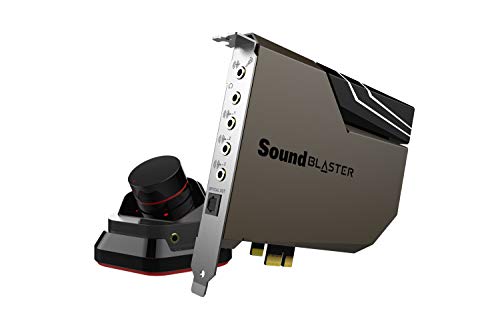
Creative Sound Blaster AE-7
This PCIe card includes a 130 dB DAC and Xamp discrete headphone amp. It supports 7.1 surround and has a metal shield for better isolation.
Pros
- High SNR
- Dedicated amp
- Great for gaming and music
Cons
- Pricey
- Not compatible with laptops
EVGA Nu Audio Card
A PCIe card with a 129 dB SNR, ESS Sabre DAC, and swappable op-amps. It offers precise sound staging and is designed for critical listening.
Pros
- Studio-grade audio
- User-replaceable op-amps
- Clean power delivery
Cons
- No surround virtualization
- Premium price

Creative Sound BlasterX G3
A compact USB dongle that upgrades laptop and Switch audio. It provides 7.1 virtual surround and a 108 dB SNR, with easy plug-and-play setup.
Pros
- Affordable
- Portable
- Simple setup
Cons
- Lower SNR than others
- No headphone amp
Side by side
| # | Model | Connection | Best for | Score | Price |
|---|---|---|---|---|---|
| 1 | Creative Sound BlasterX AE-5 Plus | PCIe | Gamers wanting balanced audio and virtual surround | 9.4 | Check price |
| 2 | ASUS Essence STX II | PCIe | Audiophiles with high-end headphones | 9.2 | Check price |
| 3 | Sound Blaster Z | PCIe | Budget-conscious gamers upgrading from onboard audio | 9.0 | Check price |
| 4 | Creative Sound BlasterX G6 | USB | Console and PC gamers needing a portable external DAC | 9.1 | Check price |
| 5 | Creative Sound Blaster AE-7 | PCIe | PC gamers wanting high-fidelity audio with Xamp | 9.0 | Check price |
| 6 | EVGA Nu Audio Card | PCIe | Music lovers wanting studio-grade components | 8.8 | Check price |
| 7 | Creative Sound BlasterX G3 | USB-C | Mobile gamers using laptops or Switch | 8.4 | Check price |
What matters most
Good to know
Do I need a sound card if my motherboard has audio?
If you are satisfied with your current audio, you may not need one. Sound cards help when you want better clarity, higher volume, virtual surround, or reduced interference, especially with high-impedance headphones.
What is the difference between internal and external sound cards?
Internal cards connect via PCIe and often have richer features, but they are desktop-only. External DACs connect via USB and are portable, offering similar quality without opening your PC.
Can I use a sound card with a gaming console?
Many external sound cards work with consoles like PS4, PS5, and Switch via USB. They provide virtual surround and improved audio. Internal cards cannot be used with consoles.
How do I install an internal sound card?
Power down your PC, open the case, insert the card into an available PCIe x1 slot, secure it, and close the case. Then install the drivers from the manufacturer’s website.
What is SNR in sound cards?
Signal-to-noise ratio measures the amount of background noise relative to the audio signal. Higher SNR means cleaner sound. Look for values above 110 dB for good quality.
Do sound cards support virtual surround sound?
Yes, many cards use software like Dolby or SBX to simulate surround sound from stereo headphones. This can improve directional awareness in games.
Can a sound card improve microphone quality?
Some cards have better microphone preamps and noise reduction, which can enhance voice clarity. However, the microphone itself matters more.
Are expensive sound cards worth it?
Expensive cards are worth it for audiophiles and professionals who need high fidelity and driving power for high-end headphones. For casual gamers, a mid-range card is often sufficient.
Will a sound card reduce audio latency?
Sound cards can offer lower latency than onboard solutions, especially with ASIO drivers, which is beneficial for music production and competitive gaming.
What is the best budget sound card?
The Sound Blaster Z is a popular budget option, providing good audio quality and gamer-friendly features at a low price. External options like the G3 are also affordable.
Our pick
For most gamers, the Creative Sound BlasterX AE-5 Plus is the best choice because it combines excellent audio precision, a strong headphone amp, and virtual surround at a reasonable price. If portability is essential, the Sound BlasterX G6 is a fantastic alternative. Audiophiles should consider the ASUS Essence STX II for its reference-grade sound and customization options.