Top Stick Welders for Every Skill Level and Budget
The Forney Easy Weld 298 is our top pick for most home users because it offers a smooth DC arc, simple controls, and a solid 20% duty cycle at 90 amps, though its 90 amp max output limits thicker metal work.
Stick welding remains a favorite for its simplicity and ruggedness, especially outdoors or on dirty metal. Choosing the right machine depends on your power source, metal thickness, and how often you weld.
We compared popular models from Forney, YesWelder, and Hobart to help you find a reliable arc welder. Each pick balances features, performance, and value for different needs.
What we recommend
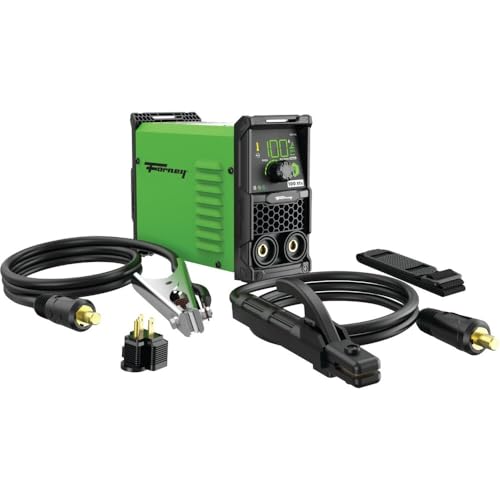
Forney Easy Weld 298 Arc Welder
The Forney Easy Weld 298 is a compact 120V stick welder that delivers a smooth DC arc for 1/16 to 5/32 inch electrodes. Owners report easy arc starts and stable performance for light to medium projects like repairs and thin metal. Its 90 amp max output limits heavy plate welding, but it excels for beginners and DIYers.
Pros
- Portable and lightweight
- Smooth DC arc
- Ideal for beginners
Cons
- Low max amperage
- Not for thick metal

YesWelder 205DS Stick Welder
The YesWelder 205DS runs on both 120V and 240V, giving you flexibility at home or on the job. It supports stick and lift TIG, with digital display and adjustable hot start. Users report a strong arc and good performance on 1/8 inch electrodes even at 120V, though 240V unlocks full potential.
Pros
- Dual voltage
- High max amperage
- Digital controls
Cons
- Lift TIG not full TIG
- Fan can be noisy

Hobart 500559 Stickmate 230AC
The Hobart Stickmate 230AC is a classic transformer machine that offers both AC and DC output. It handles 6010 and 6011 electrodes well, making it perfect for dirty or rusty metal. Owners praise its durability and strong arc, but it is heavy and requires a 230V outlet.
Pros
- AC/DC capability
- Excellent for 6010 rods
- Built to last
Cons
- Heavy and bulky
- Requires 230V

Tacklife TSW101 Stick Welder
The Tacklife TSW101 is an affordable 110V inverter stick welder that is light and easy to use. It offers 30 to 100 amps and works with 1/16 and 5/64 inch electrodes. Owners report decent arc stability for light repairs, but it struggles with thicker materials and sustained use.
Pros
- Very affordable
- Ultra portable
- Simple controls
Cons
- Low duty cycle
- Not for heavy projects

Amico Power ARC-160D Stick Welder
The Amico Power ARC-160D is a lightweight inverter that provides a smooth DC arc on 110V. It supports 1/16 to 5/32 inch rods and has a hot start feature. Users appreciate its clean beads and easy handling, though it is best for thin to medium metal.
Pros
- Smooth DC arc
- Hot start
- Great portability
Cons
- 110V only
- Fan is loud

Lotos LTPDC2000D Stick Welder
The Lotos LTPDC2000D is a 200 amp inverter with digital readout and adjustable arc force. It runs on 110V and 220V, giving flexibility. Owners report excellent arc starts and stable current for professional repairs. It includes a TIG function, but stick is the focus.
Pros
- Dual voltage
- Adjustable arc force
- Digital display
Cons
- TIG is basic
- Accessories are basic

SUNGOLDPOWER 200A ARC Welder
The SUNGOLDPOWER 200A stick welder is a robust inverter that operates on 220V and delivers up to 200 amps. It can run 5/32 inch electrodes and handle thick plates. Users report a stable arc and good penetration, though it is heavier and less portable than smaller units.
Pros
- High amperage
- Stable arc
- Good duty cycle
Cons
- Requires 220V
- Not dual voltage
How they compare
| # | Model | Input Power | Best for | Score | Price |
|---|---|---|---|---|---|
| 1 | Forney Easy Weld 298 Arc Welder | 120V | Home and hobby use on 120V outlets | 9.4 | Check price |
| 2 | YesWelder 205DS Stick Welder | 120V/240V | Dual voltage flexibility | 9.2 | Check price |
| 3 | Hobart 500559 Stickmate 230AC | 230V | Rough outdoor and farm use | 9.0 | Check price |
| 4 | Tacklife TSW101 Stick Welder | 110V | Budget-friendly 110V welding | 8.6 | Check price |
| 5 | Amico Power ARC-160D Stick Welder | 110V | Portable DC welding on a budget | 8.8 | Check price |
| 6 | Lotos LTPDC2000D Stick Welder | 110V/220V | Inverter precision with digital display | 8.9 | Check price |
| 7 | SUNGOLDPOWER 200A ARC Welder | 220V | Heavy-duty work on 240V | 8.7 | Check price |
What matters most
How to Choose the Right Amperage Range Amperage determines the thickness of metal you can weld. For home projects on sheet metal, a machine with up to 90 amps is enough. For farm repairs or structural steel, look for at least 140 amps. Higher amperage also gives you more headroom for different electrode sizes.
Understanding Duty Cycle Duty cycle shows how long you can weld continuously before the machine needs to cool. A 20% duty cycle at 90 amps means you can weld for 2 minutes out of every 10. For occasional use, 20% is fine. For longer sessions, choose a welder with a 60% duty cycle at your typical amperage.
AC vs. DC Output DC output provides a smoother arc and is easier for beginners. AC output can handle dirty or rusty metal better, especially with 6011 rods. Some machines offer both, giving you versatility. For most hobbyists, DC is preferred for its clean beads and fewer spatters.
Portability and Power Source Consider where you will weld. If you only have 120V outlets, a compact inverter like the Forney or Tacklife is convenient. For a garage or shop with 240V, a larger machine like the Hobart provides more power. Inverter welders are lighter and more energy-efficient, but transformer machines are often more durable.
Good to know
What is the best stick welder for a beginner?
The Forney Easy Weld 298 is often recommended for beginners because it operates on standard 120V outlets and produces a smooth DC arc. It is simple to set up and forgiving for first time users.
Can I weld aluminum with a stick welder?
Stick welding aluminum is difficult and requires specialized electrodes and technique. Most stick welders are not designed for aluminum. For aluminum, consider TIG or MIG with spool gun.
What is the difference between AC and DC stick welding?
DC (direct current) provides a stable arc with less spatter, making it easier for thin metal. AC (alternating current) works better on contaminated surfaces and is often used with 6011 rods for rusty or painted metal.
How thick of metal can a 120V stick welder weld?
Most 120V stick welders can handle up to 1/8 inch or 3/16 inch with proper technique and multiple passes. They are best for thin sheet metal, light repairs, and hobby projects.
What does duty cycle mean on a welder?
Duty cycle is the percentage of a 10 minute period you can weld at a given amperage without overheating. For example, 20% at 90A means you can weld for 2 minutes then rest for 8 minutes.
Is an inverter stick welder better than a transformer one?
Inverter welders are lighter, more energy efficient, and often provide better arc control. Transformer welders are typically heavier but can be more durable and handle rough conditions. The best choice depends on your portability needs.
What electrodes can I use with these welders?
Most stick welders use 6013, 7018, and 6011 electrodes. 6013 is easy for beginners, 7018 provides strong, clean welds, and 6011 works well on dirty or rusty metal. Check the welder’s amperage range to ensure compatibility.
Do I need a dedicated circuit for a 240V welder?
Yes, a 240V welder typically requires a dedicated circuit with the appropriate amperage breaker. Always check the manufacturer’s specifications and consult an electrician if needed.
Can I use a stick welder for TIG welding?
Some inverter stick welders have a lift TIG function that allows basic DC TIG welding with a torch. However, it is not as refined as a dedicated TIG machine. For serious TIG work, invest in a proper TIG welder.
The bottom line
For most home and hobby users, choose the Forney Easy Weld 298 for its balance of simplicity and performance. If you need dual voltage flexibility and higher amperage, the YesWelder 205DS is a strong alternative. For heavy farm or industrial use, the Hobart Stickmate 230AC offers unmatched durability and AC/DC capability.