Stud Finders Compared: Depth, Materials and Accuracy
Franklin Sensors’ ProSensor 710+ leads with thirteen sensors that map several studs in a single pass. Zircon’s MultiScanner i520 adds live AC wire detection for safer drilling near hidden wiring. Anyone hanging heavier fixtures gets the deepest metal range from the Bosch GMS120.
Franklin Sensors’ ProSensor 710+ maps an entire stud bay in one pass, lighting up every stud on its LED array instead of forcing repeated single sweeps. Bulk is the tradeoff, since its wide sensor face does not fit well into tight corners.
Wall material, wiring depth and stud spacing all change how reliably a sensor reads, details that spec sheets alone do not reveal. We compared published detection depths, sensor counts, material modes and owner feedback on marking accuracy across current listings.
What we recommend
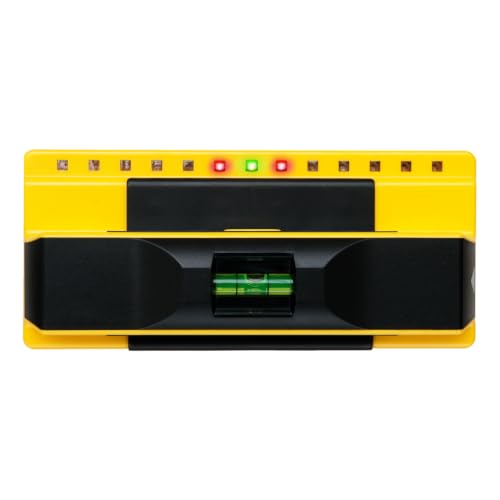
Franklin Sensors ProSensor 710+
Thirteen internal sensors light up together to reveal every stud within the tool’s width on one sweep. No centering or calibration step comes before use. Detection reaches roughly 1.5 inches into standard drywall.
Pros
- Reveals multiple studs at once instead of repeat sweeps
- Skips any calibration step before use
- Wide sensor face speeds up large wall sections
Cons
- Bulky housing struggles in tight corners
- Lacks a live-wire or metal detection mode
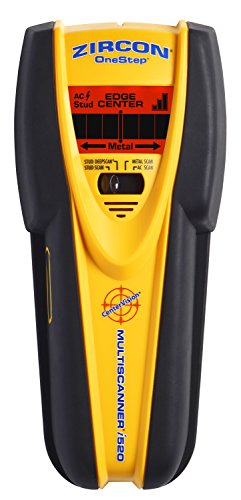
Zircon MultiScanner i520
Switchable modes detect wood studs, metal pipes or conduit, and live AC wiring behind drywall. A separate WireWarning indicator flags electrical risk apart from the stud signal. DeepScan mode extends detection to 2 inches for double-layer walls.
Pros
- Separate wire warning cuts drilling risk
- DeepScan mode reaches through thicker walls
- Backlit screen stays readable in dim rooms
Cons
- Switching between modes takes extra steps
- Single-point scanning runs slower than multi-sensor rivals

Bosch GMS120
Three sensor modes cover wood, ferrous metal and non-ferrous metal down to 120mm deep. A center-finding indicator marks the exact middle of a detected stud. Signal strength shows on a graphic display as the tool crosses the wall.
Pros
- Reaches the deepest metal detection in this group
- Center-mark indicator improves screw placement
- Graphic display tracks live signal strength
Cons
- Switching between three modes takes practice
- Housing feels less rugged than pro-grade rivals
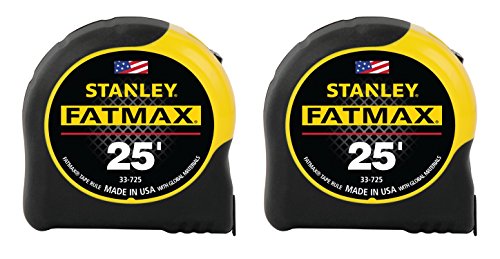
Stanley FatMax IntelliSensor
Auto-calibration starts the moment the tool touches the wall, skipping manual setup. Edge detection marks both sides of a stud instead of only its center. Audio beeps pair with a lit display to confirm a find without looking away from the pencil mark.
Pros
- Auto-calibration removes a manual setup step
- Marks both stud edges for accurate spacing
- Audio and visual alerts confirm finds together
Cons
- Skips metal and live-wire detection entirely
- Single-point scanning slows down on wide walls

Tavool Wall Scanner Stud Finder
Five detection modes cover wood, metal, AC wire, and both deep and standard stud scanning. An LCD screen displays depth alongside material type. Sound and vibration alerts still work when the display is hard to see.
Pros
- Five modes cover most common wall materials
- Vibration alert helps on noisy job sites
- LCD pairs depth with material type
Cons
- Needs a slow, flat sweep to stay accurate
- Battery door feels less durable than metal-bodied rivals

Craftsman CMHT77633 Stud Sensor
A single LED and beep confirm a stud edge during a slow horizontal sweep. Compact housing fits into a tool bag without added bulk. Detection covers standard half-inch drywall over one stud layer.
Pros
- Low price suits occasional homeowner use
- Compact size stores easily in a tool bag
- Single-button operation needs no manual
Cons
- Skips metal and wire detection modes
- Shallower max depth than pro-grade sensors

CH Hanson 03040 Magnetic Stud Finder
Rare-earth magnets inside the housing pull toward drywall screws and nails driven into studs. Batteries and calibration are never part of the process. Its pocket-sized body doubles as a quick marking guide once a fastener turns up.
Pros
- Runs without batteries or calibration, ever
- Pocket size travels well between job sites
- Doubles as a magnetic level on smooth surfaces
Cons
- Only finds studs through existing metal fasteners
- Slower on walls with few visible screws or nails
The lineup, side by side
| # | Model | Sensors | Best for | Score | Price |
|---|---|---|---|---|---|
| 1 | Franklin Sensors ProSensor 710+ | 13-sensor array | Best overall | 9.4 | Check price |
| 2 | Zircon MultiScanner i520 | Multi-mode capacitive | Best for multi-material detection | 9.1 | Check price |
| 3 | Bosch GMS120 | 3-mode sensor | Best value | 8.8 | Check price |
| 4 | Stanley FatMax IntelliSensor | Single-point capacitive | Best for edge-finding precision | 8.6 | Check price |
| 5 | Tavool Wall Scanner Stud Finder | 5-mode LCD | Best for deep scanning | 8.4 | Check price |
| 6 | Craftsman CMHT77633 Stud Sensor | Single-point | Best budget | 8.2 | Check price |
| 7 | CH Hanson 03040 Magnetic Stud Finder | Rare-earth magnet | Best for battery-free simplicity | 8.0 | Check price |
What matters most
What to look for Detection depth, material mode and sensor count decide how a stud finder handles a given wall. Multi-sensor tools like the ProSensor 710+ map several studs per sweep, while single-point tools need slower passes. Marking accuracy matters most once a fastener needs to land dead center.
Best stud finders for older homes with mixed materials Plaster-and-lath walls and older wiring runs call for a scanner that separates wood, metal and live AC signals. Zircon’s MultiScanner i520 flags wiring on its own so a drill bit does not meet a live line. DeepScan modes matter more here, since older walls often run thicker than modern drywall.
Best picks for drywall-only new construction Standard half-inch drywall over modern framing needs less depth range, so a simpler single-mode finder does the job. Craftsman’s CMHT77633 and the Stanley FatMax both cover this case without paying for metal or wire modes. Auto-calibrating models save time across a full room of studs.
Is a magnetic stud finder enough for your project? Visible nail or screw heads under paint let a magnetic tool like the CH Hanson 03040 find studs with no battery involved. This method runs slower on bare drywall with few fasteners showing through. It still works as a reliable backup when an electronic sensor gives an inconsistent reading.
Frequently asked questions
How deep can a stud finder detect through drywall?
Most electronic sensors reach 1 to 1.5 inches through standard drywall, and deep-scan modes on some models extend to 2 inches for double layers.
Can a stud finder detect wiring behind a wall?
Models with a dedicated AC mode, such as the Zircon MultiScanner i520, flag live wiring separately from wood or metal to warn against drilling risk.
Do magnetic stud finders work as well as electronic ones?
Magnetic finders only locate studs through existing metal fasteners, so they work slower on walls with few visible screws or nails.
Stud finder vs magnet: which is more accurate?
Electronic sensors read the stud material directly and work on any wall, while magnets depend on fasteners already sitting in the wood.
What is the difference between edge and center stud detection?
Edge detection marks both sides of a stud for precise screw spacing, while center detection marks only the middle point.
How do you mark a stud location accurately?
Sweep slowly and mark where the alert first triggers, then confirm with a second pass from the opposite direction to average the edges.
Can stud finders detect metal pipes as well as wood studs?
Multi-mode tools like the Bosch GMS120 switch between wood and metal settings, while single-mode finders only pick up wood framing.
Is a 9V battery stud finder better than one using AAA batteries?
Battery type changes runtime more than accuracy, though 9V models tend to last longer between replacements on daily job sites.
What is the best stud finder for hanging heavy shelves?
Multi-sensor models like the ProSensor 710+ or deep-range tools like the Bosch GMS120 suit heavier fixtures that need a precise stud center.
The verdict
Franklin Sensors’ ProSensor 710+ suits anyone marking multiple studs across a wall in one pass, especially for hanging shelving or cabinets. Working around older wiring or mixed wall materials calls for the Zircon MultiScanner i520 and its separate wire warning. Occasional users who only need a stud or two located can save money with the Craftsman CMHT77633 instead.


