Sump Pumps Ranked by Flow Rate and Switch Type
The Zoeller M53 Mighty-Mate is our top pick for its cast iron build and dependable vertical float switch. The Wayne CDU980E moves more water per hour for larger basements, and the Superior Pump 91250 covers light duty jobs and crawl spaces for far less.
The Zoeller M53 Mighty-Mate leads this roundup because a cast iron housing sheds motor heat far better than plastic and its vertical float switch avoids the tethered float problems that cause most sump pump failures. The Wayne CDU980E is the pick when the basin fills faster than a smaller pump can clear it, and the Superior Pump 91250 handles crawl spaces, window wells and light duty jobs at a fraction of the outlay.
Sump pumps are trickier to compare than the horsepower figures suggest, because the number that actually matters is how many gallons per hour the pump moves at the height it has to lift water, and that figure drops sharply as head height rises. Switch design matters even more, since the pump body usually outlives the float mechanism that tells it when to run. We compared housing materials, published flow rates at realistic head heights, switch types, motor ratings and discharge sizes, then weighed those against what owners report about longevity, noise and how each unit behaves during heavy, repeated cycling. For anything involving electrical work or a permanently flooding basement, get a licensed plumber or electrician involved.
The best picks, ranked
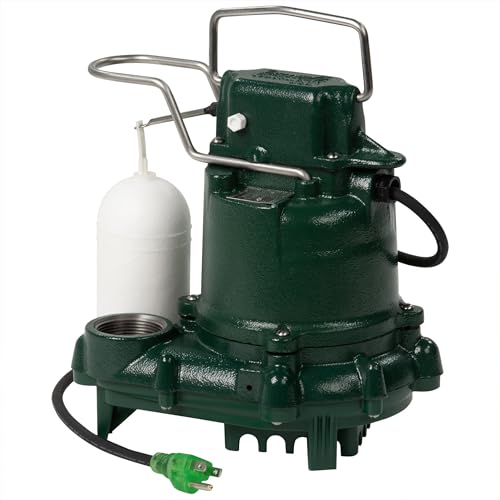
Zoeller M53 Mighty-Mate Submersible Sump Pump
The M53 has been the default recommendation among plumbers for years, and the reasons are unglamorous, namely a cast iron housing that pulls heat out of the motor and a vertical float switch that cannot tangle against the basin wall. It passes solids well enough to survive a gritty pit. It is not the highest flow pump here, so a basin that fills very quickly may need more capacity.
Pros
- Cast iron housing dissipates motor heat
- Vertical float avoids tangling in narrow pits
- Long service life reported by owners
Cons
- Flow rate is moderate rather than high
- Heavy to lift in and out of a pit

Wayne CDU980E Submersible Sump Pump
When the basin fills faster than a smaller pump can empty it, this three quarter horsepower unit clears water quickly and keeps up during sustained heavy rain. The cast iron and stainless construction handles continuous duty, and the vertical float switch is a sealed design. Higher flow means it cycles harder against a small basin, so pair it with a pit sized for the output.
Pros
- Clears water quickly during heavy rain
- Durable cast iron and stainless build
- Sealed switch design
Cons
- Short cycles in undersized basins
- Draws more current than smaller pumps

Liberty Pumps 257 Submersible Sump Pump
Liberty designs this with a compact vertical float that works in basins too narrow for a tethered float to swing, which describes plenty of older homes. The cast iron body and quick disconnect union make servicing straightforward. It sits at the premium end for a one third horsepower pump, which is the cost of the build quality and the switch design.
Pros
- Works in narrow basins where tethered floats bind
- Quick disconnect simplifies servicing
- Solid cast iron construction
Cons
- Premium outlay for the motor size
- Vertical float has a shorter on off range

Wayne ESP25 Battery Backup Sump Pump System
The storm that floods a basement is often the same storm that cuts the power, which is exactly when a mains pump is useless. This battery system sits alongside the primary pump and takes over automatically when power fails or the main pump cannot keep up. It needs a deep cycle battery, which is an extra purchase, and the battery needs replacing on a schedule.
Pros
- Keeps pumping during a power cut
- Automatic switchover with an alarm
- Adds redundancy to an existing pump
Cons
- Battery is an additional purchase
- Battery needs periodic replacement

Basement Watchdog Special BWSP Backup Sump Pump
This is a lower cost route to backup protection, providing enough capacity to keep a typical basement clear through a power cut without the outlay of a full system. Installation is straightforward alongside an existing primary pump. Run time depends entirely on battery capacity and how fast water enters, so it is insurance against a few hours rather than a multi day outage.
Pros
- Affordable way to add redundancy
- Straightforward installation alongside a primary pump
- Audible alarm flags a problem early
Cons
- Lower capacity than premium backup systems
- Run time limited by battery size

Little Giant 6-CIA Submersible Sump Pump
Little Giant pairs a cast iron volute with a tethered float that gives a wide on and off range, which reduces cycling in a large basin and extends motor life. That same tethered design needs room to swing, so it belongs in a wide pit rather than a narrow one. Build quality is good and the pump is quieter than several rivals here.
Pros
- Wide on off range reduces motor cycling
- Quieter running than several rivals
- Solid cast iron volute
Cons
- Tethered float needs a wide basin
- Float can hang up against pipework

Superior Pump 91250 Submersible Utility Pump
For a crawl space, a window well or clearing a flooded area occasionally, this thermoplastic pump does the job for very little. It is light enough to move around and simple to set up with a garden hose adapter. It is not the pump to rely on as a primary basement defence, since thermoplastic housings shed heat poorly under sustained duty.
Pros
- Very low outlay for occasional use
- Light and easy to move where needed
- Hose adapter included
Cons
- Thermoplastic housing runs hotter under load
- Not suited to primary basement duty
How to choose
Flow rate at head height beats horsepower Manufacturers publish flow in gallons per hour, and the honest figure is the one measured at the height the pump actually has to lift water, usually eight to ten feet from a basement pit to grade. That number falls steeply with height, so a pump rated impressively at zero lift may be marginal in your installation. Measure the vertical distance from the pump to the discharge point before comparing anything.
The switch fails before the motor Most sump pump failures come down to the float switch, not the pump itself. Tethered floats swing freely and give a wide on and off range, which reduces cycling, but they jam against basin walls and pipework in narrow pits. Vertical floats work in tight spaces and cycle more often. Electronic switches have no moving float but can be affected by debris and mineral deposits.
Cast iron outlasts plastic under load A submerged pump uses the surrounding water to shed motor heat, and cast iron transfers that heat far more effectively than thermoplastic. During a long storm when the pump runs almost continuously, that difference decides whether the thermal cutout trips. Thermoplastic pumps are fine for occasional utility work and questionable as the sole defence for a finished basement.
Backup power is the real insurance The heaviest rainfall often arrives with the outage that disables your pump, which is why battery backup systems exist. A backup pump sits alongside the primary, triggers automatically on power loss or high water, and buys you hours rather than days. Test both pumps a few times a year by pouring water into the pit, check the battery on schedule, and have a plumber inspect the check valve and discharge line.
How they stack up
| # | Model | Housing | Best for | Score | Price |
|---|---|---|---|---|---|
| 1 | Zoeller M53 Mighty-Mate Submersible Sump Pump | Cast iron | Best overall | 9.4 | Check price |
| 2 | Wayne CDU980E Submersible Sump Pump | Cast iron and stainless steel | Best for high water volume | 9.2 | Check price |
| 3 | Liberty Pumps 257 Submersible Sump Pump | Cast iron | Best for narrow pits | 9.0 | Check price |
| 4 | Wayne ESP25 Battery Backup Sump Pump System | Battery backup pump system | Best backup system | 8.8 | Check price |
| 5 | Basement Watchdog Special BWSP Backup Sump Pump | Battery backup pump | Best budget backup | 8.6 | Check price |
| 6 | Little Giant 6-CIA Submersible Sump Pump | Cast iron volute | Best for tethered float pits | 8.3 | Check price |
| 7 | Superior Pump 91250 Submersible Utility Pump | Thermoplastic | Best budget option | 8.0 | Check price |
Frequently asked questions
What size sump pump do I need?
For most homes a one third horsepower pump is sufficient, stepping up to one half or three quarters if the basin fills quickly, the water table is high or the lift to the discharge point is unusually tall. Flow at your actual head height matters more than the horsepower rating.
How long does a sump pump last?
Commonly around seven to ten years, though heavy cycling shortens that considerably and the switch usually fails first. If yours is approaching a decade of service, replacing it before a storm season is cheaper than dealing with a flooded basement.
Do I need a battery backup?
If your basement is finished, or if losing it to water would be expensive, yes. Storms cause both the water and the power cut, and a mains pump does nothing without electricity. A backup system is the single most useful addition to an existing setup.
Why does my sump pump keep cycling on and off?
Usually a basin that is too small for the pump’s output, or a switch with too narrow an on and off range, or a failed check valve letting discharged water run back into the pit. Short cycling wears the motor quickly, so it is worth diagnosing rather than ignoring.
Cast iron or thermoplastic housing?
Cast iron for anything protecting a finished basement, since it dissipates heat better during long runs. Thermoplastic is acceptable for occasional utility pumping, crawl spaces and light duty applications where the pump is not running for hours.
How do I test my sump pump?
Pour a bucket of water into the pit until the float rises, and check that the pump starts, clears the water and shuts off cleanly. Do this a few times a year, especially before the wet season, and listen for unusual noises.
Should the discharge pipe have a check valve?
Yes. Without one, the column of water in the discharge pipe drains back into the pit each time the pump stops, causing repeated cycling. Check valves are inexpensive and should be inspected when servicing the pump.
Can I install a sump pump myself?
Swapping a like for like pump in an existing pit is within reach for a confident DIYer. Anything involving new electrical circuits, a new pit, or changes to the discharge routing should go to a licensed plumber or electrician, particularly where local codes govern where water may be discharged.
Our take
The Zoeller M53 Mighty-Mate is the pump to buy for most basements, since cast iron construction and a reliable vertical float address the two things that actually fail. Homes with a fast filling pit should step up to the Wayne CDU980E for the extra flow. Whichever primary pump you choose, adding a battery backup such as the Wayne ESP25 is the change most likely to keep the basement dry when it matters.


