Surge Protectors Worth Trusting With Your Electronics
The APC P11VT3 SurgeArrest leads on protection features and outlet spacing, the Belkin BE112230-08 is the value pick for a desk full of devices, and the Tripp Lite ISOBAR6ULTRA is the choice for sensitive audio and network gear. All three warn you when protection has expired.
The APC P11VT3 SurgeArrest is the surge protector we would put behind most home setups, the Belkin BE112230-08 covers a busy desk for less, and the Tripp Lite ISOBAR6ULTRA is the one to buy when the gear plugged into it is genuinely expensive. Smart, compact and rack style options fill out the list.
Surge protectors are unusually easy to buy badly, because the joule number on the box is the only figure most people look at and it says nothing about clamping voltage, response time or whether the strip tells you when it has stopped protecting anything. We compared published joule ratings, clamping voltage, outlet count and spacing for bulky adapters, noise filtering, indicator lights and cord length.
The best picks, ranked

APC P11VT3 SurgeArrest Performance Surge Protector
The P11VT3 combines a high joule rating with eleven outlets, three of which are spaced for wall adapters, plus coaxial and telephone line protection. Crucially it disconnects power when its protection components have worn out rather than silently passing current through. That behaviour is what separates a real surge protector from a power strip.
Pros
- Disconnects when protection expires
- Spacing fits bulky wall adapters
- Covers coaxial lines as well as power
Cons
- Bulky to hide behind furniture
- Costs more than a plain strip

Belkin BE112230-08 12-Outlet Surge Protector
Belkin packs twelve outlets and an eight foot cord into a strip that costs noticeably less than the APC while still carrying a high joule rating. It is the practical choice for a desk or entertainment centre where the socket is inconveniently far away. Outlet spacing is tighter, so plan for a couple of blocked positions.
Pros
- Excellent outlet count for the money
- Long cord reaches awkward sockets
- High joule rating
Cons
- Bulky adapters block neighbouring outlets
- No coaxial or network protection

Tripp Lite ISOBAR6ULTRA Surge Protector
The Isobar design splits its outlets into isolated filter banks so noise from one device does not travel to another, which matters for audio equipment and network hardware. The all metal housing is far more rugged than plastic strips. Six outlets is fewer than rivals, and that is the deliberate trade.
Pros
- Genuine noise isolation between banks
- Metal housing survives rough placement
- Trusted in professional installs
Cons
- Only six outlets
- Heavy and inflexible to position

Anker 351 Power Strip
Anker integrates USB-C and USB-A charging alongside the mains outlets, which removes several wall adapters from a desk setup at once. Surge protection is present with a clear joule rating and a compact footprint. Its joule rating sits below the dedicated protectors, so it suits peripherals more than a home theatre.
Pros
- Removes several charging bricks
- Neat on a visible desk
- Flat plug sits close to the wall
Cons
- Lower joule rating than dedicated units
- Fewer mains outlets
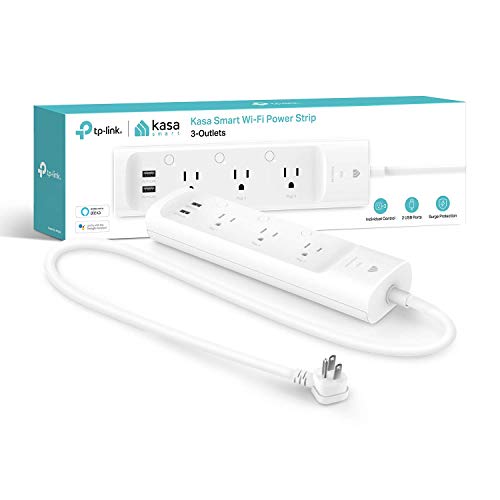
Kasa Smart Wi-Fi Power Strip HS300
The HS300 lets you switch each of its six outlets independently from an app or a voice assistant and reports energy use per outlet. It includes surge protection, so it can replace a basic strip rather than sitting alongside one. Smart features mean it depends on your network for remote control, though the physical buttons always work.
Pros
- Each outlet switches independently
- Useful energy monitoring
- Physical buttons work without the network
Cons
- Lower surge rating than dedicated units
- Requires initial app setup

Furman PST-8 Power Station Surge Protector
Furman builds this for home theatre racks, using a series protection approach that does not degrade with each surge in the way basic components do. Filtering is aimed at removing the noise that shows up as hum in audio systems. It is expensive and only makes sense when protecting equipment worth considerably more.
Pros
- Protection does not wear down per event
- Real audible noise reduction
- Fits AV racks neatly
Cons
- Most expensive option here
- Overkill for a computer desk

Amazon Basics 6-Outlet Surge Protector Power Strip
For lamps, fans and low value devices there is no reason to spend more than this. It provides a basic joule rating, an overload switch and an indicator light in a compact strip. Do not put a television or a computer behind it, since the protection margin is modest.
Pros
- Very inexpensive
- Compact and easy to hide
- Fine for low value devices
Cons
- Lowest protection rating in the group
- No filtering or line protection
How to choose
What the joule rating actually tells you Joules measure how much total surge energy the protector can absorb across its life, and the components wear down with every event including small ones you never notice. A higher rating means a longer useful life rather than better protection at any single moment. For a computer or television, look for something in the low thousands of joules. For a lamp, a few hundred is fine. What matters just as much is clamping voltage, which is the level at which the protector begins diverting energy: lower is better, and around 400 volts or below is a reasonable target.
The feature nobody checks and everybody needs A surge protector that has absorbed its rated energy stops protecting and, in most designs, keeps passing power silently. That is why a protection status indicator light matters, and why the best models cut power entirely rather than continuing to supply unprotected outlets. Check the strip’s indicator every few months, since a protector that quietly expired years ago is providing exactly the same protection as an extension lead. Replace after any significant electrical event in your area.
Outlet count, spacing and cord length Count the devices you actually plug in, then add two. More important is spacing, because a strip with twelve tightly packed outlets may only accept eight real world plugs once wall adapters are in place. Look for widely spaced or rotating outlets if you use several adapters. Cord length determines whether the strip sits neatly behind furniture or stretched taut across a floor, and stretched cords are both a trip hazard and a wear point.
What a surge protector will not do It will not regulate a brownout, keep your computer alive during an outage, or protect against a direct lightning strike on the property. For a computer holding unsaved work, an uninterruptible power supply is the right tool and many include surge protection. Never daisy chain one surge protector into another, since it defeats the protection circuitry and creates a real fire risk. High draw appliances such as space heaters and air conditioners should go straight into a wall outlet.
The lineup, side by side
| # | Model | Outlets | Best for | Score | Price |
|---|---|---|---|---|---|
| 1 | APC P11VT3 SurgeArrest Performance Surge Protector | 11 with adapter spacing | Best overall | 9.4 | Check price |
| 2 | Belkin BE112230-08 12-Outlet Surge Protector | 12 | Best value | 9.2 | Check price |
| 3 | Tripp Lite ISOBAR6ULTRA Surge Protector | 6 in isolated filter banks | Best for sensitive equipment | 9.0 | Check price |
| 4 | Anker 351 Power Strip | Mains outlets plus USB-C and USB-A | Best for desks with USB devices | 8.8 | Check price |
| 5 | Kasa Smart Wi-Fi Power Strip HS300 | 6 individually switched | Best smart control | 8.6 | Check price |
| 6 | Furman PST-8 Power Station Surge Protector | 8 rear mounted | Best for audio and video systems | 8.3 | Check price |
| 7 | Amazon Basics 6-Outlet Surge Protector Power Strip | 6 | Best budget | 8.0 | Check price |
Common questions
How many joules do I need in a surge protector?
A few hundred joules is adequate for lamps and small appliances, while computers and televisions deserve something in the low thousands. Higher ratings mean a longer service life rather than stronger instantaneous protection.
How long does a surge protector last?
It depends on how many surges it has absorbed, but replacing one every three to five years is a reasonable rule, and sooner after a major electrical event. Check the protection indicator light regularly.
What is the difference between a power strip and a surge protector?
A power strip only splits one outlet into several, with no protective components at all. A surge protector adds circuitry that diverts excess voltage away from your devices.
Do surge protectors protect against lightning?
They handle the voltage spikes that travel through wiring after a nearby strike, but nothing plugged into a wall survives a direct strike on the building. Unplugging during a severe storm is still the safest approach.
Can I plug one surge protector into another?
No. Daisy chaining defeats the protection circuitry and creates a genuine overload and fire risk, and it is prohibited by most electrical codes.
Do I need a surge protector or a UPS?
A surge protector guards against voltage spikes, while an uninterruptible power supply also keeps equipment running through an outage. Anything holding unsaved work benefits from a UPS.
What is clamping voltage?
It is the voltage level at which the protector starts diverting energy away from your devices. A lower number means it acts sooner, and around 400 volts or below is a good target.
Should I unplug during a storm?
For genuinely valuable or irreplaceable equipment, yes, since no consumer protector guarantees survival of a direct strike. For everyday devices, a good surge protector is a reasonable trade for the convenience.
The bottom line
The APC P11VT3 SurgeArrest is our pick for most homes because it cuts power once its protection has worn out rather than pretending to still be working. If you need more outlets for less, the Belkin BE112230-08 is a straightforward value choice for a busy desk. Reserve the Tripp Lite ISOBAR6ULTRA or the Furman PST-8 for setups where the connected equipment justifies the extra outlay.