How to Choose Threaded Rod for Heavy Duty Projects
Simpson Strong-Tie ATR All-Thread Rod leads for structural hanging thanks to its ASTM A307 rating. Hillman Group Steel Threaded Rod offers strong value for general fastening. For outdoor or wet locations, SNUG Fasteners 18-8 Stainless Steel Threaded Rod resists rust that plain zinc coating eventually lets through.
Simpson Strong-Tie ATR All-Thread Rod leads for structural work, since its ASTM A307 carbon steel construction meets code requirements for hangers and anchors. Hillman Group Steel Threaded Rod covers everyday fastening jobs at a lower cost per foot. SNUG Fasteners 18-8 Stainless Steel Threaded Rod holds up outdoors, where zinc-plated rod eventually rusts at the cut ends.
Threaded rod looks simple, but material grade changes what it can safely hold. Low carbon grade 2 rod bends under loads that grade 5 or stainless rod handles without stretching, and the wrong choice can fail a structural connection. We compared material grade, stated tensile and yield strength, thread pitch, coating, and length options, then weighed owner reports of stripped threads, rust at cut ends, and mismatched nuts.
What we recommend
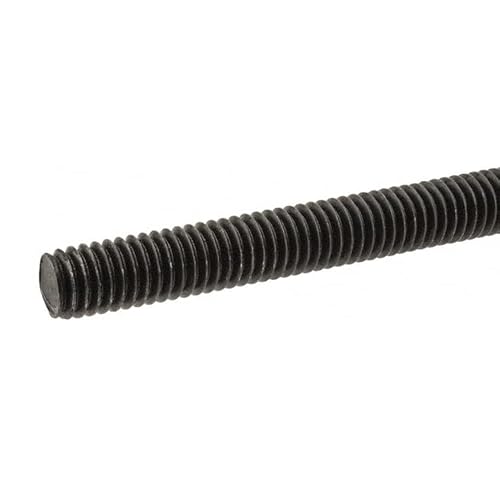
Simpson Strong-Tie ATR All-Thread Rod
Made to ASTM A307 specification, this rod is engineered for structural connections like joist hangers, ledger boards, and foundation anchoring. Continuous rolled threads run the full length so it can be cut to size on site. Simpson publishes load tables for it, which lets a builder size the rod to the actual job.
Pros
- Meets structural code requirements
- Published load tables simplify sizing
- Continuous thread cuts to any length
Cons
- Plain finish rusts without a protective coating
- Costs more than general hardware store rod

Hillman Group Steel Threaded Rod
This grade 2 low carbon steel rod covers general fastening, hanging, and repair work at a lower price than structural-grade options. Zinc plating resists light surface rust in dry indoor settings. It comes in common sizes like 1/4-20 and 3/8-16 that match standard hardware store nuts.
Pros
- Affordable for everyday fastening tasks
- Matches common hardware store nuts and washers
- Widely stocked in standard diameters
Cons
- Lower tensile strength than grade 5 rod
- Zinc plating wears at cut ends

SNUG Fasteners 18-8 Stainless Steel Threaded Rod
Type 304 stainless, labeled 18-8 for its chromium and nickel content, resists rust far longer than zinc-plated rod in damp or outdoor settings. It suits deck hardware, dock fittings, and outdoor equipment mounts. Owners report the surface stays corrosion-free even where cut ends expose bare steel.
Pros
- Resists rust at cut and drilled ends
- Holds up in damp or outdoor settings
- Won’t need a protective coating
Cons
- Costs noticeably more than zinc-plated steel
- Lower tensile strength than grade 5 carbon steel

Hard-to-Find Fastener 18-8 Stainless Threaded Rod
This stainless rod targets marine hardware, pool equipment, and coastal builds where salt air accelerates corrosion on plain steel. The 18-8 alloy resists pitting better than painted or galvanized rod near saltwater. It ships in assorted diameters sized for boat fittings and outdoor railings.
Pros
- Resists pitting from salt air exposure
- Multiple diameters for marine hardware
- No coating to chip or peel
Cons
- Not rated for structural load tables like A307 rod
- Softer than hardened grade 8 rod

Prime-Line Coarse Thread Rod
This zinc-plated steel rod covers basic repair and hanging jobs at a lower cost than premium brands. Coarse UNC threading matches standard nuts sold at most hardware stores. It suits light shelving, furniture repair, and general workshop use rather than structural loads.
Pros
- Lower cost than name-brand structural rod
- Works with common hardware store nuts
- Suits light general repair work
Cons
- Not rated for structural or load-bearing use
- Zinc coating is thinner than premium brands
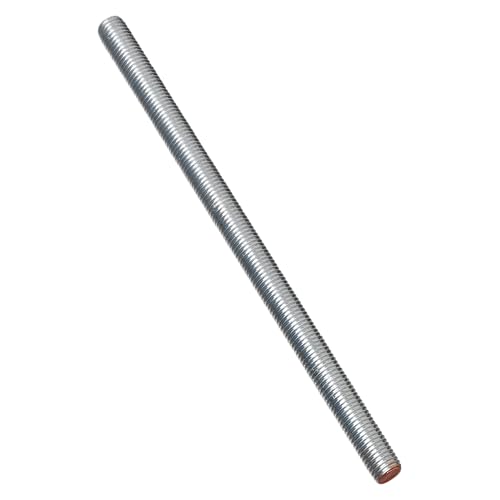
National Hardware Zinc Plated Threaded Rod
This rod suits indoor projects like hanging light fixtures, shelving brackets, and cabinet hardware. Zinc plating protects against light moisture but isn’t meant for outdoor exposure. Shorter stock lengths reduce waste on small jobs compared to buying a full 12 foot bar.
Pros
- Shorter lengths reduce waste on small jobs
- Adequate coating for indoor humidity
- Priced for occasional household use
Cons
- Not suited to outdoor or wet locations
- Limited diameter options compared to bulk rod

Grip-Rite Grade 5 Threaded Rod
Grade 5 medium carbon steel gives this rod higher tensile and yield strength than standard grade 2 hardware store rod. It suits machinery mounts, equipment anchoring, and other jobs where the connection carries real load. A yellow zinc dichromate finish adds more corrosion resistance than plain zinc plating.
Pros
- Higher tensile strength than grade 2 rod
- Yellow zinc adds extra corrosion resistance
- Suited to equipment and machinery mounting
Cons
- Costs more than basic grade 2 rod
- Not stocked in as many diameters as grade 2
How they stack up
| # | Model | Material | Best for | Score | Price |
|---|---|---|---|---|---|
| 1 | Simpson Strong-Tie ATR All-Thread Rod | ASTM A307 carbon steel | Best overall | 9.4 | Check price |
| 2 | Hillman Group Steel Threaded Rod | Grade 2 low carbon steel | Best value | 9.1 | Check price |
| 3 | SNUG Fasteners 18-8 Stainless Steel Threaded Rod | 18-8 (304) stainless steel | Best for outdoor and wet locations | 8.9 | Check price |
| 4 | Hard-to-Find Fastener 18-8 Stainless Threaded Rod | 18-8 stainless steel | Best for marine and coastal use | 8.6 | Check price |
| 5 | Prime-Line Coarse Thread Rod | Low carbon steel | Best budget pick | 8.4 | Check price |
| 6 | National Hardware Zinc Plated Threaded Rod | Low carbon steel | Best for light-duty hanging | 8.2 | Check price |
| 7 | Grip-Rite Grade 5 Threaded Rod | Grade 5 medium carbon steel | Best for high-strength fastening | 8.0 | Check price |
Before you buy
What threaded rod grade actually measures Grade refers to the material and its tensile strength, not just the size of the rod. Grade 2 low carbon steel bends and stretches under loads that grade 5 medium carbon steel handles without deforming. Stainless rod, labeled 18-8 or 316, trades some tensile strength for corrosion resistance instead.
Choosing rod for structural versus general fastening Structural work like joist hangers, ledger boards, and foundation anchoring calls for rod rated to ASTM A307 or higher, with published load tables like Simpson provides. General fastening, shelving, and light repair jobs work fine with grade 2 hardware store rod at a fraction of the cost. Mixing the two use cases, like hanging a heavy fixture with grade 2 rod, risks bending or shearing under load.
Matching rod finish to the environment Indoor, dry projects do fine with zinc-plated steel, which resists light surface rust but not sustained moisture. Outdoor decks, docks, and coastal hardware need 18-8 or 316 stainless rod, since plated coatings eventually wear through at cut ends. Yellow zinc dichromate splits the difference, adding more protection than plain zinc without the cost of full stainless.
Edge cases: dissimilar metals and thread pitch mismatches Stainless rod paired with galvanized nuts can gall or seize during installation, so matching material types on both the rod and fasteners avoids a stuck connection. Coarse UNC threads dominate hardware store stock, but some structural specs call for fine UNF threads, which won’t accept a coarse nut. Rod cut to length loses any factory coating at the cut end, so outdoor installs benefit from stainless even on a mostly indoor structure.
Common questions
What is threaded rod used for?
Hanging pipes, ductwork, and light fixtures, anchoring machinery, building structural connections like joist hangers, and general fastening where a standard bolt is too short.
What’s the difference between grade 2 and grade 5 threaded rod?
Grade 5 medium carbon steel has higher tensile and yield strength than grade 2 low carbon steel, making it better suited to load-bearing connections.
Is stainless steel threaded rod strong enough for construction?
18-8 stainless rod has lower tensile strength than grade 5 carbon steel, so it suits corrosion resistance more than maximum load capacity.
Can you cut threaded rod to length?
Yes. Continuous thread rod like Simpson Strong-Tie ATR is designed to be cut on site, though cutting removes any factory coating at that end.
18-8 vs 316 stainless threaded rod, what’s the difference?
316 stainless resists chloride corrosion, from saltwater or pool chemicals, better than 18-8. For general outdoor use, 18-8 stainless rod is usually sufficient.
What size threaded rod do I need to hang a shelf?
Light shelving typically uses 1/4-20 or 3/8-16 rod, while heavier loads or longer spans call for 1/2-13 rod or larger.
Does threaded rod rust?
Zinc-plated steel rod rusts over time, especially at cut ends. Stainless steel rod resists rust far longer in damp or outdoor conditions.
What’s the best threaded rod for structural framing?
Simpson Strong-Tie ATR All-Thread Rod, rated to ASTM A307 with published load tables, is built specifically for structural connections.
The bottom line
Simpson Strong-Tie ATR All-Thread Rod is the safest pick for structural work, since it meets ASTM A307 code requirements with published load ratings. For general fastening, Hillman Group Steel Threaded Rod costs less, while SNUG Fasteners 18-8 Stainless Steel Threaded Rod handles outdoor and wet locations that would rust plain steel.