Tool Bags That Survive Real Job Sites
For most contractors, the Milwaukee 48-22-8200 is the top pick because it pairs a rigid base with a weather resistant interior that shrugs off mud and moisture. Its main advantage, however, is the sheer capacity for its footprint, letting you carry a full toolkit without a bulky silhouette. The limitation is that the zippers can be stiff when new, but they loosen up after a few weeks of use.
Carrying tools to a job site is more than just transportation. A good tool bag protects your investment, saves time, and keeps your back happy. But with countless options on the market, finding one that actually holds up can be overwhelming.
We looked at bags from brands that contractors trust, focusing on real world features like reinforced stitching, water repellent bases, and comfortable straps. Based on specifications and owner reports, these are the tool bags that earn their keep.
The best picks, ranked

Milwaukee 48-22-8200 Tool Bag
This Milwaukee bag is a workhorse with a rigid base that stands up on its own. The 1680D ballistic weave fabric resists tears, and the IP65 rated weather seal keeps dust and rain out. Owners often praise how it fits a surprising amount of tools, including drills and small power tools, without tipping over.
Pros
- Stands upright on its own
- Weather sealed to protect tools
- Lots of pockets for organization
Cons
- Zipper can be stiff initially
- No shoulder strap included
Husky 17 in. Contractor Bag
Husky offers a budget friendly option that doesn’t skimp on durability. The 600D polyester fabric is tough, and the reinforced bottom holds up to rough surfaces. It has a wide opening for easy access, and the multiple pockets keep small parts organized. Many contractors use it for everyday jobs where they don’t want to risk an expensive bag.
Pros
- Affordable price point
- Wide opening for visibility
- Durable enough for daily use
Cons
- Not fully waterproof
- Zippers may snag occasionally
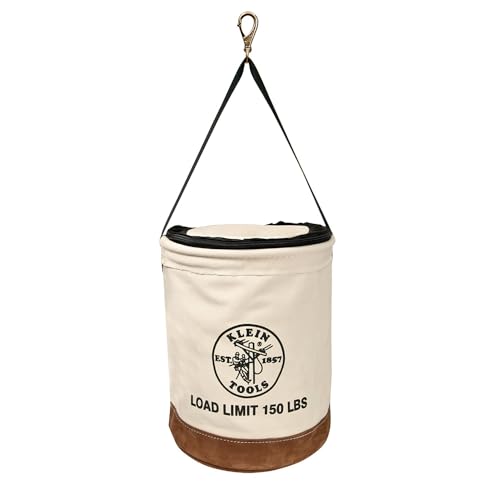
Klein Tools 55421BP-14 Canvas Bucket Bag
Klein’s bucket bag is designed to fit inside a 5 gallon bucket, making it perfect for electricians who work on ladders. The heavy duty canvas is abrasion resistant, and the interior has a rigid liner that holds its shape. It features a tool holder for up to 40 tools, plus exterior pockets for small parts. Electricians appreciate the convenient handle and the ability to clip it to a ladder.
Pros
- Fits perfectly on a bucket
- Tool loops keep screwdrivers ready
- Canvas is abrasion resistant
Cons
- Not for large power tools
- No shoulder strap

DEWALT DWST6425 Tool Bag
This DEWALT bag is built to haul power tools like drills and saws. With a 15 inch size, it has a large main compartment and a rigid, impact resistant base. The 1680D material resists punctures, and the metal zippers are smooth. Contractors note that it easily fits a hammer drill, charger, and several batteries.
Pros
- Large enough for power tools
- Rigid base protects contents
- Metal zippers slide smoothly
Cons
- Bulky for small jobs
- No weather sealing
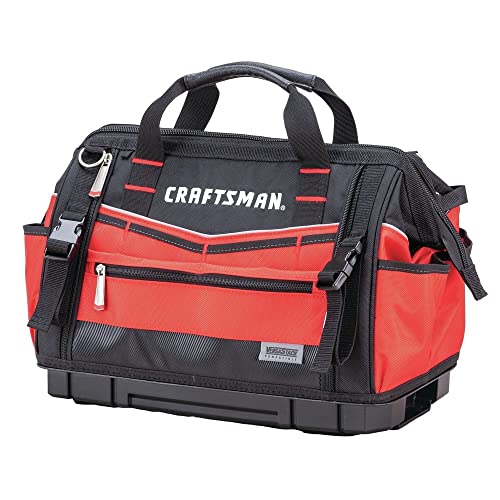
Craftsman CMST17909 Tool Bag
An open top tote style bag, this Craftsman gives you quick access to tools without unzipping. The 1680D material is tough, and the interior has a rigid liner to maintain shape. It includes a shoulder strap and a padded handle. The open top is a double edged sword: easy access but less protection from the elements.
Pros
- Quick tool access
- Padded shoulder strap
- Rigid liner holds shape
Cons
- Not weather resistant
- Small tools can fall out if tipped
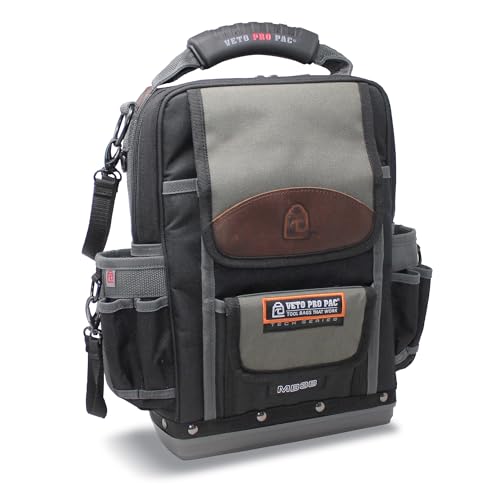
Veto Pro Pac MB3B Meter Bag
Veto Pro Pac is famous for their premium bags, and the MB3B is no exception. Designed for meters and test equipment, it features a padded interior to protect delicate instruments. The 1000D CORDURA fabric is extremely durable, and the zippers are heavy duty. While pricey, contractors who own it say it lasts for years.
Pros
- Superior protection for meters
- Extremely durable construction
- Excellent warranty
Cons
- High price
- Narrow for large tools

WorkPro 15 in. Tool Tote
If you’re looking for a lightweight option for light duty work, this WorkPro tote is a smart choice. It’s made of durable nylon with a reinforced bottom, and it has a simple design with several pockets. It won’t hold up to heavy abuse, but it’s perfect for quick jobs or as a backup bag.
Pros
- Very lightweight
- Simple and affordable
- Padded handle
Cons
- Not for heavy tools
- Limited pocket depth
How they compare
| # | Model | Material | Best for | Score | Price |
|---|---|---|---|---|---|
| 1 | Milwaukee 48-22-8200 Tool Bag | 1680D ballistic weave | Best Overall | 9.4 | Check price |
| 2 | Husky 17 in. Contractor Bag | 600D polyester | Best Value | 9.0 | Check price |
| 3 | Klein Tools 55421BP-14 Canvas Bucket Bag | Heavy duty canvas | Best for Electricians | 9.2 | Check price |
| 4 | DEWALT DWST6425 Tool Bag | 1680D ballistic weave | Best for Power Tools | 8.8 | Check price |
| 5 | Craftsman CMST17909 Tool Bag | 1680D polyester | Best Open Top | 8.6 | Check price |
| 6 | Veto Pro Pac MB3B Meter Bag | 1000D CORDURA | Best for Test Equipment | 9.1 | Check price |
| 7 | WorkPro 15 in. Tool Tote | Nylon | Best Lightweight | 8.0 | Check price |
How to pick the right one
Questions worth asking
What is the best material for a contractor tool bag?
The best materials are high denier nylon like 1680D ballistic weave or 1000D CORDURA. They resist tears, punctures, and abrasion. Canvas is also durable but heavier and may not be as water resistant.
How much should I spend on a tool bag?
Prices vary widely. Budget bags can be under current price while premium brands like Veto Pro Pac can exceed current price. For daily professional use, investing in a higher quality bag is worth it because it lasts longer and protects your tools.
What size tool bag do I need?
Think about the largest tools you carry. If you carry a hammer drill, you need a bag at least 15 inches long and with a wide opening. For hand tools only, a smaller bag with many pockets might be enough. Measure your tools to be sure.
Are open top tool bags better than zippered?
Open top bags allow faster access and are easier to see inside. However, they do not protect tools from rain or dust. Zippered bags are more secure and weather resistant, but can be slower to open and close.
How do I clean my tool bag?
Most bags can be wiped down with a damp cloth and mild soap. For stubborn dirt, use a soft brush. Avoid machine washing as it can damage the material and zippers. Let it air dry completely before storing.
Can a tool bag be used as a carry on for flights?
Some smaller tool bags can be used as carry on if they fit size restrictions. Check with your airline. However, tools like screwdrivers and hammers are not allowed in carry on luggage, so you would need to check the bag or use a specialized tool bag that complies with TSA rules.
How do I prevent tools from rusting in my bag?
Keep your bag dry and store it in a dry place. Consider using silica gel packs to absorb moisture. Some bags have weather sealed zippers, but it’s still wise to wipe down tools before storing them.
What is the difference between a tool bag and a toolbox?
A tool bag is flexible and often has more pockets, making it easier to organize small tools. A toolbox is rigid and offers more protection but can be heavier and less portable. Many contractors use both: a box for power tools and a bag for hand tools.
The verdict
For most contractors, the Milwaukee 48-22-8200 is the best all around tool bag because it offers a perfect balance of durability, organization, and weather resistance. If you’re on a tight budget, the Husky contractor bag is a solid alternative that won’t break the bank. But if you carry expensive test equipment, the Veto Pro Pac MB3B is worth the investment for its unmatched protection.