Festool, Makita or DeWalt: Picking the Right Track Saw
The Makita SP6000J1 is the best track saw for most workshops, matching premium cut quality at a friendlier price with a 55-inch rail included. Festool’s TS 55 remains the system king for dust collection and accessories, while the WEN CT1065 makes plunge-cut accuracy affordable for DIYers.
For breaking down plywood with cabinet-grade edges, the Makita SP6000J1 delivers the best blend of precision and price. Festool’s TS 55 leads the premium system route and the WEN CT1065 opens the category to budget builders.
Track saws are confusing to shop because rails, blades, and batteries lock you into ecosystems, and spec sheets hide real differences in dust control and anti-splinter performance. We compared cutting depth, rail standards, extraction ports, and owner reports on accuracy to rank these seven.
Our top picks

Makita SP6000J1 6-1/2 Inch Plunge Circular Saw
Makita bundles a 55-inch guide rail with a 12-amp saw that cuts 2-3/16 inches deep at 90 degrees, enough for doubled sheet stock. Electronic speed control holds RPM under load, and a bevel range of minus 1 to 48 degrees covers cabinet work. Its rails interchange with Festool-pattern tracks, keeping accessory options open.
Pros
- Near-premium cut quality for mid-tier money
- Rail ships in the box
- Variable speed with soft start
Cons
- Dust bag not included, extractor recommended
- Riving knife absent, unlike Festool

Festool TS 55 FEQ-F-Plus Track Saw
Festool built the modern track saw category, and the TS 55 still sets the bar for splinter-free cuts and near-total dust capture with a CT extractor. A riving knife and slip clutch add safety margins rivals skip. The surrounding system, rails, clamps, and Systainer storage, is unmatched in depth.
Pros
- Cleanest cuts and best dust control here
- Riving knife prevents kickback pinches
- Deep accessory ecosystem
Cons
- Highest cost, extractor sold separately
- Slightly shallower cut than the Makita

DEWALT DCS520B FLEXVOLT 60V MAX Track Saw
Running on 60V FLEXVOLT packs, the DCS520B rips full sheets without a cord across a job site. Cut depth reaches 2-1/8 inches, and a zero-clearance track system delivers splinter-free edges on both sides of the kerf. Existing DeWalt FLEXVOLT users can buy the bare tool and share batteries.
Pros
- True cordless power for sheet goods
- Anti-kickback and riving knife features
- Shares FLEXVOLT batteries
Cons
- DeWalt tracks do not fit Festool-pattern accessories
- Battery and charger raise the real cost

Makita XPS01PTJ 36V LXT Cordless Track Saw Kit
Makita’s cordless version runs on two 18V LXT batteries, tapping the most common battery platform on job sites. Automatic speed change shifts torque under load, and cut quality matches its corded sibling. The kit includes batteries, dual charger, and a stackable case, though the rail is separate.
Pros
- Uses ubiquitous 18V LXT batteries
- Corded-class cut quality without the cord
- Complete kit with charger and case
Cons
- Guide rail costs extra
- Heavier than corded with both packs

Milwaukee 2831-21 M18 FUEL Track Saw Kit
Milwaukee’s M18 FUEL track saw claims corded-matching power from a single 18V High Output pack. Integrated rail compatibility follows the Festool pattern, so third-party tracks fit. Tradespeople already on M18 batteries get the shortest path to track-saw capability.
Pros
- Single-battery convenience on M18
- Accepts widely available Festool-style rails
- Fast electronic brake
Cons
- Newer entry with a shorter track record
- Kit pricing sits near premium corded rivals
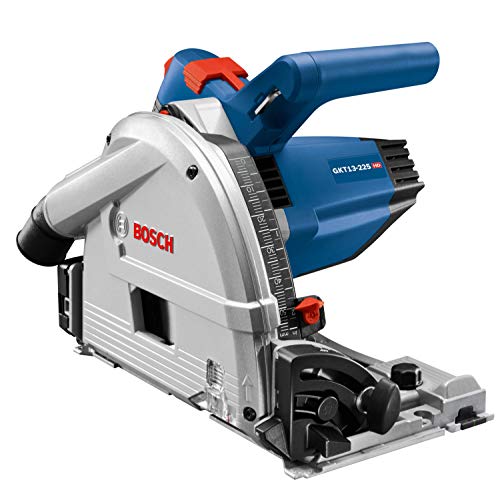
Bosch GKT13-225L Worm Drive Style Track Saw
Bosch’s 13-amp track saw plunges on a smooth dual-pivot action and holds depth precisely with a clear scale. The saw rides Festool-pattern rails, and its included L-Boxx case stacks with Bosch storage. It appeals to corded users who want an alternative to the Makita with stronger included storage.
Pros
- Powerful motor for dense sheet stock
- Rides common Festool-style rails
- Ships in a stackable case
Cons
- Rail not included
- Fewer dealers stock spares than Makita or DeWalt
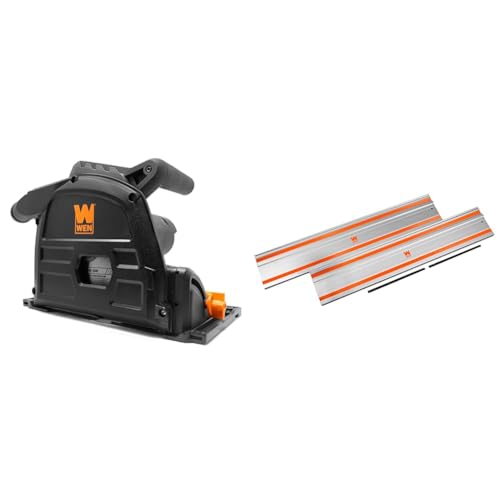
WEN CT1065 10-Amp Plunge Cut Track Saw
WEN delivers the core track-saw experience, plunge action, 1-3/4 inch depth, and 45 degree bevels, at a fraction of premium pricing. Compatible tracks sell separately and cheaply. Weekend woodworkers breaking down plywood a few times a month get most of the benefit for the least money.
Pros
- Dramatically lower cost of entry
- Genuine plunge mechanism, not a converted circular saw
- Light and easy to handle
Cons
- Dust collection and cut polish trail the majors
- Stock blade worth upgrading immediately
How they stack up
| # | Model | Motor | Best for | Score | Price |
|---|---|---|---|---|---|
| 1 | Makita SP6000J1 6-1/2 Inch Plunge Circular Saw | 12 A corded | Best overall | 9.4 | Check price |
| 2 | Festool TS 55 FEQ-F-Plus Track Saw | About 2 in at 90 degrees | Best premium system | 9.2 | Check price |
| 3 | DEWALT DCS520B FLEXVOLT 60V MAX Track Saw | 60V MAX FLEXVOLT | Best cordless | 9.0 | Check price |
| 4 | Makita XPS01PTJ 36V LXT Cordless Track Saw Kit | 2x 18V LXT, 36V total | Best cordless kit value | 8.8 | Check price |
| 5 | Milwaukee 2831-21 M18 FUEL Track Saw Kit | M18 FUEL, High Output pack | Best for Milwaukee platform users | 8.6 | Check price |
| 6 | Bosch GKT13-225L Worm Drive Style Track Saw | 13 A corded | Best for smooth plunge action | 8.3 | Check price |
| 7 | WEN CT1065 10-Amp Plunge Cut Track Saw | 10 A corded | Best budget | 8.0 | Check price |
What matters most
What a track saw does that a circular saw cannot A track saw plunges into the work and rides a rail whose rubber edge marks the exact cut line, producing straight, splinter-free edges without measuring offsets. Depth adjusts precisely for scoring passes or cutting stacked sheets. Combined with sacrificial foam on a bench, it replaces a table saw for sheet goods in small shops. Circular saws with clamped straightedges get close on straightness but cannot match the chip-free edge or plunge starts.
Rail systems and ecosystem lock-in explained Most brands, Makita, Bosch, Milwaukee, WEN, and Festool itself, share the Festool rail pattern, so tracks, clamps, and square attachments interchange. DeWalt uses its own rail profile, which cuts you off from that accessory pool. Decide on the ecosystem before the saw. Buyers already holding DeWalt FLEXVOLT or Milwaukee M18 batteries should weigh battery savings against rail flexibility.
Corded or cordless, which track saw fits your work? Shop-based woodworkers should stay corded: the Makita SP6000J1 and Festool TS 55 cost less than cordless kits and never pause for charging. Installers and site carpenters gain real productivity from cordless models like the DCS520B and XPS01PTJ, especially where power is not yet run. Cutting long rips all day drains packs quickly, so cordless buyers should budget for a second battery set.
Dust collection, blades, and heavy daily use Track saws only deliver dust-free promise when hooked to an extractor, where Festool’s sealed design captures the most and budget saws leak. Blade choice moves cut quality as much as the saw. A 48-tooth blade suits veneered ply, and a 28-tooth rip blade speeds solid wood. Daily users should also check riving knife presence, spare part availability, and rail lengths, since a 55-inch rail crosscuts sheets but ripping eight feet needs a long or joined rail.
Questions worth asking
Is a track saw worth it over a circular saw and straightedge?
For sheet goods, yes. The rail’s anti-chip strip, plunge action, and consistent offset produce finish-ready edges a straightedge setup cannot match. Rough framing cuts do not justify the upgrade.
Can a track saw replace a table saw?
For plywood and MDF work, largely yes, and more safely in small spaces. Narrow rip cuts, dados, and repeat cuts of small parts still favor a table saw. Many small shops run both.
Which track saws use Festool rails?
Makita, Bosch, Milwaukee, and several budget brands follow the Festool rail pattern, so those saws ride each other’s tracks. DeWalt’s rails are proprietary and only fit DeWalt track saws.
How deep can a track saw cut?
Most 6-1/2 inch models cut about 2 to 2-3/16 inches at 90 degrees, enough for doubled 3/4 inch sheets. The Makita SP6000J1 leads this group at 2-3/16 inches. Depth drops when beveling.
Do I need a dust extractor for a track saw?
Strongly recommended. These saws are designed around extraction, and without a vacuum they shed chips like any circular saw. A basic shop vacuum with an adapter captures most debris on every model here.
What size track do I need for cutting plywood?
A 55-inch rail crosscuts a 4-foot sheet with room to spare. Ripping 8-foot lengths takes a 106-inch class rail or two joined rails with connectors. Joined rails need careful alignment for straightness.
Are cordless track saws as good as corded?
Cut quality now matches, and the DeWalt DCS520B and Makita XPS01PTJ prove it. Corded still wins on all-day endurance and total cost, since batteries and chargers add meaningfully to cordless kits.
Makita SP6000J1 vs Festool TS 55, what is the real difference?
Festool adds a riving knife, tighter dust sealing, and a deeper accessory system for a much higher spend. Makita matches the cut quality most eyes can detect and includes the rail. Professionals in finished homes lean Festool, everyone else saves with Makita.
The bottom line
Buy the Makita SP6000J1 and a good blade, and sheet goods stop being a struggle, that is the value story of this category. Choose Festool’s TS 55 when dust control and system depth pay for themselves in professional work. Cordless-first buyers should match the saw to the batteries they already own, DeWalt or Makita, while the WEN CT1065 lets a hobbyist in for the price of a premium blade.