TVs That Stay Watchable When Sunlight Floods the Room
Samsung’s QN90D Neo QLED performs best in bright rooms thanks to its anti-reflection coating and high peak brightness. Hisense’s U8N matches much of that performance for less. Sony’s Bravia 9 offers the strongest glare control for harsh window light, and all three stay watchable well past midday sun.
A room with unshaded windows or south-facing glass calls for Samsung’s QN90D Neo QLED first. Its anti-reflection screen coating and Neo Quantum processor push peak brightness high enough to keep shadow detail visible at noon. Owners report the main downside is a remote without backlighting, a small tradeoff for daylight performance this strong.
Nits alone don’t guarantee a watchable picture once direct sun hits the glass. A glossy panel rated at 2000 nits can still wash out under window light without an anti-reflective layer, while a matte, lower-rated screen sometimes reads brighter to the eye. Manufacturer brightness specs, panel coating type, and owner feedback on glare in large-window rooms were compared to rank these seven sets.
The top picks, ranked

Samsung QN90D Neo QLED
Mini-LED backlighting rated for high peak brightness runs through the Neo Quantum Processor across the full size range. Window glare scatters instead of bouncing back thanks to the anti-reflection coating. Local dimming zones keep dark scenes from washing out even with room lamps on.
Pros
- Anti-reflection coating cuts window glare noticeably
- 144Hz panel handles fast sports motion cleanly
- Available in sizes up to 98 inches for large rooms
Cons
- Remote lacks backlighting for dim-room use
- One Connect box adds a cable to route separately
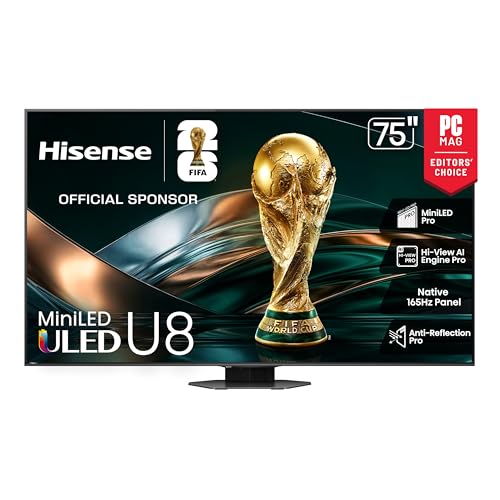
Hisense U8N
A dense Mini-LED array pairs with Dolby Vision IQ here, adjusting tone mapping automatically based on room lighting. Larger sizes hold detail in bright dens without a light-controlled setup, according to owner reports. App switching runs without noticeable lag on the Google TV platform.
Pros
- Peak brightness rivals sets that cost more
- Dolby Vision IQ adapts HDR to ambient light
- 165Hz mode supports PC and console gaming
Cons
- No anti-reflection coating, so direct glare still shows
- Local dimming can bloom around bright text on dark backgrounds

TCL QM851G
Mini-LED brightness reaches a wider range of screen sizes on TCL’s QM8 line than most rival flagships offer. A great room with floor-to-ceiling windows suits the 98-inch option well. Google TV ships here too, the same smart platform found on the Sony and Hisense sets in this lineup.
Pros
- Available in a 98-inch size for oversized bright rooms
- VRR up to 288Hz suits PC gaming setups
- Quantum Dot layer boosts color under bright ambient light
Cons
- No anti-reflection layer, so glare from side windows persists
- Off-axis viewing dims noticeably past 30 degrees

Sony Bravia 9
An anti-reflective panel coating built to scatter light from windows and overhead fixtures anchors the Bravia 9’s design. Scene-by-scene contrast mapping comes from the XR processor instead of one static brightness curve. Sound fires from behind the screen through Acoustic Multi-Audio, skipping the need for a separate soundbar.
Pros
- Anti-reflection coating outperforms standard glossy panels against window glare, based on owner feedback
- XR processor adjusts contrast per scene automatically
- Built-in speaker array skips the need for a soundbar
Cons
- Limited to three screen sizes
- 120Hz refresh trails the 144Hz panels from Samsung and TCL

Samsung Q80D QLED
Some peak brightness gets traded for a faster motion processor tuned to live broadcasts on the Q80D. Direct Full Array dimming keeps stadium lighting from blooming into the crowd shots. Audio moves across the screen as the ball or puck travels, courtesy of Object Tracking Sound Lite.
Pros
- 144Hz panel with FreeSync Premium Pro reduces motion blur
- Direct Full Array dimming handles bright stadium scenes well
- Shares Neo QLED’s motion tech on a standard QLED panel
Cons
- Peak brightness falls short of the QN90D in direct sun
- No anti-reflection coating on this tier
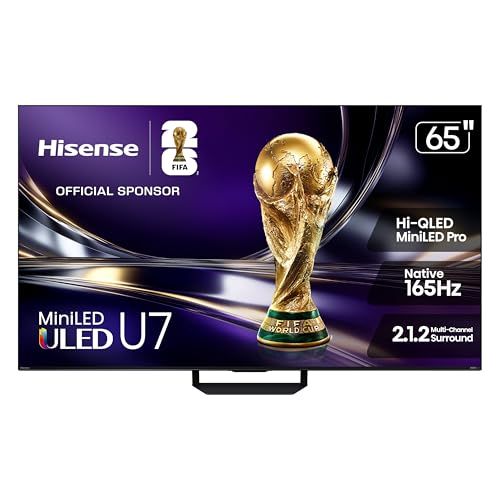
Hisense U7N
Open floor plans where the TV sits far from seating are the target for the 100-inch U7N option. Mini-LED dimming zones keep contrast intact across that larger panel size. Console players get a variable refresh rate and low input lag through Game Mode Pro.
Pros
- 100-inch option covers open, sunlit living rooms
- 144Hz with VRR suits console gaming
- Dolby Vision keeps HDR detail readable in daylight
Cons
- No anti-reflection coating, so glare from patio doors is visible
- Off-angle seating loses contrast faster than Samsung’s Neo QLED

LG QNED90T
A wide-viewing-angle layer joins Mini-LED backlighting on the QNED90T, useful where seating spreads across the sun’s path. Color and contrast hold up from off-center seats better than standard VA-panel competitors. LG’s webOS smart hub ships here too, the same platform found on the brand’s OLED lineup.
Pros
- Wide viewing angle keeps color accurate from side seating
- webOS smart hub matches LG’s higher-end OLED lineup
- Handles mixed daylight and lamp-lit evening viewing well
Cons
- Peak brightness trails the Samsung and Hisense Mini-LED sets
- 120Hz refresh is lower than several competitors on this list
What to look for
What makes a TV good in a bright room Peak brightness, measured in nits, sets the ceiling for how much light a panel pushes out before highlights start looking gray. Mini-LED backlights typically reach higher peak brightness than standard LED-lit LCDs. Ambient light bounce matters just as much, which is why an anti-reflection or anti-glare coating changes how a screen reads at noon. Dark scenes stay intact under room lights only when local dimming zones do their job.
Best for glare-heavy rooms with big windows Unshaded windows or sliding glass doors call for a panel engineered specifically to scatter reflections. Sony’s Bravia 9 uses an anti-reflective coating built for that scenario, and Samsung’s Neo QLED line applies a similar treatment. Budget Mini-LED sets from TCL and Hisense skip this layer, so direct sun still creates a visible glare patch. Curtains or blinds help any TV, but coating quality decides how much they’re actually needed.
Screen size and viewing distance for sunlit spaces Bigger rooms with more window area often need a larger screen just to compete with the ambient light entering the space. A 65-inch panel viewed from 10 feet reads dimmer, proportionally, than the same panel viewed from 7 feet. Sizes up to 100 and 98 inches, offered on the Hisense U7N and TCL QM851G, suit open floor plans. Smaller rooms with one window rarely need to go past 55 or 65 inches even with strong sun exposure.
When a projector or matte-screen TV beats brightness alone No LED backlight fully solves a room where sun hits the screen directly at certain hours. Rotating seating or the TV itself sometimes fixes glare more effectively than chasing higher nits. A matte-screen monitor-style panel or an ambient-light-rejecting projector screen can outperform a glossy TV in that one specific spot. Most living rooms still get through daylight hours fine with a Mini-LED set that pairs anti-reflection coating and central local dimming.
How they stack up
| # | Model | Peak brightness | Best for | Score | Price |
|---|---|---|---|---|---|
| 1 | Samsung QN90D Neo QLED | Up to 2000 nits per Samsung specifications | Best overall | 9.4 | Check price |
| 2 | Hisense U8N | Up to 3000 nits on the 65-inch model, per Hisense specifications | Best value | 9.1 | Check price |
| 3 | TCL QM851G | Up to 2000 nits per TCL specifications | Best budget | 8.8 | Check price |
| 4 | Sony Bravia 9 | Rated above 2000 nits per Sony specifications | Best for glare reduction | 8.5 | Check price |
| 5 | Samsung Q80D QLED | Up to 1000 nits per Samsung specifications | Best for sports/fast motion | 8.3 | Check price |
| 6 | Hisense U7N | Up to 1500 nits per Hisense specifications | Best for large bright living rooms | 8.1 | Check price |
| 7 | LG QNED90T | Up to 1500 nits per LG specifications | Best for mixed lighting | 8.0 | Check price |
Good to know
What is the best TV for a bright room?
Samsung’s QN90D Neo QLED handles the most window glare thanks to its anti-reflection coating. Hisense’s U8N and Sony’s Bravia 9 also rank near the top on peak brightness and coating quality. Unshaded windows as the main issue point toward the QN90D first.
How many nits do I need for a sunny room?
Direct, unshaded sun calls for panels rated above 1500 nits peak brightness. A north-facing room with indirect light can look fine on TVs rated closer to 1000 nits. Anti-reflection coating matters as much as the raw nit figure once direct sun hits the glass.
Is OLED or QLED better in a bright room?
QLED and Mini-LED panels generally outperform OLED in daylight because they push higher peak brightness. OLED panels produce deeper black levels but top out at lower nits on most current models. Brighter Mini-LED and QLED sets on this list suit a sunlit room over OLED alternatives.
Does anti-reflective coating actually reduce TV glare?
Yes, an anti-reflective or anti-glare layer scatters incoming light instead of reflecting it straight back at the viewer. Sony’s Bravia 9 and Samsung’s Neo QLED line both use this treatment. Panels without it, like several budget Mini-LED sets, show a visible glare patch from windows or overhead lights.
Can a cheap TV work in a bright living room?
A lower-cost Mini-LED set like the Hisense U7N still handles moderate daylight thanks to a dense backlight array. It lacks the anti-reflection coating found on pricier models, so direct sun on the glass creates more visible glare. Positioning the screen away from windows helps close that gap.
What screen size works best for a room with lots of windows?
Bigger rooms with more window area often need a larger screen to stay visually dominant against the light entering the space. Sizes from 75 to 100 inches, like those offered on the TCL QM851G and Hisense U7N, suit open floor plans. Smaller rooms with a single window rarely need to go past 65 inches.
Does Mini-LED perform better than standard LED in daylight?
Mini-LED backlights use smaller, more numerous LEDs than standard LED-lit LCDs, raising peak brightness and improving local dimming. Every TV on this list uses Mini-LED for that reason. Standard LED sets without local dimming zones wash out faster once room light increases.
Should I close curtains even with a bright TV?
Closing curtains still improves contrast and color accuracy on any TV, even a high-brightness Mini-LED model. Direct sun hitting the screen at a low angle overwhelms even the best anti-reflection coating. Early morning or late afternoon, when the sun sits low, is when curtains matter most.
Our pick
Samsung’s QN90D Neo QLED remains the strongest all-around pick for a bright room, pairing anti-reflection coating with local dimming and sizes up to 98 inches. Harsher glare from unshaded windows should send buyers to Sony’s Bravia 9 instead, since its panel coating targets exactly that scenario. A large open room on a tighter budget gets nearly the same peak brightness from the Hisense U8N.


