Utility Knives Built for the Job Site
For most contractors, the Milwaukee 48-22-1505 Fastback is the top pick. It offers one-handed folding convenience and a blade change without tools. Its main limitation is the lack of a cushioned grip, which can be a factor during extended use.
A utility knife is one of the most used tools on a job site. It cuts drywall, opens packages, trims carpet, and scores materials. A good one saves time and prevents frustration.
We compared seven of the best utility knives for contractors. Each has strengths for different tasks. Consider how you hold the knife, how often you change blades, and whether you need a folding design.
How to pick the right one
The top picks, ranked

Milwaukee 48-22-1505 Fastback
The Milwaukee Fastback is a favorite among contractors. It folds open with one hand and has a blade change mechanism that releases the blade without tools. The handle is sturdy and the pocket clip is deep. Owners report it holds up well on job sites, though the grip can become slippery when wet.
Pros
- One-handed operation
- Quick blade change without tools
- Durable build
Cons
- Plastic handle may feel less premium
- No cushioned grip

Stanley 10-099 Heavy Duty Retractable Utility Knife
The Stanley 10-099 is a classic workhorse. It has a die-cast metal body and a fixed blade that locks securely. The handle is textured for grip. Users like its reliability, but changing the blade requires a screwdriver, which can slow you down.
Pros
- Very durable metal construction
- Secure blade lock
- Comfortable grip
Cons
- Blade change is not tool-free
- Heavier than some

DEWALT 20V MAX Utility Knife (DCE140B)
The DEWALT DCE140B is a powered utility knife that oscillates the blade for faster cutting. It is compatible with DEWALT 20V batteries. It is great for cutting drywall, carpet, and roofing. However, it is heavier and requires a battery, so it is not for everyone.
Pros
- Cuts faster with less effort
- Reduces hand fatigue
- Compatible with DEWALT batteries
Cons
- Battery and charger not included
- Bulky for tight spaces

Tajima 24-150L Smooth Cut Utility Knife
The Tajima Smooth Cut features a unique blade guide that reduces blade deflection, allowing for straighter cuts. The handle has an elastomer grip and is angled for better control. It has a quick-change blade system. Some users find the blade a bit finicky to load.
Pros
- Straight, precise cuts
- Comfortable grip
- Low profile
Cons
- Blade change takes practice
- Plastic body may not be as tough

IRWIN 10-099 Heavy Duty Utility Knife
The IRWIN 10-099 is an affordable and dependable knife. It has a die-cast body and a non-slip grip. It uses standard blades and has a simple blade change via a screw. It lacks the quick-change convenience of higher-end models but gets the job done.
Pros
- Very affordable
- Solid metal construction
- Comfortable grip
Cons
- Blade change is slow
- No pocket clip

OLFA 25B Heavy Duty Utility Knife
The OLFA 25B uses snap-off blades that allow you to break off the dull tip for a fresh edge. It has a rubberized grip and a metal body. It is ideal for cutting cardboard and drywall. The blade is not as rigid as a fixed blade, so it may flex under heavy pressure.
Pros
- Always sharp edge
- Durable metal body
- Comfortable grip
Cons
- Blade flex can affect deep cuts
- Blade is shorter than standard
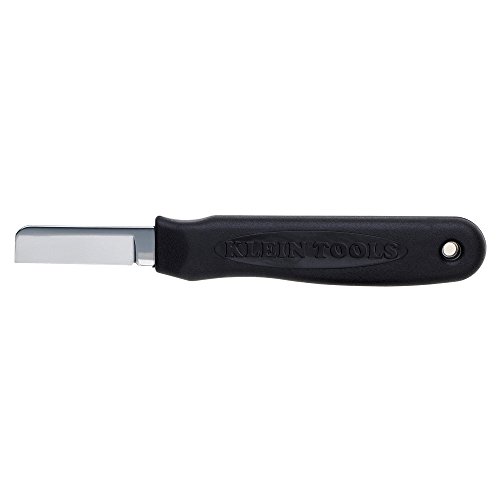
Klein Tools 44200 Folding Utility Knife
The Klein Tools 44200 is a compact folding knife that is easy to carry. It has a liner lock that keeps the blade secure. The blade change is simple with a tool-free mechanism. The handle is ergonomic with a rubber grip. It is not as heavy-duty for tough cutting tasks.
Pros
- Compact and lightweight
- Safe locking mechanism
- Easy blade change
Cons
- May not withstand heavy abuse
- Smaller grip for large hands
How they compare
| # | Model | Blade Type | Best for | Score | Price |
|---|---|---|---|---|---|
| 1 | Milwaukee 48-22-1505 Fastback | Standard utility blade | One-handed folding and quick blade change | 9.4 | Check price |
| 2 | Stanley 10-099 Heavy Duty Retractable Utility Knife | Standard utility blade | Heavy-duty cutting with a fixed blade | 9.2 | Check price |
| 3 | DEWALT 20V MAX Utility Knife (DCE140B) | 20V MAX battery (not included) | Cordless power cutting for repetitive tasks | 8.9 | Check price |
| 4 | Tajima 24-150L Smooth Cut Utility Knife | Standard utility blade | Precision cutting with a comfortable grip | 9.0 | Check price |
| 5 | IRWIN 10-099 Heavy Duty Utility Knife | Standard utility blade | Budget-friendly reliability | 8.6 | Check price |
| 6 | OLFA 25B Heavy Duty Utility Knife | Snap-off blade (25mm) | Snap-off blades for always sharp cutting | 8.8 | Check price |
| 7 | Klein Tools 44200 Folding Utility Knife | Standard utility blade | Compact and safe with auto-locking | 8.4 | Check price |
Good to know
What is the best utility knife for cutting drywall?
For cutting drywall, a fixed blade knife like the Stanley 10-099 provides stability and precise control. The DEWALT powered knife can also speed up drywall cutting, but it is heavier and requires a battery.
Are snap-off blades better than standard blades?
Snap-off blades are convenient because you can break off the dull segment for a fresh edge without changing the whole blade. However, they are thinner and can flex, so they are less suitable for heavy-duty scoring or cutting thick materials.
How often should I replace my utility knife blade?
Replace the blade when it becomes dull and starts tearing instead of cutting. For heavy daily use, you might change it several times a week. For occasional use, a blade can last for months, but always check for sharpness.
Can I use a utility knife for opening boxes without damaging contents?
Yes, but use a light touch and cut away from the contents. A retractable blade with a shallow depth setting can help. Some knives have a safety feature that limits blade exposure, which is ideal for box cutting.
What safety precautions should I take with a utility knife?
Always cut away from your body. Keep your free hand clear of the cutting path. Use a sharp blade because dull blades require more force and can slip. Retract the blade when not in use, and store the knife safely.
Are utility knives with a quick-change blade worth it?
Yes, for contractors who change blades often, a quick-change mechanism saves time and reduces frustration. It also encourages you to replace dull blades more frequently, which improves safety and cut quality.
What is the most durable utility knife?
The Stanley 10-099 and the IRWIN 10-099 have die-cast metal bodies that are very durable. They can withstand drops and rough handling. However, they lack the convenience of tool-free blade changes.
Can I carry a folding utility knife in my pocket?
Yes, folding utility knives with a pocket clip are designed for pocket carry. Ensure the blade locks securely to prevent accidental opening. The Milwaukee Fastback and Klein Tools 44200 are popular options.
Do powered utility knives work well?
Powered knives, like the DEWALT DCE140B, can cut faster and reduce effort, especially on repetitive jobs. However, they are heavier, require a battery, and may be overkill for light tasks. They are a good investment for heavy users.
What is the difference between a utility knife and a box cutter?
A box cutter is typically lighter and designed for opening boxes. A utility knife is more robust and used for a wider range of cutting tasks, such as drywall, carpet, and roofing. Utility knives often have thicker blades and more durable handles.
Our take
For most contractors, the Milwaukee 48-22-1505 Fastback is the best utility knife because it combines one-handed operation, tool-free blade changes, and a compact design that is easy to carry. If you need maximum durability for heavy cutting, choose the Stanley 10-099. For repetitive cutting tasks that cause hand fatigue, the DEWALT powered knife is worth the investment.


