UV Resin Lamps Ranked by Cure Speed and Coverage
The LET’S RESIN 54W UV Light for Resin is our top pick for craft resin thanks to broad coverage and a hinged design that fits larger pieces. The SUNUV SUN2C is the best value everyday lamp, and the ELEGOO Mercury Plus 2.0 is the strongest choice for printed resin models.
For craft resin work, the LET’S RESIN 54W UV Light for Resin is the lamp we would buy first, with the SUNUV SUN2C as the cheaper everyday option and the ELEGOO Mercury Plus 2.0 for anyone curing three dimensional printed parts.
UV curing gear is confusing because nail lamps, craft lamps and printer curing stations all use ultraviolet light but differ in wavelength, coverage and how evenly they reach a piece. We compared published wavelengths, power ratings, chamber dimensions, timer settings and consistent maker feedback, then ranked lamps by how completely they cure typical resin thicknesses without leaving tacky shadows.
The shortlist, ranked

LET’S RESIN 54W UV Light for Resin
This lamp is built for craft resin rather than nails, so the head opens wide enough to sit over moulds, bookmarks and keyring blanks. The reflective interior spreads light across the whole tray, which is what prevents the tacky corners people complain about with small lamps. Owners report it cures thin layers in minutes, with thicker pours still needing multiple passes.
Pros
- Fits larger craft pieces than nail lamps
- Even coverage reduces sticky spots
- Preset timers simplify repeat work
Cons
- Thick pours still need layered curing
- Open design lets more light escape

SUNUV SUN2C UV LED Nail Lamp
SUNUV lamps are the crossover choice, sold for nails but widely used for small resin charms, jewellery and repairs. The removable base plate lets slightly taller pieces fit inside, which extends what a small lamp can do. Owners report it is fast for thin layers and best treated as a lamp for small work rather than large moulds.
Pros
- Dual wavelength suits varied resins
- Removable base fits taller pieces
- Very quick cure on thin layers
Cons
- Small chamber limits piece size
- No cooling fan on longer sessions
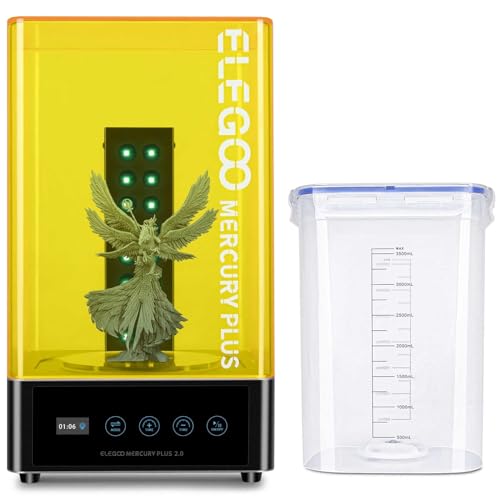
ELEGOO Mercury Plus 2.0 Washing and Curing Machine
This is a two stage station that washes prints in alcohol and then cures them on a rotating turntable inside a reflective chamber. That rotation is what gives even curing on models with undercuts and detail, which flat lamps cannot achieve. Owners report it dramatically improves surface finish compared with curing prints on a windowsill.
Pros
- Even cure on complex three dimensional shapes
- Handles washing and curing in one workflow
- Reflective chamber avoids shadowed areas
Cons
- Chamber size limits large prints
- Alcohol washing needs good ventilation

ANYCUBIC Wash and Cure 2.0
ANYCUBIC takes a similar approach with a taller chamber that suits larger printed models and a strong curing array around the sides. The washing basket and platform mount make transferring prints straightforward without touching wet resin. Owners report the build feels solid and the seals keep alcohol fumes down during washing.
Pros
- Takes taller models than most stations
- Multi angle lighting reaches recesses
- Good sealing during the wash cycle
Cons
- Takes up meaningful bench space
- Overkill for flat craft resin work
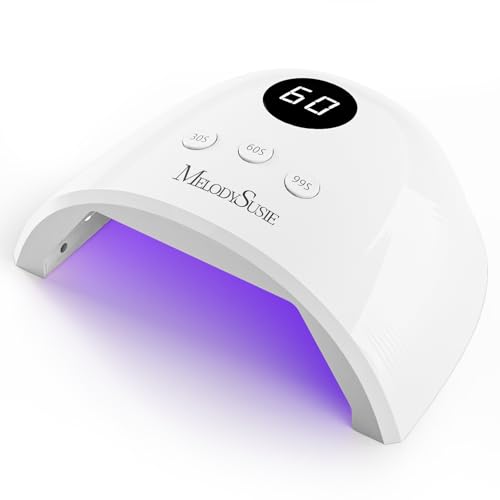
MelodySusie UV LED Nail Lamp
MelodySusie lamps run a dense LED array with quick preset timers, which suits repetitive small work such as pendants, earrings and resin coated findings. The wide opening makes it easy to slide a tray of small pieces in and out. Owners report it is efficient for batch work where each item is thin and flat.
Pros
- Efficient for batches of small items
- Dense LED array cures thin layers quickly
- Easy front loading
Cons
- Not suited to deep moulds
- Bright light spill needs care

Creality UW-01 Washing and Curing Machine
The UW-01 is the smaller footprint option among wash and cure stations, aimed at makers with limited bench space who still print regularly. It uses a rotating platform with side mounted UV LEDs for even coverage. Owners report it is best matched to small and medium prints rather than large single piece models.
Pros
- Takes less bench space than rivals
- Rotation gives even cure results
- Simple controls with few menus
Cons
- Smaller capacity than larger stations
- Basic build compared with premium units
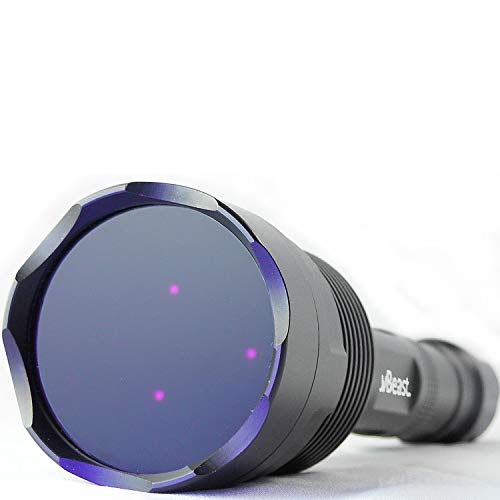
UVBeast V3 365nm UV Blacklight Flashlight
A handheld 365nm torch is the tool for touching up a sticky edge, curing a repair in place, or reaching into a mould a lamp cannot cover. It is also genuinely useful for inspecting resin surfaces and finding uncured patches. Owners report it needs close range and patience, so it complements a lamp rather than replacing one.
Pros
- Reaches spots a chamber cannot
- Useful for inspecting cure quality
- Portable and battery powered
Cons
- Slow for anything larger than a small area
- Requires strict eye protection at close range
How to choose
Wavelength has to match your resin Most craft UV resins cure around 395 to 405nm, while some formulations and printer resins respond better nearer 365nm, and dual band lamps hedge between the two. If a resin refuses to cure fully under a lamp that works for everything else, wavelength mismatch is the usual explanation. Check the resin bottle first, then buy a lamp that covers the stated range rather than assuming any UV source will work.
Coverage matters more than raw wattage A high wattage lamp with a small opening will leave shadowed edges tacky, while a lower powered unit with reflective walls and a turntable cures evenly. For flat craft work, look at the illuminated area and whether the light reaches the sides of a mould. For printed models, rotation is what removes shadows, which is why wash and cure stations produce better results than flat lamps.
Cure in layers for thick pours UV light only penetrates so far, so thick resin pours cure on the surface while remaining soft underneath, which later causes bending and yellowing. Pouring in layers of a few millimetres and curing between them is slower but produces a clear, hard result. This is also the fix for pieces that feel firm but dent under a fingernail after a long cure.
Take eye and skin safety seriously UV lamps used for resin emit enough energy to damage eyes with repeated direct exposure, and uncured resin is a skin sensitiser that can cause lasting allergy. Use enclosed lamps or UV blocking glasses, keep hands out of the beam, and wear nitrile gloves when handling uncured material. Good ventilation matters too, especially when using isopropyl alcohol to wash printed parts.
How they stack up
| # | Model | Power | Best for | Score | Price |
|---|---|---|---|---|---|
| 1 | LET’S RESIN 54W UV Light for Resin | 54W LED array | Best overall | 9.4 | Check price |
| 2 | SUNUV SUN2C UV LED Nail Lamp | 48W LED array | Best value | 9.2 | Check price |
| 3 | ELEGOO Mercury Plus 2.0 Washing and Curing Machine | Washing and curing in one unit | Best for 3D printed resin | 9.0 | Check price |
| 4 | ANYCUBIC Wash and Cure 2.0 | Two stage wash and cure | Best for printer users | 8.8 | Check price |
| 5 | MelodySusie UV LED Nail Lamp | Around 54W | Best for small jewellery | 8.6 | Check price |
| 6 | Creality UW-01 Washing and Curing Machine | Wash and cure combined | Best compact station | 8.3 | Check price |
| 7 | UVBeast V3 365nm UV Blacklight Flashlight | 365nm filtered | Best for spot curing | 8.0 | Check price |
Good to know
Can I use a nail lamp for UV resin?
Yes, and many crafters do, since the wavelengths overlap. The limitation is chamber size, so nail lamps suit small jewellery and charms rather than large moulds.
Why is my resin still sticky after curing?
Common causes are insufficient light reaching the surface, too thick a pour, or oxygen inhibition on the exposed top layer. Curing in thinner layers and increasing exposure time solves most cases.
What wavelength do I need for UV resin?
Most craft resins specify around 395 to 405nm, while many printer resins prefer 365 to 405nm. Dual wavelength lamps cover both, which is why they are popular for mixed use.
How long does UV resin take to cure?
Thin layers often cure in one to three minutes under a strong lamp, while thicker pieces need multiple layered cures. Always follow the resin maker’s stated time as a starting point.
Is sunlight a substitute for a UV lamp?
It works slowly and unevenly, and results vary with season, cloud and glass. A lamp gives consistent, repeatable cures and avoids the partially cured layers that sunlight often leaves.
Do I need a wash and cure station for 3D prints?
Not strictly, but it improves surface finish and consistency significantly. Washing removes uncured resin that would otherwise cure sticky, and rotation cures complex shapes evenly.
Are UV resin lamps safe for eyes?
Direct exposure should be avoided, so use enclosed units or UV blocking glasses. Handheld torches deserve particular care because the beam is easy to point at yourself.
Can I cure resin that has already yellowed?
Curing will not reverse yellowing, which comes from UV exposure and resin chemistry over time. Storing finished pieces away from strong sunlight slows further change.
The verdict
The LET’S RESIN 54W UV Light for Resin is the lamp we would buy for most craft work, because its wide opening and even coverage handle real project sizes rather than just nail sized pieces. The SUNUV SUN2C is the value pick for small jewellery, and anyone curing printed models should skip flat lamps entirely for the ELEGOO Mercury Plus 2.0. Match the wavelength to your resin, cure in layers, and wear eye protection every time.


