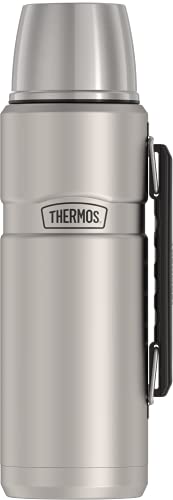
UV Water Filters Compared: Flow Rate, Dose and Lamp Life
Viqua’s VH410 leads for whole-house use, backed by an NSF/ANSI 55 Class A validated dose and 10 GPM flow. Home Master’s HMUV1 costs less while covering typical household demand. iSpring’s UVF15A suits tight budgets that still want whole-house coverage against bacteria and viruses.
Viqua, Home Master and iSpring top this UV water filter lineup based on flow rate, UV dose and lamp life. Disinfection method varies by design, and whole-house units, under-sink filters and portable purifiers each answer a different contamination risk.
Well water, RVs and reverse osmosis setups complicate the choice fast. We compared certified UV dose ratings, flow capacity and owner feedback from current Amazon listings to match each system to a specific use case.
The shortlist, ranked

Viqua VH410 UV Water Disinfection System
A 10 GPM flow rate covers a typical 3 to 4 bedroom home from a single point of entry. Viqua built its reputation on validated dose performance rather than marketing claims. Installation happens after the main line, so every fixture gets treated water at once.
Pros
- Validated dose meets NSF/ANSI 55 Class A standards
- Handles a full household’s peak flow rate
- Compact chamber suits basement or utility installs
Cons
- Needs professional installation in most homes
- Leaves sediment and chemicals untouched
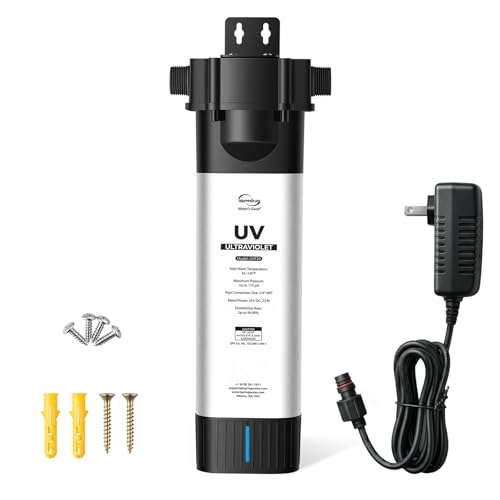
Home Master HMUV1 Whole House UV Water Purifier
Home Master positions the HMUV1 as a mid-range alternative to premium UV brands, using a 3/4 inch NPT connection that fits most existing plumbing. Setup skips specialty tools, according to owner reports. An 8 GPM flow rate covers daily demand in smaller households.
Pros
- Costs less than comparable whole-house UV systems
- Standard NPT fittings simplify plumbing swaps
- Indicator light signals lamp status clearly
Cons
- Lower flow rate than larger households may need
- Replacement lamps cost about the same as premium brands
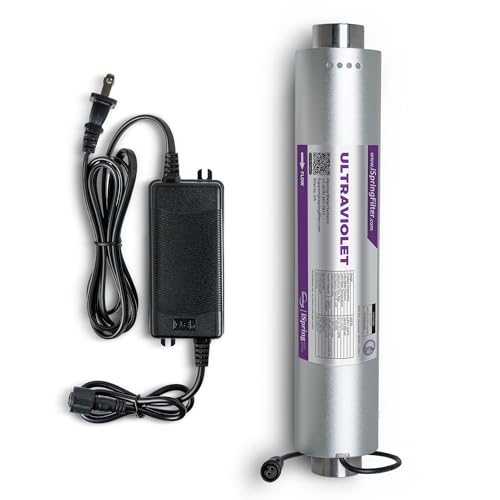
iSpring UVF15A Whole House UV Water Filter
Whole-house UV coverage arrives here without the premium brand markup. A stainless steel chamber houses the 38-watt lamp, rated for 15 GPM, higher than most units at this price. Basic instructions cover standard residential setups without extra hardware.
Pros
- Higher flow rate than most budget UV systems
- Stainless steel housing resists corrosion
- Costs less upfront than name-brand alternatives
Cons
- Fewer long-term reviews than established brands
- No app or smart monitoring

Aquasana Rhino EQ-1000-UV Whole House Filter with UV
Aquasana pairs its Rhino whole-house filtration line with a UV stage built for private well owners. Sediment and carbon filtration happen first, protecting lamp performance from mineral buildup. A 1 inch inlet and outlet suits higher-demand rural properties.
Pros
- Combines sediment, carbon and UV stages in one system
- 1 inch connections suit higher-demand well setups
- Long-rated filter capacity cuts cartridge changes
Cons
- Lower flow rate than dedicated UV-only units
- Multiple filter stages raise long-term maintenance cost

APEC ROES-UV75 Ultimate RO-UV System
APEC built the ROES-UV75 as a six-stage reverse osmosis system with a UV chamber added after the membrane. Drinking water is the target here, not whole-house use. Under-sink installation keeps the footprint small next to whole-house alternatives.
Pros
- Combines reverse osmosis and UV disinfection in one unit
- Compact footprint fits under a sink
- Targets drinking water taste and safety together
Cons
- Treats only the kitchen faucet, not the whole house
- Needs periodic membrane replacement alongside the UV lamp
Acuva Alpha-1 UV-LED Water Purification System
UV-LED technology replaces the mercury lamp here, so the unit activates instantly with no warm-up. A 12V DC power option suits RVs, boats and off-grid cabins. Sediment and carbon block stages sit ahead of the UV-LED chamber.
Pros
- Mercury-free UV-LED design activates instantly
- 12V DC option runs off standard household power too
- Compact enough for RV or boat installation
Cons
- Flow rate too low for whole-house use
- Higher unit cost per GPM than whole-house systems
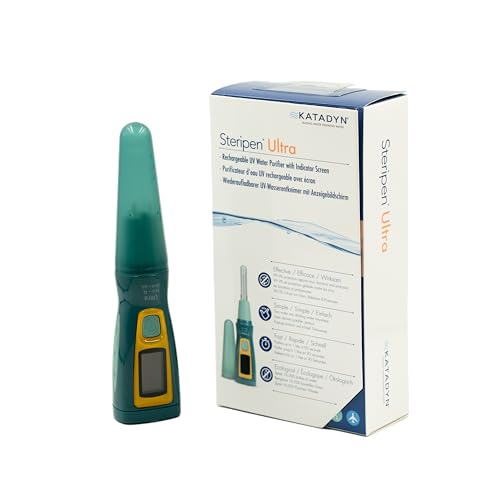
SteriPen Ultra UV Water Purifier
One liter at a time, a rechargeable UV lamp treats water for hikers and travelers rather than home plumbing. Treatment finishes in about 90 seconds per liter, per the listing. A USB-rechargeable battery replaces the disposable batteries earlier SteriPen models used.
Pros
- Compact enough for backpacking and travel use
- Rechargeable battery skips disposable battery waste
- Fast per-liter treatment time
Cons
- Not suited to continuous home water supply
- Needs clear water, since turbidity blocks UV exposure
How they compare
| # | Model | Flow Rate | Best for | Score | Price |
|---|---|---|---|---|---|
| 1 | Viqua VH410 UV Water Disinfection System | 10 GPM | Best overall | 9.4 | Check price |
| 2 | Home Master HMUV1 Whole House UV Water Purifier | 8 GPM | Best value | 9.1 | Check price |
| 3 | iSpring UVF15A Whole House UV Water Filter | 15 GPM | Best budget | 8.8 | Check price |
| 4 | Aquasana Rhino EQ-1000-UV Whole House Filter with UV | 1,000,000 gallons for pre/post filters | Best for well water | 8.6 | Check price |
| 5 | APEC ROES-UV75 Ultimate RO-UV System | 6-stage RO plus UV | Best for reverse osmosis combo | 8.4 | Check price |
| 6 | Acuva Alpha-1 UV-LED Water Purification System | UV-LED, mercury-free | Best for RVs and off-grid use | 8.2 | Check price |
| 7 | SteriPen Ultra UV Water Purifier | 90 seconds per liter | Best for travel and backpacking | 8.0 | Check price |
Before you buy
What does a UV water filter actually do? Ultraviolet light disrupts the DNA of bacteria, viruses and cysts so they cannot reproduce. Water passes through a quartz sleeve wrapped around a lamp, typically rated between 15 and 40 watts for household units. Sediment, chlorine taste and heavy metals pass through untouched, since UV handles only microorganisms. Most manufacturers pair the UV chamber with a sediment or carbon pre-filter to keep the quartz sleeve clear. Cloudy water blocks UV penetration, so pre-filtration is not optional for well sources.
Whole-house, under-sink or portable: which UV system fits? Whole-house systems like the Viqua VH410 install after the main line enters the home, treating every fixture at once. Under-sink combinations such as the APEC ROES-UV75 add UV disinfection after reverse osmosis, targeting drinking water specifically. Portable options like the SteriPen Ultra skip installation entirely, treating one liter at a time. The right pick depends on whether the goal is whole-home safety, drinking water purity or protection while traveling.
Best UV water filters for well water and off-grid homes Coliform bacteria show up often in well water, so many rural households treat UV disinfection as a required safety step rather than an upgrade. Flow rate matters more here, since an undersized chamber lets untreated water slip through during peak demand. Low-wattage options like the Acuva Alpha-1 run on 12V DC, useful for RVs and cabins without steady power. Seasonal homes should also plan a lamp replacement schedule, since a dormant system can grow biofilm inside the chamber.
Installation, lamp replacement and maintenance costs UV lamps degrade gradually and typically need replacement every 9,000 to 12,000 hours, roughly once a year under continuous use. Quartz sleeves need periodic wiping to remove mineral scale, especially in hard water areas. A licensed plumber usually handles the initial 3/4 inch or 1 inch NPT connection on whole-house units. Under-sink and portable units skip professional installation, connecting instead to an existing faucet or running on batteries.
Frequently asked questions
Do UV water filters remove chlorine or heavy metals?
No. UV light neutralizes bacteria, viruses and cysts only. Removing chlorine, lead or other metals needs a separate carbon or reverse osmosis stage, which is why most systems pair UV with additional filtration.
How often should a UV lamp be replaced?
Most household lamps carry a rated life of 9,000 to 12,000 hours, roughly one year of continuous operation. Manufacturers list the exact interval in the product documentation.
Is a UV water filter worth it on city water?
Municipal water already goes through disinfection, so UV adds a backup layer rather than a necessity. Homes with older pipes, private storage tanks or inconsistent chlorine residual sometimes still add UV for extra protection.
Can a UV water purifier work during a power outage?
Standard lamp systems need continuous electricity, so they stop disinfecting during an outage. Battery-powered portable units, like the SteriPen Ultra, keep working since they run on a rechargeable cell instead.
What is the difference between UV and reverse osmosis filtration?
UV disinfects biological contaminants but leaves dissolved solids and chemicals untouched. Reverse osmosis removes dissolved contaminants through a membrane but does not reliably kill bacteria on its own. Combination systems, such as the APEC ROES-UV75, use both methods together.
Are UV-LED purifiers better than traditional lamp systems?
UV-LED units skip mercury entirely and often switch on instantly with no warm-up period. Traditional mercury lamp systems still dominate whole-house installations, since they handle higher flow rates at a lower unit cost.
Does a UV water filter need a pre-filter?
Yes, in most cases. Sediment and turbidity block UV light from reaching organisms in the water, so manufacturers pair UV chambers with sediment or carbon pre-filters to keep water clear enough for treatment.
How much water pressure do UV water filters need?
Household systems typically operate within standard residential pressure ranges of 40 to 80 psi. Flow rate matters more than pressure alone, since water moving too fast through the chamber may not receive an adequate dose.
Which UV water filter works best for a family home?
Whole-house units sized for 8 GPM or more, like the Viqua VH410 or Home Master HMUV1, match typical peak demand in a 3 to 4 bedroom house. Undersized units let water through faster than the lamp can treat it.
The verdict
Whole-house protection points to the Viqua VH410 or Home Master HMUV1, depending on budget and flow needs. Well water, off-grid and travel situations each call for a different design, from the Aquasana Rhino to the Acuva Alpha-1 to the SteriPen Ultra. Matching flow rate and installation type to the actual water source matters more than chasing the highest UV dose number.