Vehicle Covers Compared: Indoor vs All Weather Use
The Kayme 6 Layer Car Cover is our overall pick for outdoor parking thanks to its layered construction and reflective coating. The Motor Trend OC-643 All Season Cover offers the best value, while the Covercraft WeatherShield HP is the choice for long term outdoor storage.
For year round outdoor parking the Kayme 6 Layer Car Cover ranks first here, with the Motor Trend OC-643 All Season Cover the strongest value option and the Covercraft WeatherShield HP the pick when a car sits still for months.
Covers are tricky because the two things buyers want, total waterproofing and breathability, pull against each other, and a fully sealed cover traps moisture against the paint. We compared published fabric specifications, layer counts, fastening systems, lining materials and what owners report after a full season outdoors.
Our top picks

Kayme 6 Layer Car Cover
Six bonded layers combine an aluminium film for heat reflection, waterproof membranes and a soft cotton inner face. That inner layer is what keeps the cover from sanding the clearcoat when wind moves it. Owners report it handles heavy rain and summer sun without the crackly stiffness cheaper multi layer covers develop.
Pros
- Reflective outer keeps cabin temperatures well down
- Cotton lining is gentle on paint in windy conditions
- Straps and buckles hold it through gusty weather
Cons
- Bulky to fold and store in a small trunk
- Heavy enough that fitting alone takes practice

Motor Trend OC-643 All Season Car Cover
A straightforward multi layer cover in a handful of size bands that covers most sedans and hatchbacks. It resists rain, dust and UV without pretending to be a storage grade product. For a daily driver parked on a street or driveway it does the job for a modest outlay.
Pros
- Sensible price for genuine all season protection
- Mirror pockets improve fit on most sedans
- Light enough for one person to fit quickly
Cons
- Generic sizing leaves slack on shorter cars
- Thinner than dedicated hail or storage covers
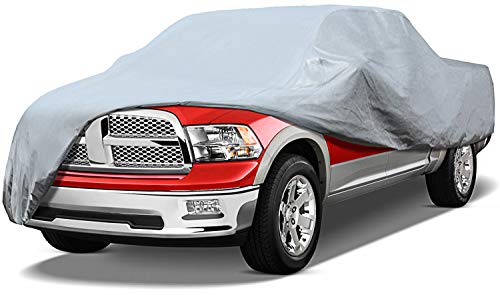
Leader Accessories Basic Guard 3 Layer Car Cover
Three layers of non woven fabric shed light rain while still letting trapped moisture escape, which is the balance that matters when a car is parked under trees or in a damp climate. It is lighter and easier to handle than six layer covers. Best suited to sheltered outdoor parking rather than open exposure.
Pros
- Breathes well so condensation does not sit on paint
- Light and quick to fit and fold
- Grommets allow an under body cable for security
Cons
- Not intended for sustained heavy downpours
- Thin against hail or falling branches

Covercraft WeatherShield HP Car Cover
WeatherShield HP is a high performance solution dyed fabric that resists UV, mildew and staining while still breathing, and Covercraft cuts it to specific vehicle patterns. That pattern fit is why it does not flap and abrade the way generic covers do. It is the option people buy once for a car they care about.
Pros
- Pattern cut fit means almost no flapping in wind
- Fabric resists mildew and UV over years of use
- Breathes well enough for months of storage
Cons
- Significantly more expensive than universal covers
- You must order the exact vehicle pattern

OxGord Executive Storm-Proof Car Cover
Built around heavier storm rated fabric with reinforced seams and multiple tie down points, this is the cover for exposed driveways where wind is the real enemy. It sheds sustained rain well. Owners report it stays put in conditions that pull lighter covers off entirely.
Pros
- Multiple tie downs keep it on in strong wind
- Reinforced seams resist tearing at stress points
- Handles prolonged wet weather without soaking through
Cons
- Less breathable than lighter three layer covers
- Heavy and awkward to fold when wet

Budge Lite Car Cover
A single layer polypropylene cover aimed at garage use, light dust and short outdoor spells. It weighs almost nothing and folds down small enough to live in the trunk. Treat it as a dust and pollen shield rather than a weather barrier and it represents good value.
Pros
- Cheapest way to keep dust and pollen off paint
- Folds small enough to keep in the vehicle
- Breathable so no moisture trap in a garage
Cons
- Not waterproof in any meaningful sense
- Single layer tears more easily than multi layer covers
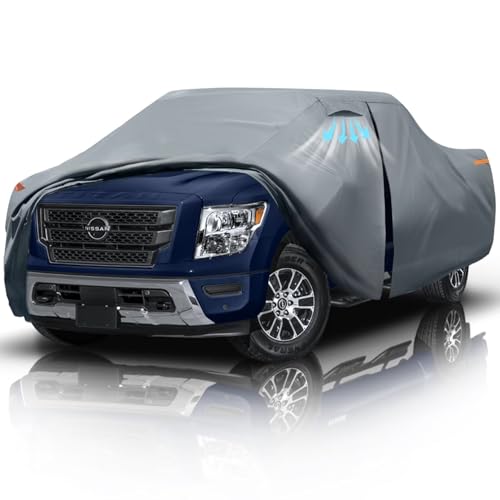
Titan Lightweight Car Cover
Titan focuses on covers that one person can throw over a car in under a minute, with soft fabric and a stretchy hem that grips the bumpers. Protection is moderate but the low friction of using it daily means it actually gets used. Good for people who cover the car every night rather than seasonally.
Pros
- Genuinely quick to fit and remove single handed
- Soft lining is safe on delicate finishes
- Compact enough to store in the vehicle
Cons
- Moderate protection against heavy weather
- Stretch hem loosens after a season of use
How they stack up
| # | Model | Layers | Best for | Score | Price |
|---|---|---|---|---|---|
| 1 | Kayme 6 Layer Car Cover | Six bonded layers | Best overall | 9.4 | Check price |
| 2 | Motor Trend OC-643 All Season Car Cover | Multi layer woven polyester | Best value | 9.2 | Check price |
| 3 | Leader Accessories Basic Guard 3 Layer Car Cover | Three non woven layers | Best for breathability | 9.0 | Check price |
| 4 | Covercraft WeatherShield HP Car Cover | WeatherShield HP solution dyed | Best for long term storage | 8.8 | Check price |
| 5 | OxGord Executive Storm-Proof Car Cover | Heavy duty layered fabric | Best for wind and rain | 8.6 | Check price |
| 6 | Budge Lite Car Cover | Single layer polypropylene | Best budget | 8.3 | Check price |
| 7 | Titan Lightweight Car Cover | Lightweight layered fabric | Best for easy handling | 8.0 | Check price |
How to pick the right one
Waterproof is not the goal, water resistant is A fully waterproof cover traps evaporating moisture underneath, and paint sitting under a damp sheet in warm weather is worse off than paint left bare. What you want is a fabric that sheds rain from above while letting vapour escape from below. Every quality outdoor cover here works this way, and any cover marketed as one hundred percent waterproof plastic should be avoided for anything longer than an afternoon.
Fit matters more than layer count A loose cover moves in the wind, and moving fabric with road grit on it acts like fine sandpaper on the clearcoat. Pattern cut covers such as the Covercraft avoid this entirely. If you buy a universal cover, get the size band right, use every strap it comes with, and wash the vehicle before covering so there is no grit trapped underneath.
Match the cover to the actual threat Sun and heat call for a reflective outer layer, tree sap and bird mess call for something easy to wash, hail calls for genuine padding, and garage dust calls for the lightest breathable sheet you can find. Buying a six layer storm cover for a garaged car is money spent on bulk you then have to wrestle with every day.
Look after the cover and it lasts Fold it the same way each time so the clean inner face never touches the ground, and never put it away soaking wet for weeks. Most covers can be washed on a gentle cycle without fabric softener, or hosed down over a fence and dried in the sun. Owners report that the covers that fail early are almost always the ones stored damp and crumpled.
Common questions
Will a car cover scratch my paint?
Only if grit gets between the cover and the paint, or the cover flaps loose in wind. Wash the vehicle before covering it, choose a soft lined cover, and use all the straps so it stays still. A well fitted cover is far kinder to paint than months of sun and bird mess.
Can I cover a wet car?
It is better not to, but a breathable cover will let the moisture escape over time. Never put a non breathable plastic sheet over a wet vehicle, since that traps water against the paint and trim and can encourage mildew inside the cover itself.
How do I stop the cover blowing off?
Use the built in straps and buckles under the vehicle, and add a cable through the grommets if the cover has them. Covers with multiple tie down points such as the OxGord Executive hold far better than an elastic hem alone in exposed locations.
Do I need a custom fit cover?
Not for occasional use. Universal size bands are fine for a daily driver. A pattern cut cover earns its cost when the vehicle is parked outside long term, has an unusual shape, or has paintwork you particularly care about, because the tighter fit eliminates flapping.
Are car covers good for hail?
Standard multi layer covers soften small hail but will not stop dents from large stones. If hail is a regular risk in your area, look specifically for padded or inflatable hail covers rather than assuming a thicker all season cover will do the same job.
How often should I take the cover off?
For a stored vehicle, lift it every few weeks to check for moisture, and give the car a walk around. For daily use it comes off anyway. Leaving any cover untouched for a whole winter without checking underneath is where problems tend to start.
Can I wash a car cover?
Most can be washed on a gentle cold cycle without fabric softener or bleach, then air dried fully. Check the label first, since some coated fabrics prefer being hosed down over a rail. Never tumble dry a coated or laminated cover.
Indoor or outdoor cover for a garaged car?
An indoor cover such as the Budge Lite is the right call. It keeps dust, pollen and workshop grit off without the weight and bulk of weatherproof layers, and it breathes freely so nothing condenses under it.
The bottom line
The Kayme 6 Layer Car Cover balances heat reflection, weather resistance and a paint safe lining better than anything else at its level, which makes it the pick for most outdoor parking. Motor Trend OC-643 covers the basics for less, and the Covercraft WeatherShield HP is what to buy when the car will sit still for months.