Wash Mitts vs Sponges: Which One Protects Your Paint?
The Chemical Guys Chenille Microfiber Wash Mitt leads for its deep plush nap that lifts grit away from paint. The Meguiar’s Microfiber Wash Mitt is the value pick for an everyday safe wash, and the Chemical Guys Big Mouth Foam Sponge wins when a large sponge that holds plenty of suds matters more.
Deep chenille fingers on the Chemical Guys Chenille Microfiber Wash Mitt pull grit up and away from the clearcoat instead of dragging it across paint, which puts it at the top of this list. The Meguiar’s Microfiber Wash Mitt covers safe everyday washing at a lower price, while the Chemical Guys Big Mouth Foam Sponge suits anyone who prefers a large sponge that carries a lot of suds.
A thin flat sponge traps grit against the surface, while a deep plush mitt lifts particles up into the nap where rinsing removes them. That single difference decides whether a wash tool leaves a clean finish or a web of swirl marks. Two-bucket technique and rinsing habits matter too, so we compared nap depth and grit release, coverage per pass, how cleanly each item rinses out, and what owners report about swirls before ranking on paint safety.
The shortlist, ranked

Chemical Guys Chenille Microfiber Wash Mitt
Long chenille microfiber fingers reach into the wash water and lift grit up off the paint on this mitt. A deep nap holds a lot of suds, so reloading happens less often, and it rinses out well between panels. For anyone chasing a swirl-free finish on a daily driver or a show car, this is the safest all-rounder here.
Pros
- Deep nap lifts grit off the paint
- Holds plenty of suds per dunk
- Rinses clean between panels
Cons
- Bulky in tight areas
- Sheds a little lint when new
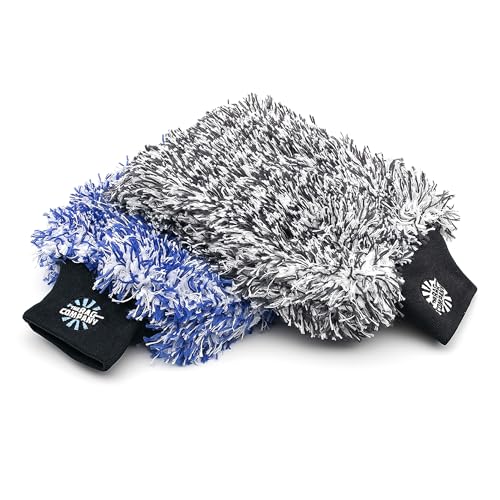
The Rag Company Cyclone Deluxe Wash Mitt
Long twisted microfiber loops trap and hold grit deep in the pile on this detailing-favorite mitt. Its dense pile carries a huge amount of foam, and the mitt glides plush and slick against paint once loaded. Price sits above everyday mitts, but build quality and grit handling justify it for careful owners.
Pros
- Long pile traps grit deep away from paint
- Carries a large volume of foam
- High quality, durable construction
Cons
- Higher price than everyday mitts
- Takes longer to dry after washing

Meguiar’s Microfiber Wash Mitt
Safe, plush washing comes without a premium price tag on this straightforward microfiber mitt. Nap depth runs deep enough to beat any sponge on gentleness, and the mitt suits most hand sizes comfortably. It works as a sensible default for a weekend wash without overthinking the choice.
Pros
- Plush enough to be paint safe
- Comfortable everyday size
- Widely available at a fair price
Cons
- Nap shallower than premium mitts
- Holds less foam than deep pile options

Adam’s Wool Wash Mitt
Traditional plush feel defines this genuine wool mitt, prized on delicate and dark paint. Natural wool fibers stay soft and carry water and suds generously as they glide over the surface. Extra care in washing and drying applies compared with synthetic mitts, yet many enthusiasts rate wool among the safest options for show finishes.
Pros
- Very soft on delicate paint
- Holds water and suds well
- Traditional plush glide
Cons
- Needs careful washing and drying
- Higher cost than synthetic mitts

Relentless Drive Ultimate Car Wash Mitt
A plush, safe format at a low price is the pitch behind this chenille microfiber mitt. Nap depth still beats any sponge at lifting grit, and it holds suds well for the cost. Longevity may trail the top mitts here, though as an affordable entry into safe washing it holds up well.
Pros
- Plush safe washing at a low price
- Deep nap holds suds well
- Good starter mitt
Cons
- Not as durable as premium mitts
- Some lint shedding early on

Chemical Guys Big Mouth Foam Sponge
This large soft foam block holds a generous load of suds and covers panels quickly for anyone who prefers a sponge over a mitt. Size and grip make it comfortable to work with across a whole car. Sponges hold grit less safely than a deep pile mitt, so frequent rinsing in a grit guard bucket keeps swirl risk down.
Pros
- Holds a large volume of suds
- Covers big panels quickly
- Comfortable to grip
Cons
- Foam holds grit less safely than a plush mitt
- Needs frequent rinsing to stay safe

SM Arnold Professional Wash Sponge
Detailers have relied on this large professional foam block for years, and SM Arnold still supplies it to the trade. Durability and low cost pair with generous water capacity for wheels, tires, and rough jobs where a good paint mitt has no business. A separate sponge for lower panels and wheels keeps paint tools protected.
Pros
- Durable trade grade foam
- Inexpensive and long lasting
- Good for wheels and rough areas
Cons
- Less paint safe than a plush mitt
- Traps grit if not rinsed often
How to pick the right one
Why nap depth prevents swirl marks Fine scratches called swirl marks form when grit gets trapped between a wash tool and the paint. Deep pile lets particles rise up into the fibers and away from the surface, where rinsing removes them. A thin flat sponge has nowhere to store that grit, so it drags the same particles back and forth. Anyone prioritizing a swirl-free finish should reach for the deepest plush mitt they can comfortably use and save sponges for wheels and lowers.
Mitt versus sponge: how they differ Both tools can clean a car, but safety and feel set them apart. A plush microfiber or wool mitt protects paint better because of how it lifts and stores grit. Foam sponges cost less, hold a lot of suds, and cover ground fast, though they keep grit closer to the surface. Many owners run a mitt on paint and reserve a separate sponge for wheels, tires, and the dirtiest lower panels.
Why the two-bucket method matters as much as the tool Technique protects paint just as much as tool choice does. One bucket holds soap solution, a second holds clean rinse water, and grit guards in the bottom of each help. Rinsing the mitt in the clean bucket and agitating it against the guard between panels lets grit fall to the bottom instead of returning to the car. This habit does more for paint than any single product upgrade.
Cleaning and storing wash tools between uses A mitt stays paint safe only when it is clean. Machine wash microfiber mitts without fabric softener, since it clogs the fibers, then air dry them. Wool mitts need a gentler wash and air drying. Dropping a mitt on the ground and continuing to use it invites scratches from embedded grit, so retire anything that hits the pavement. Keep separate mitts and sponges dedicated to paint and to wheels.
How they compare
| # | Model | Material | Best for | Score | Price |
|---|---|---|---|---|---|
| 1 | Chemical Guys Chenille Microfiber Wash Mitt | Chenille microfiber | Best overall | 9.4 | Check price |
| 2 | The Rag Company Cyclone Deluxe Wash Mitt | Twisted loop microfiber | Best premium | 9.2 | Check price |
| 3 | Meguiar’s Microfiber Wash Mitt | Microfiber | Best value | 9.0 | Check price |
| 4 | Adam’s Wool Wash Mitt | Natural wool | Best for delicate finishes | 8.7 | Check price |
| 5 | Relentless Drive Ultimate Car Wash Mitt | Chenille microfiber | Best budget mitt | 8.5 | Check price |
| 6 | Chemical Guys Big Mouth Foam Sponge | Soft foam | Best sponge | 8.2 | Check price |
| 7 | SM Arnold Professional Wash Sponge | Foam | Best classic sponge | 8.0 | Check price |
Common questions
Are wash mitts better than sponges for cars?
For paint safety, yes. A deep pile mitt lifts grit up into the fibers and away from the clearcoat, while a flat sponge keeps grit closer to the surface where it can cause swirls. Sponges still work fine for wheels, tires, and the dirtiest lower panels.
How do I avoid swirl marks when washing my car?
Use a plush microfiber or wool mitt, wash with a two-bucket method and grit guards, and rinse the mitt often. Work top to bottom, keep a separate tool for wheels, and dry with a clean microfiber towel rather than an old rag.
Should I use different mitts for wheels and paint?
Yes. Wheels collect brake dust and coarse grit that will scratch paint if the same tool touches the body afterward. Keep one mitt or sponge strictly for wheels and lower panels, mark it clearly, and use a separate one only for paint.
How do I clean a microfiber wash mitt?
Machine wash it without fabric softener, which clogs the fibers and reduces grip, then air dry or tumble on low. Washing after every use stops trapped grit from scratching paint on the next wash. Wool mitts need a gentler wash and air drying instead.
Is microfiber or wool better for washing a car?
Both stay paint safe when plush. Microfiber is easy to care for, durable, and affordable, while natural wool is prized for softness on delicate and dark finishes but needs gentler washing. Budget and how much care you want to give the tool usually decide it.
Can a wash sponge scratch my paint?
It can, if grit gets trapped inside and is not rinsed out. Foam holds particles closer to the surface than a deep mitt, so frequent rinsing in a grit guard bucket matters, along with reserving sponges for wheels and heavily soiled lower areas.
How often should I replace a wash mitt?
Replace a mitt once the nap flattens, it stops holding suds, or it picks up embedded contamination that will not wash out. Regular cleaning helps a good microfiber or wool mitt last a long time, though any mitt dropped on the ground should be retired from paint duty.
Do I need special soap with a wash mitt?
A dedicated car wash shampoo works better than dish soap, which strips wax and protection. Good shampoo provides lubrication that helps grit slide off the paint and into the mitt, working alongside the plush nap to cut the chance of swirls.
Our take
The Chemical Guys Chenille Microfiber Wash Mitt is the top choice for keeping swirl marks off paint, thanks to its deep grit-lifting nap. The Meguiar’s Microfiber Wash Mitt delivers the same plush safety for less on a weekend wash. Sponge fans should reach for the Chemical Guys Big Mouth Foam Sponge, which holds plenty of suds and covers panels fast provided it gets rinsed often in a grit guard bucket.

