Washable Small Animal Bedding for Guinea Pigs and Rabbits
GuineaDad’s GuineaPad 2.0 ranks best overall thanks to its three-layer absorbent core and standard C&C sizing. Kavee’s liner offers strong value with a waterproof PUL backing, while the AK KYC liner suits owners testing washable bedding on a tight budget. All three go straight into the washing machine for reuse.
GuineaDad’s GuineaPad 2.0 fits owners moving guinea pigs or rabbits off disposable bedding for good. A three-layer build pulls urine into a hidden absorbent core instead of leaving it sitting on the surface. Dry time runs longer on the largest 2×5 size, which is the main tradeoff.
Sizing complicates these comparisons, since liners get cut for different standards: C&C grids, branded hutches, or generic bins. Layer construction, sizing options, and owner-reported durability across current Amazon listings separate real differences from marketing claims.
What we recommend

GuineaDad GuineaPad 2.0 Fleece Cage Liner
A three-layer system traps urine below the fleece surface rather than leaving it to pool on top. That absorbent core cuts down on the ammonia smell that builds up between washes. Cutting comes pre-sized to standard 2×3, 2×4, and 2×5 C&C cage dimensions.
Pros
- Absorbent core keeps paws dry between spot cleanings
- Fits standard C&C cage grid sizes without trimming
- Holds up to repeated machine washing
Cons
- Larger 2×5 size takes longer to air dry
- Absorbent core adds bulk compared to single-layer liners

Kavee Guinea Pig Fleece Cage Liner
Both branded Kavee cages and standard C&C grid setups get a matching pre-cut size. A waterproof PUL layer stops urine from soaking into the coroplast base underneath the liner. Fasteners hold the fleece surface flat and non-slip once secured in place.
Pros
- Non-slip backing keeps the liner from bunching
- Sized for both Kavee cages and generic C&C setups
- Waterproof layer protects the coroplast floor
Cons
- No dedicated absorbent core layer
- Fasteners wear out faster than the fleece itself

AK KYC Guinea Pig Cage Liner
Polar fleece paired with a waterproof PUL backing keeps this two-layer build straightforward. Pre-cut sizing ships ready for standard 2×3 and 2×4 C&C cages without trimming. Owners report it as a low-cost entry point before upgrading to layered liners.
Pros
- Lower cost than multi-layer competitors
- Pre-cut sizing matches common C&C cage dimensions
- Lightweight fleece dries faster after washing
Cons
- No separate absorbent layer, so wicking is slower
- Thinner fleece shows wear sooner with heavy use
Bunny Business Fleece Hutch Liner
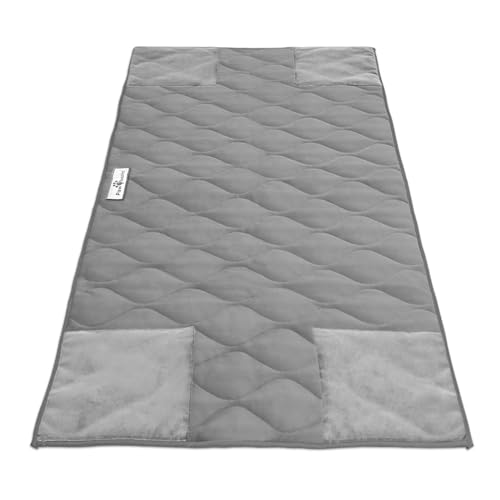
Rabbit hutches and outdoor runs get a purpose-built fit here, rather than the C&C grid sizing common to guinea pig liners. Non-slip backing keeps the fabric anchored on wooden hutch floors during active digging. Dimensions run closer to typical hutch measurements than the standard grid.
Pros
- Sized for rabbit hutches instead of C&C grids
- Non-slip backing suits wooden hutch floors
- Washes at standard machine settings without special care
Cons
- Sizing does not match standard guinea pig C&C cages
- No listed waterproof layer for heavy soaking

Amakunft 4-Layer Guinea Pig Cage Liner
A fourth layer doubles up the absorbent middle section compared to standard three-layer liners. Cages housing multiple guinea pigs produce more waste, and that extra layer targets exactly that load. Waterproof backing on the bottom keeps moisture from ever reaching the cage floor.
Pros
- Extra absorbent layer helps with multi-pig cages
- Waterproof bottom protects coroplast or wood floors
- Cut to standard C&C grid sizes
Cons
- Extra layers add weight, slowing dry time
- Bulkier feel than simpler two-layer liners
Downtown Pet Supply Washable Fleece Cage Liner
Extra-large sizing goes beyond the usual C&C dimensions to cover shared enclosures housing more than one small pet. Fleece paired with absorbent padding targets general moisture control rather than one specific species. Coverage this wide suits group housing more than a single guinea pig’s cage.
Pros
- Extra-large sizes fit multi-pet and oversized enclosures
- Works across rabbits, guinea pigs, and similar small pets
- Reusable padding cuts down on loose bedding waste
Cons
- Extra-large sizes need a larger washer and dryer
- Padding is less structured than dedicated C&C liner brands

PIVBY Guinea Pig Fleece Cage Liner
A quick-dry fleece blend sheds water faster than standard fleece, cutting turnaround between washes. Owners washing liners every few days benefit most from that shorter dry time. No fabric softener step is needed, which helps preserve wicking ability over repeated cycles.
Pros
- Quick-dry fleece shortens laundry turnaround
- No fabric softener needed, preserving wicking ability
- Custom sizing options beyond standard C&C grids
Cons
- Quick-dry blend feels thinner than heavier fleece liners
- Custom sizes take longer to order correctly
The lineup, side by side
| # | Model | Layer construction | Best for | Score | Price |
|---|---|---|---|---|---|
| 1 | GuineaDad GuineaPad 2.0 Fleece Cage Liner | 3-layer: fleece top, absorbent core, waterproof PUL bottom | Best Overall | 9.4 | Check price |
| 2 | Kavee Guinea Pig Fleece Cage Liner | Soft polyester fleece | Best Value | 9.0 | Check price |
| 3 | AK KYC Guinea Pig Cage Liner | Polar fleece | Best Budget | 8.2 | Check price |
| 4 | Bunny Business Fleece Hutch Liner | Synthetic fleece with non-slip backing | Best for Rabbits | 8.8 | Check price |
| 5 | Amakunft 4-Layer Guinea Pig Cage Liner | 4-layer: fleece, absorbent middle layers, waterproof bottom | Best for Odor Control | 8.6 | Check price |
| 6 | Downtown Pet Supply Washable Fleece Cage Liner | Fleece top with absorbent padding | Best for Multi-Pet Cages | 8.4 | Check price |
| 7 | PIVBY Guinea Pig Fleece Cage Liner | Fleece top with waterproof PUL bottom | Best for Easy Washing | 8.0 | Check price |
What matters most
What to look for in washable small animal bedding Layer count is the biggest gap between budget liners and premium ones. Single-layer fleece wicks moisture slower than liners built with a dedicated absorbent core. Waterproof PUL backing stops liquid from reaching the cage floor, which matters most for coroplast and wood hutches. Listed sizing should get checked against your cage’s C&C grid or hutch dimensions before ordering.
Fleece liners vs loose bedding for guinea pigs and rabbits Loose bedding like paper or aspen gets replaced every few days and thrown out entirely. Fleece liners get shaken out daily instead, then machine washed roughly once a week. Guinea pigs and rabbits produce formed droppings that sweep off fleece easily, which is why the material suits them well. Hamsters that burrow tend to do better on loose substrate than on a flat liner.
Sizing a liner to a C&C cage, hutch, or multi-pet setup C&C cages follow a grid standard, commonly built in 2×3, 2×4, or 2×5 panel configurations. Rabbit hutches and generic bins rarely match that grid, so measuring the actual floor before ordering avoids a poor fit. Multi-pet enclosures need liners sized past the standard grid, a size only a few brands stock. Owning two liners lets one stay in rotation while the other dries.
How to wash and dry fleece liners without ruining them Shaking off solid waste before washing keeps the machine drum clean between loads. Fabric softener coats fleece fibers and blocks urine wicking over time, so it gets skipped entirely. A warm wash cycle followed by air drying or a low tumble setting protects the waterproof backing. Rotating two liners keeps a cage covered continuously while one sits in the wash.
Good to know
Is washable bedding better than paper bedding for guinea pigs?
Washable fleece cuts ongoing waste since owners reuse the same liner instead of buying new bags. Paper bedding still absorbs odor faster right out of the bag. Many owners combine a fleece liner with a paper-lined litter corner for the best of both.
How often should fleece cage liners get washed?
Most owners wash liners every two to four days for guinea pigs and rabbits. Multi-pet cages or messier animals may need washing every one to two days. Spot-cleaning wet spots between full washes extends time between laundry loads.
Do washable liners work for hamster cages?
Fleece liners work less well for hamsters, since hamsters burrow and need loose substrate for tunneling behavior. Guinea pigs and rabbits, which do not burrow the same way, adapt to flat fleece liners more easily. A hamster cage usually still needs several inches of loose bedding underneath.
What is the best washable bedding for rabbits?
Bunny Business makes its fleece liner specifically for rabbit hutches and outdoor runs, with sizing closer to hutch dimensions than the guinea pig C&C grid. A non-slip backing keeps it in place on wooden hutch floors. Waterproof backing still matters for rabbits that dig at their bedding.
Can fleece liners be used without a waterproof bottom layer?
A liner without a waterproof layer lets urine soak straight through to the cage floor underneath. That works fine over a coroplast base that gets wiped down separately. Wood or fabric-bottomed cages need the waterproof backing to avoid staining and odor buildup.
How many liners does one cage need?
Two liners per cage let one stay in use while the other is in the wash. Multi-pet or larger cages sometimes need a third liner to cover the full floor without gaps. Extra-large sizes from brands like Downtown Pet Supply can cover bigger enclosures with a single piece.
Does washable fleece control odor better than disposable bedding?
A liner with a dedicated absorbent middle layer, like the Amakunft 4-layer design, traps ammonia smell below the fleece surface. Single-layer fleece without that core needs more frequent washing to stay odor-free. Disposable bedding masks odor faster at first but needs full replacement sooner.
Does fleece cage bedding shrink after machine washing?
Polyester fleece resists shrinking far better than cotton fabric under normal wash and dry cycles. High heat drying can still warp the waterproof PUL backing on some liners over repeated cycles. Air drying or a low tumble setting keeps sizing accurate for C&C grid liners.
Which washable cage liner suits multiple guinea pigs in one cage?
Amakunft’s 4-layer liner adds a second absorbent middle section built for higher waste output. That extra capacity matters more in shared cages than in a single-pig setup. Downtown Pet Supply’s extra-large sizing is worth checking too when the enclosure itself runs bigger than a standard C&C grid.
Are C&C grid liners and hutch liners interchangeable?
C&C liners are cut for grid-panel cage dimensions, commonly 2×3, 2×4, or 2×5 panels. Hutch liners like Bunny Business follow rabbit hutch measurements instead, which rarely line up with the C&C standard. Measuring the actual cage floor before ordering avoids a liner that leaves gaps or overhangs.
Our take
GuineaDad’s GuineaPad 2.0 remains the strongest all-around pick for most guinea pig and rabbit cages, thanks to its absorbent core and standard C&C sizing. Owners on a tighter budget should start with the AK KYC liner instead, then upgrade once washable bedding proves it fits their routine. Rabbit keepers with wooden hutches get a better fit and grip from the Bunny Business liner.