Which Water Leak Detector Catches a Drip Fastest?
The YoLink Smart Water Leak Sensor tops this list for long range alerts that survive a weak Wi Fi corner. The Govee Water Leak Detector is the value pick for whole house coverage in a multipack, and the Moen Flo Smart Water Shutoff is the choice when you want the supply closed automatically.
The YoLink Smart Water Leak Sensor is our top pick because its long range radio reaches basement corners and crawl spaces where Wi Fi sensors simply fall silent. The Govee Water Leak Detector is the best value for covering several risk points at once, and the Moen Flo Smart Water Monitor and Shutoff is the upgrade for anyone who wants the water turned off rather than just an alert on a phone.
Leak detectors look interchangeable on a listing page, but the failures happen in predictable places. Sensors positioned under a basement laundry sink often sit at the edge of Wi Fi coverage, alarms that only sound locally are useless in an empty house, and a puddle that spreads away from a small sensor foot never touches the contacts. We compared radio technology and range, whether a hub is required, sensing reach through probes or rope cables, freeze detection, battery life and what happens when the network drops. Owners report that placement and range matter more than sensitivity, so those weighed heavily here.
The shortlist, ranked

YoLink Smart Water Leak Sensor
YoLink uses a low frequency long range radio rather than Wi Fi, which is exactly why it keeps reporting from a basement sump pit or a garage corner. The sensor sounds locally and pushes an app alert through the hub, and it can trigger a YoLink valve controller to shut the supply. It needs the hub, so it makes most sense if you plan more than one sensor.
Pros
- Reaches basements and outbuildings other sensors miss
- Can trigger an automatic valve shutoff
- Very long battery intervals
Cons
- Hub purchase required to start
- Ecosystem is less mainstream than Wi Fi brands

Govee Water Leak Detector
Govee sells these in multipacks, which suits the reality that a house has five or six places worth watching rather than one. The onboard siren is genuinely loud, and app alerts arrive through the Govee gateway. Coverage per sensor is modest, so plan on placing them directly at the lowest point beside each appliance.
Pros
- Cheapest way to cover many rooms
- Siren is loud enough to hear through a door
- Simple app setup
Cons
- Gateway needed for phone notifications
- Small sensing foot needs careful placement

Moen Flo Smart Water Monitor and Shutoff
Flo installs on the main supply line and watches flow patterns rather than waiting for a puddle to appear, so it catches slow pipe leaks a floor sensor never sees. When it detects an abnormal pattern it can close the valve on its own. Installation on the main is a plumbing job, which is the main barrier for renters and anyone without a convenient access point.
Pros
- Catches hidden in wall and underground leaks
- Shuts the water off without you being home
- Reports usage trends over time
Cons
- Requires plumbing installation
- Some alerting features sit behind a plan

Aqara Water Leak Sensor
The Aqara sensor is small enough to slide behind a toilet or under a dishwasher toe kick, and it speaks Zigbee through an Aqara hub. The real appeal is automation, since a leak can trigger lights, sirens or a smart valve elsewhere in the house. It is a component in a larger system rather than a standalone alarm, so the hub is not optional.
Pros
- Fits behind appliances other sensors will not
- Powerful automation options
- Broad platform support
Cons
- No useful local siren on its own
- Aqara hub required

Ring Alarm Flood and Freeze Sensor
If a Ring Alarm base station is already installed, this is the path of least resistance because pairing takes moments and alerts land in the app you already watch. It detects both standing water and low temperature, which covers burst pipe risk in cold snaps. Outside the Ring ecosystem it has no purpose, so treat it as an add on rather than a starting point.
Pros
- Adds to an alarm system already monitored
- Freeze detection included
- Setup takes under a minute
Cons
- Useless without a Ring Alarm base
- No loud siren in the sensor itself
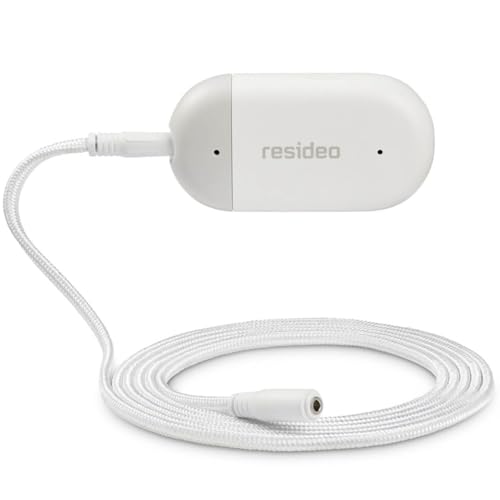
Honeywell Home Lyric Wi-Fi Water Leak and Freeze Detector
This one connects straight to Wi Fi with no hub and, importantly, ships with a sensing cable that can be run along the base of a wall or around a water heater. That rope style sensing covers a line rather than a point, which catches water spreading in an unexpected direction. Wi Fi dependence is the trade, so it belongs where signal is reliable.
Pros
- Cable senses along a line, not a point
- No hub to buy or power
- Humidity and freeze reporting included
Cons
- Wi Fi coverage limits basement placement
- Bulkier than the compact sensors here
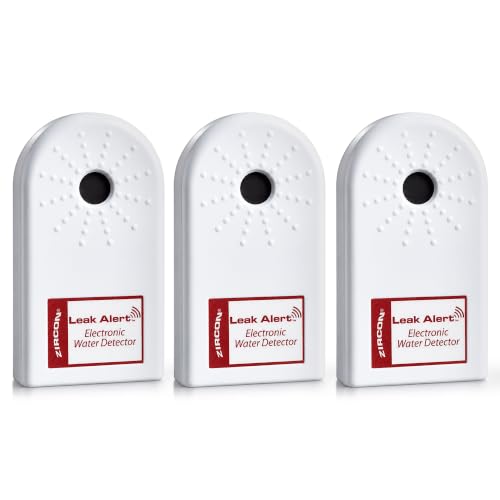
Zircon Leak Alert
Zircon makes a straightforward battery alarm that shrieks when its contacts get wet and asks nothing of your network. There is no app, no hub and nothing to configure, which is the point. It suits a garage, a shed or anyone who wants protection at the utility sink without adding another account, though it only helps if somebody is home to hear it.
Pros
- Works with no network or account
- Extremely simple to deploy
- Low cost for multiple placements
Cons
- No remote notification at all
- Useless in an empty house
How they stack up
| # | Model | Radio | Best for | Score | Price |
|---|---|---|---|---|---|
| 1 | YoLink Smart Water Leak Sensor | LoRa long range | Best overall | 9.4 | Check price |
| 2 | Govee Water Leak Detector | Multipack options | Best value | 9.2 | Check price |
| 3 | Moen Flo Smart Water Monitor and Shutoff | Inline flow monitor with valve | Best for automatic shutoff | 9.0 | Check price |
| 4 | Aqara Water Leak Sensor | Zigbee via Aqara hub | Best for smart home automations | 8.8 | Check price |
| 5 | Ring Alarm Flood and Freeze Sensor | Ring Alarm base station | Best for Ring Alarm owners | 8.6 | Check price |
| 6 | Honeywell Home Lyric Wi-Fi Water Leak and Freeze Detector | Wi Fi, no hub | Best sensing reach | 8.3 | Check price |
| 7 | Zircon Leak Alert | Standalone audible alarm | Best budget | 8.0 | Check price |
What to look for
Point sensors, cables and flow monitors Point sensors detect water touching two small contacts on the base of the unit, which is fine directly under a supply line but easy to miss if the floor slopes away. Cable or rope sensors extend that detection along a run, so a water heater pan or the base of a wall can be watched as a line. Flow monitors like the Moen Flo sit on the main and identify abnormal usage patterns, catching leaks inside walls or underground that no floor sensor will ever reach. Many homes benefit from combining a flow monitor with a handful of point sensors.
Range is the spec that decides success The places most likely to leak are also the places with the worst wireless coverage, which is why Wi Fi based sensors fail in basements and crawl spaces. Long range radio designs like YoLink and mesh protocols like Zigbee generally hold a connection where Wi Fi will not. Before committing to a Wi Fi model, check signal strength on a phone standing where the sensor will sit. If bars are marginal, choose a hub based system or plan for a mesh extender.
Alerts nobody hears do not help A local siren is valuable when someone is home and worthless when they are not, which is precisely when a leak does the most damage. Push notifications solve that, and text or call escalation solves the case where a phone is silenced. The strongest setups do both, sounding locally and notifying remotely. If your main concern is a holiday absence, prioritise remote alerting and consider automatic shutoff over siren loudness.
Where to place them first Start with the appliances that fail most often rather than spreading sensors evenly. Water heaters, washing machine hoses, dishwashers, under sink shutoffs, refrigerator ice maker lines, sump pits and any pipe running through an unheated space cover the majority of real claims. Place each sensor at the lowest point where water would collect, not against the appliance itself, and check that the floor actually drains toward it. Freeze detection is worth having anywhere pipes run through uninsulated areas.
Common questions
Do water leak detectors need Wi Fi?
Standalone alarms like the Zircon Leak Alert need nothing at all, but they only sound locally. Smart sensors need either Wi Fi or a hub to send remote alerts. Hub based systems using long range radio or Zigbee usually hold a connection better in basements than direct Wi Fi sensors.
Can a leak detector shut off my water automatically?
Only if it controls a valve. The Moen Flo Smart Water Monitor and Shutoff includes one on the main line. Sensor systems such as YoLink can also trigger a separate motorised valve controller. Basic sensors alert you and nothing more, so shutting off remains your job.
How long do the batteries last?
Most sensors run for a year or more on replaceable cells, and long range models often quote several years because the radio wakes only briefly. Battery life shortens in cold locations. Look for a model that reports low battery in its app, since a silent dead sensor gives false confidence.
Will these detect a slow leak inside a wall?
Point sensors will not, because nothing reaches them until damage is already visible. Flow monitors on the main supply are the tool for that, since they identify continuous small usage that should not be happening. Owners report this is the main reason to fit one alongside floor sensors.
How many sensors does an average house need?
Five or six covers the common failure points in a typical home: water heater, washing machine, dishwasher, kitchen sink cabinet, main bathroom and any sump or utility area. Multipacks make that affordable. Add more only where you have specific known risks such as an ageing supply line.
Do leak detectors work if the power goes out?
The sensors themselves are battery powered and keep working, but hubs and routers usually are not, so remote alerts stop. A local siren still sounds. If outage coverage matters, put the hub and router on a small uninterruptible power supply.
Is freeze detection worth paying for?
In any climate with a real winter, yes. Burst pipes cause far larger losses than slow drips, and a low temperature alert gives you time to act before the pipe fails. Several models here, including the Ring and Honeywell Home sensors, include it at no extra cost.
Can I put a sensor inside a water heater drip pan?
Yes, and it is one of the highest value placements. Set it flat on the pan floor where water will pool first. A cable style sensor is even better in a large pan because it covers more of the perimeter than a single point contact.
The bottom line
For coverage that actually reports from a basement or crawl space, the YoLink Smart Water Leak Sensor is the most reliable choice in this group. The Govee Water Leak Detector is the sensible way to cover several rooms at once when signal is strong. If the goal is stopping damage rather than being told about it, add the Moen Flo Smart Water Monitor and Shutoff on the main supply.


