Window Rain Guards Compared: In Channel vs Tape On
The WeatherTech Side Window Deflectors lead on fit precision and low profile styling. The Auto Ventshade AVS Ventvisor In-Channel is the easier no adhesive option for most vehicles, and the Lund Ventvisor Elite balances coverage and wind noise for daily highway driving.
The WeatherTech Side Window Deflectors are the rain guards we would fit first for precision and a low profile look, with the Auto Ventshade AVS Ventvisor In-Channel as the simplest no adhesive install and the Lund Ventvisor Elite as the balanced daily driver choice. All three let you leave a window cracked in rain without soaking the door card.
Rain guards are tricky because the two mounting styles fail in opposite ways. In channel guards can rub window seals or trigger auto up sensors, while tape on guards depend entirely on surface prep and temperature at install. We ranked these by comparing published fit data, material thickness and tint, mounting hardware, and what owners report about wind noise and adhesion after a full winter.
How to pick the right one
In channel or tape on In channel guards slide into the window track and hold by tension, so nothing touches your paint and removal leaves no residue. Tape on guards mount to the outside of the frame with automotive adhesive and never interfere with the glass. If your vehicle has auto up windows that reverse on resistance, in channel guards are the ones to test carefully after install.
Install temperature really matters Adhesive backed guards need a surface above roughly fifteen degrees Celsius and a properly cleaned frame using the supplied alcohol wipe. Fitting them on a cold morning is the single most common reason a set peels a month later. Park in the sun for an hour first and leave the windows shut for a day afterwards.
Wind noise comes from profile height Taller visors catch more air, and above sixty miles per hour that becomes a low buffeting hum. Low profile deflectors trade a little rain coverage for a much quieter cabin. If you spend most of your driving on the motorway, go slim, and if you mainly want a cracked window in a parked car, go deep.
Check your local tint rules Some regions regulate anything attached to a side window, including deflectors that overlap the glass area. Most rain guards sit above the glass line and are fine, but very deep or heavily tinted sets can attract attention. Confirm the rules where you drive before ordering a dark deep profile set.
What we recommend

WeatherTech Side Window Deflectors
WeatherTech cuts these from a vehicle specific scan, so the profile follows the door frame instead of standing proud of it. The low profile shape means less wind noise than taller visors at highway speed. Owners report the in channel fit is snug enough that careful installation matters, particularly on vehicles with auto up windows.
Pros
- Closest fit of anything here
- Low profile keeps wind noise down
- No adhesive to fail in heat or cold
Cons
- Tight fit can trip auto up window sensors
- Less rain coverage than tall visors

Auto Ventshade AVS Ventvisor In-Channel
The AVS Ventvisor slides into the window channel and holds by tension, which makes it the least intimidating install in this group. Reinforced acrylic gives it more body than budget visors, and the smoke tint is dark enough to hide door frame trim. It is a good pick if you would rather not commit adhesive to your paint.
Pros
- No tape and no drilling
- Removable without residue
- Wide vehicle coverage
Cons
- Can rub the window felt over time
- Taller profile adds some wind noise

Lund Ventvisor Elite
Lund shapes the Elite with a trimmed leading edge that reduces the buffeting many visors create above sixty miles per hour. Coverage is still generous enough to keep rain out at a two finger window gap. Owners report it is one of the easier sets to align because the mounting surface is clearly defined.
Pros
- Noticeably quieter than basic visors
- Good rain coverage at a cracked window
- Straightforward alignment
Cons
- Fitment list is narrower than AVS
- Acrylic scratches if wiped dry
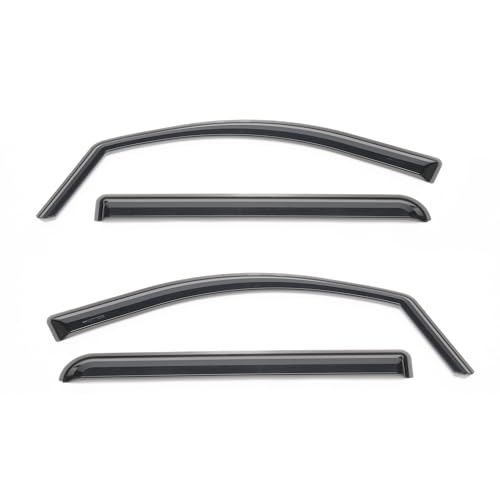
Putco Element Tinted Window Visors
Putco Element visors sit deeper than most, which suits trucks and SUVs where the window opening is tall and the rain angle is steeper. The tint is darker than typical smoke, giving a cleaner look against black trim. That extra depth does bring more turbulence noise at speed than a low profile deflector.
Pros
- Extra coverage for tall window openings
- Dark tint looks factory on black trim
- Solid moulded feel
Cons
- More wind noise than low profile sets
- Bulky look on smaller cars

EGR In-Channel Window Visors
EGR builds these to sit tight against the frame so they read as factory equipment rather than an add on. The acrylic is thick enough to resist the flex that makes cheap visors rattle. Installation is fussier than tape on sets because the channel fit needs the window fully down and clean.
Pros
- Subtle factory appearance
- Rigid acrylic does not rattle
- Slim profile keeps noise low
Cons
- Install takes patience to seat evenly
- Limited fitment on older vehicles

Goodyear Shatterproof In-Channel Window Deflectors
These use a shatter resistant polymer rather than standard acrylic, so they take a knock from a car wash brush better than most. Fit is good but not scan precise, and small gaps at the corners are normal. For a second car or a lease return vehicle, the cost to benefit ratio is hard to argue with.
Pros
- Tougher material than standard acrylic
- Low cost for a full four door set
- Easy to remove for a lease return
Cons
- Small corner gaps on some vehicles
- Lighter tint shows dirt more

WELLvisors Side Window Deflectors
WELLvisors offers finishes that most brands do not, including chrome trimmed and premium series versions, so it is the pick if appearance is driving the purchase. Coverage is moderate and the mounting method varies by series, so check which style you are ordering. Owners report fit quality is good on common models and mixed on rarer ones.
Pros
- Widest choice of finishes
- Premium series feels solid
- Works for styling led builds
Cons
- Mounting style differs between series
- Fit is less consistent on uncommon models
How they compare
| # | Model | Mounting | Best for | Score | Price |
|---|---|---|---|---|---|
| 1 | WeatherTech Side Window Deflectors | In channel, no tape | Best overall | 9.4 | Check price |
| 2 | Auto Ventshade AVS Ventvisor In-Channel | In channel tension fit | Best value | 9.2 | Check price |
| 3 | Lund Ventvisor Elite | In channel | Best for highway driving | 9.0 | Check price |
| 4 | Putco Element Tinted Window Visors | In channel | Best for trucks | 8.8 | Check price |
| 5 | EGR In-Channel Window Visors | In channel | Best for OEM look | 8.6 | Check price |
| 6 | Goodyear Shatterproof In-Channel Window Deflectors | In channel | Best budget | 8.3 | Check price |
| 7 | WELLvisors Side Window Deflectors | In channel or tape depending on series | Best for styling options | 8.0 | Check price |
Good to know
Do rain guards actually keep rain out?
Yes, with the window cracked one to two fingers. They deflect the airflow and water over the opening, which is enough to vent a hot car in light rain without soaking the door card.
Are in channel or tape on guards better?
In channel guards leave no residue and never touch your paint, but they can rub the window felt and confuse auto up sensors. Tape on guards avoid the glass entirely but depend on clean, warm surface prep to stay put.
Will rain guards damage window seals?
In channel styles sit against the felt run and can wear it over years of use, particularly if grit gets trapped. Cleaning the channel before install and occasionally afterwards keeps that wear minimal.
Do window deflectors cause wind noise?
Deep profile visors add a noticeable hum above about sixty miles per hour. Low profile deflectors are much quieter. Noise usually means the guard is not fully seated, so recheck alignment before assuming it is normal.
Can you still use an automatic car wash?
Most owners do, though brushes can catch the leading edge of taller visors. Touchless washes are safer. If you use a brush wash regularly, a shatter resistant polymer set holds up better than thin acrylic.
Do they interfere with auto up windows?
They can. A tight in channel fit adds enough resistance that some vehicles reverse the window automatically. Test every window right after installation and reseat the guard if a window stops closing cleanly.
How long do the adhesive versions last?
Properly installed on a clean warm surface, several years is normal. Failures almost always trace back to cold weather installation, skipped cleaning, or the windows being opened before the adhesive fully cured.
Can rain guards be removed later?
In channel sets pull out with careful pressure and leave nothing behind. Tape on sets need fishing line to cut the adhesive and an adhesive remover to clean the frame, and the paint underneath may show a faint outline.
The verdict
WeatherTech Side Window Deflectors are the set to buy when fit and a quiet cabin matter most, since the vehicle specific shape sits close to the door line. The Auto Ventshade AVS Ventvisor In-Channel is the easier install for anyone avoiding adhesive, and the Lund Ventvisor Elite splits the difference well for cars that live on the motorway.