Wiper Blades That Stay Quiet Through Winter Rain
The Bosch ICON is our top pick for its long lasting rubber and consistent pressure across the sweep. The Rain-X Latitude Water Repellency is the value choice because it treats the glass as it wipes, and the Michelin Stealth Ultra suits drivers who want a hybrid frame.
The Bosch ICON leads this roundup because its tensioned beam structure keeps even pressure right to the ends of the blade, which is where cheaper wipers chatter and streak first. The Rain-X Latitude Water Repellency is the value pick since it deposits a water repellent coating on the glass while it works, and the Michelin Stealth Ultra is the choice if you prefer a hybrid frame that resists lift.
Wiper shopping is unusually confusing because the packaging talks about frame technology while the thing that actually determines how long a blade lasts is the rubber compound and how quickly ultraviolet light and ozone harden it. We compared frame design, edge material, snow and ice clearing behaviour, wind lift at speed and adapter coverage, then weighed those against what owners report about how many months each blade stayed quiet before the first streak appeared.
Our top picks
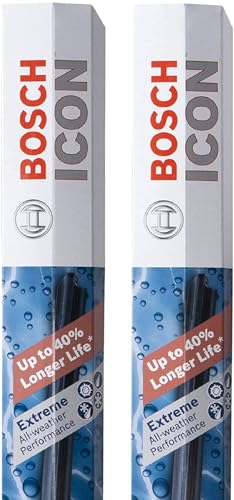
Bosch ICON Wiper Blade
The ICON is the blade most often recommended when someone is tired of replacing wipers twice a year. Its tensioned steel beam distributes pressure evenly rather than through six or eight contact points, and the dual rubber compound resists hardening. Owners report service life well beyond a typical conventional blade, which offsets the higher cost per pair.
Pros
- Even pressure eliminates end of sweep streaking
- Compound resists hardening in sun and heat
- Long service life reduces replacement frequency
Cons
- Costs noticeably more than conventional blades
- Not every size fits pin arm vehicles

Rain-X Latitude Water Repellency Wiper Blade
This blade transfers a water repellent coating to the windscreen as it sweeps, so rain beads and rolls off between wipes. That effect fades over a season but is genuinely useful in heavy rain. The beam frame keeps snow from packing into a hinge, and the fitment range is among the widest here.
Pros
- Beading effect improves visibility in heavy rain
- Beam frame resists snow packing
- Broad vehicle coverage
Cons
- Repellent effect diminishes over months
- Some owners report shorter rubber life than the ICON

Michelin Stealth Ultra Hybrid Wiper Blade
The hybrid design wraps a conventional articulated frame inside an aerodynamic shell, aiming to combine the pressure distribution of a bracket blade with the wind resistance of a beam. It suits curved windscreens that beam blades sometimes struggle to follow. The independent suspension arms adapt well to strong glass curvature.
Pros
- Follows heavily curved glass closely
- Aerodynamic shell limits lift at speed
- Quiet operation reported by owners
Cons
- Shell adds bulk and visual height
- Heavier than a plain beam blade

Valeo 900 Series Ultimate Beam Wiper Blade
Valeo supplies wipers to a number of vehicle manufacturers, so this is effectively original equipment sold through the aftermarket. The beam profile is low and unobtrusive, and the rubber compound is tuned for quiet operation rather than headline claims. It is a straightforward, well engineered blade without marketing gimmicks.
Pros
- Original equipment engineering standards
- Very low profile on the glass
- Consistent quiet sweep
Cons
- Fewer marketing features than rivals
- Availability varies by size

Trico Force Beam Wiper Blade
Trico designed the Force around keeping the blade planted at motorway speeds, using a memory curve steel beam that presses harder as airflow increases. That makes it a good match for vehicles with steeply raked windscreens where lift is the main complaint. Clearing performance in slush is solid thanks to the closed frame.
Pros
- Stays planted at motorway speeds
- Closed frame resists ice packing
- Simple snap on installation
Cons
- Firmer pressure can shorten rubber life
- Less flexible on very curved glass

Aero Voyager Premium All Season Beam Wiper Blade
Aero sells beam blades in matched pairs with the adapters preinstalled, which suits anyone replacing both sides at once without wanting to think about it. Performance sits a step below the premium names but well above bargain bin conventional blades. Owners report good first season performance with more variability in year two.
Pros
- Pairs cost less than two premium blades
- Adapters preinstalled for a fast swap
- Clean sweep when new
Cons
- Service life shorter than premium options
- Quality control varies between batches

Bosch Clear Advantage Beam Wiper Blade
This is Bosch entry level beam blade, giving you the frame advantages of a beam without the ICON price. The rubber compound is more conventional, so expect a shorter interval before streaking begins. For a second vehicle or a mild climate it is a sensible compromise.
Pros
- Beam benefits at a modest cost
- Established brand quality control
- Easy installation out of the packet
Cons
- Rubber hardens sooner than the ICON
- No water repellent treatment
The lineup, side by side
| # | Model | Frame | Best for | Score | Price |
|---|---|---|---|---|---|
| 1 | Bosch ICON Wiper Blade | Tensioned beam | Best overall | 9.4 | Check price |
| 2 | Rain-X Latitude Water Repellency Wiper Blade | Contoured beam | Best value | 9.2 | Check price |
| 3 | Michelin Stealth Ultra Hybrid Wiper Blade | Hybrid shell over articulated arms | Best hybrid frame | 9.0 | Check price |
| 4 | Valeo 900 Series Ultimate Beam Wiper Blade | One piece beam | Best original equipment quality | 8.8 | Check price |
| 5 | Trico Force Beam Wiper Blade | Memory curve steel beam | Best for high speed driving | 8.6 | Check price |
| 6 | Aero Voyager Premium All Season Beam Wiper Blade | Beam | Best multipack value | 8.3 | Check price |
| 7 | Bosch Clear Advantage Beam Wiper Blade | Beam | Best budget beam | 8.0 | Check price |
How to pick the right one
Beam, hybrid or conventional Conventional bracket blades press the rubber onto the glass through a series of pivot points, which works until ice packs into those joints and the blade stops conforming to the curve. Beam blades replace the frame with a single tensioned strip, so there is nothing for snow to fill and pressure is spread more evenly. Hybrids wrap a bracket frame in an aerodynamic shell to get some of both. For most modern vehicles a beam is the default answer, with hybrids worth considering where the windscreen is unusually curved.
The rubber compound decides service life Every wiper fails the same way. Ultraviolet light, ozone and heat harden the rubber edge until it no longer flips cleanly at each direction change, and that is when streaking and chattering start. Blades marketed with dual compounds, graphite treatment or synthetic edges are addressing exactly this. In a hot sunny climate expect any blade to age faster, and note that a car parked outdoors all day will go through wipers considerably quicker than one kept in a garage.
Getting the fitment right Two things must match, the length and the arm connector. Front blades are frequently different lengths left and right, so check both rather than buying a matched pair blindly. The connector is usually a J hook, but pinch tab, bayonet, side pin and side lock arms all exist, and premium blades ship with an adapter set covering the common types. If your vehicle uses an unusual arm, verify the adapter is included before ordering rather than after.
Habits that make blades last longer Most wiper damage happens when the blade is not wiping. Never run wipers to clear ice, since dragging rubber across a frozen sheet tears the edge, and lifting frozen blades off the glass can bend the arm. Clean the windscreen and wipe the rubber edge with a damp cloth every few weeks to remove grit that acts like sandpaper. Keep the washer reservoir filled so you are never wiping a dry dusty screen, which is the fastest way to ruin a new blade.
Questions worth asking
How often should wiper blades be replaced?
Roughly every six to twelve months for most drivers, though climate matters more than the calendar. Replace them when you see streaking, hear chattering, or notice the blade skipping across the glass, whichever comes first. Cars parked outdoors in strong sun typically need replacing at the shorter end of that range.
Are beam blades better than conventional ones?
For most vehicles yes. There are no hinges for snow and ice to pack into, pressure is distributed more evenly across the length, and the low profile resists lift at speed. Conventional blades still work adequately and cost less, which is why they remain common on older vehicles.
What size wiper blades does my car take?
Check the owner manual or measure each existing blade, remembering that driver and passenger sides are often different lengths. Online fitment lookups are reliable for common vehicles, but measuring what is already fitted is the safest check, particularly if a previous owner fitted the wrong size.
Do water repellent wipers actually work?
The coating is real and does make rain bead and roll off, which improves visibility in heavy downpours. The effect diminishes over several months as the coating on the blade depletes. Think of it as a bonus rather than the reason to choose a blade.
Why do my wipers chatter and squeak?
Usually the rubber edge has hardened and no longer flips direction cleanly, or the glass has a film of wax, road grime or polish on it. Clean the windscreen thoroughly and wipe the blade edge first, and if the noise persists the blade has reached the end of its life.
Can I install wiper blades myself?
Yes, and it takes a couple of minutes per side. Lift the arm away from the glass, release the connector clip, slide the old blade off and fit the new one until it clicks. Lay a towel over the windscreen while doing it, since a spring loaded arm snapping back onto bare glass can crack it.
Should I replace both blades at once?
Yes, because they age at the same rate and a new blade next to a worn one just makes the worn one more obvious. Do not forget the rear blade on hatchbacks and estates, which is often neglected until it fails completely.
Do winter specific blades make a difference?
In heavy snow they can. Winter blades enclose the frame in a rubber boot so slush cannot freeze the joints, though beam blades achieve much of the same benefit without the bulk. In mild climates a good all season beam blade is enough.
Our pick
The Bosch ICON is the blade to buy if you would rather not think about wipers again for a couple of years, because even pressure and a durable compound address the two reasons blades fail. The Rain-X Latitude Water Repellency is the better value and adds genuinely useful beading in heavy rain. On a steeply curved windscreen where beam blades leave patches, the Michelin Stealth Ultra hybrid frame is the one worth trying.


