Top Wire Connectors for DIY Projects and Repairs
For most DIY projects, the WAGO 221 Lever-Nuts are the top pick, offering tool-free lever operation and reusable connections. They excel for lighting fixtures and quick splices, but they are bulkier than twist-on connectors and cost more per connection.
Wire connectors are essential for any electrical DIY, from replacing a ceiling fan to wiring a lamp. Choosing the right type can save time, ensure safety, and make future changes easier. This guide compares the most popular connectors on the market, highlighting their strengths and limitations.
We analyzed specifications, user feedback, and safety features to help you decide. Whether you are a beginner or a seasoned DIYer, this roundup covers everything from classic twist-ons to modern push-in and lever connectors.
How to choose
The best picks, ranked

WAGO 221 Lever-Nuts
WAGO 221 Lever-Nuts are the gold standard for DIY electrical work. Their transparent housing lets you verify the wire is fully inserted, and the lever locks the connection securely. They are rated for solid and stranded copper wire, making them versatile for various projects.
Pros
- Tool-free operation
- Reusable many times
- Clear housing for visual check
Cons
- Bulkier than twist-on connectors
- Higher cost per connection

Ideal In-Sure Push-In Wire Connectors
Ideal In-Sure connectors offer a simple push-in design that works with solid and stranded wire. They are UL listed and come in various sizes for different wire combinations. Users appreciate the clear casing that shows the wire depth, ensuring a proper connection.
Pros
- Fast installation
- Clear cover for verification
- Accepts stranded wire
Cons
- Not reusable
- Requires precise stripping length
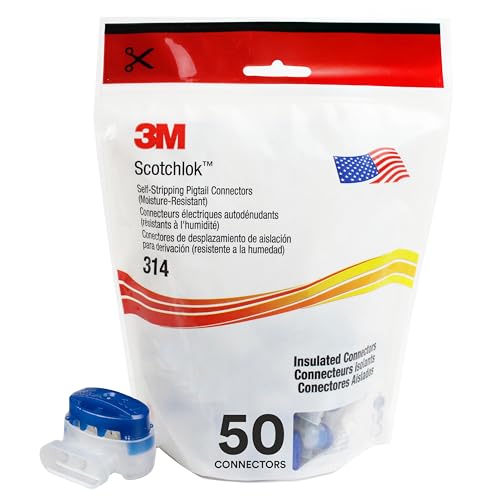
3M ScotchLok 314 Crimp Connectors
3M ScotchLok 314 connectors are reliable crimp-style butt splices with a heat-shrink tube that provides insulation and strain relief. They are ideal for automotive, marine, and outdoor DIY projects where a moisture-resistant connection is needed.
Pros
- Heat-shrink protection
- Strong mechanical crimp
- Resists vibration
Cons
- Requires crimping tool
- Not reusable
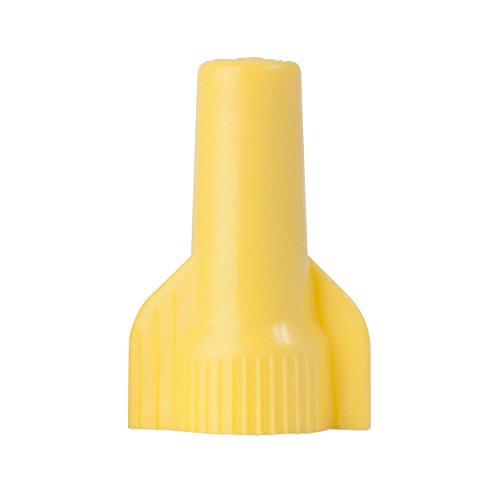
Gardner Bender Winged Twist-On Wire Connectors
Gardner Bender’s winged twist-on connectors are a classic choice for residential wiring. The wings provide extra torque for a secure grip without tools. They come in assorted sizes and colors, making it easy to match the right connector to your wire gauge.
Pros
- Low cost
- Easy to install
- Wide range of sizes
Cons
- Can loosen over time
- Not for stranded wire in some sizes

Ideal 30-1031 Double Crimp Connectors
Ideal Double Crimp connectors provide a secure connection for solid and stranded wire. They feature a two-step crimp: one for the conductor and one for the insulation. This makes them ideal for applications where vibration might loosen other connectors, such as in power tools or appliances.
Pros
- Secure double crimp
- Color-coded by size
- Durable nylon insulation
Cons
- Requires crimping tool
- No color variety for identification
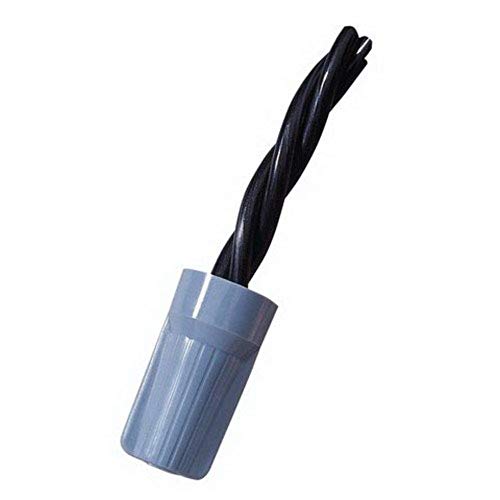
Buchanan B-2 Wire Connectors
Buchanan B-2 connectors are a dependable and affordable option for DIYers. They have a classic design with a threaded cap that screws onto twisted wires. They are UL listed and come in a bulk pack, making them great for small projects or stocking up.
Pros
- Very affordable
- Simple design
- Large pack size
Cons
- Not reusable
- Limited to solid wire

Milwaukee 48-10-6001 Wire Connector Kit
Milwaukee’s wire connector kit offers a mix of push-in and twist-on connectors in a compact case. It is designed for electricians and serious DIYers who need a versatile assortment. The kit includes connectors for various wire sizes and types.
Pros
- All-in-one solution
- Durable case
- Covers many wire sizes
Cons
- Some connectors are not reusable
- Higher initial cost
How they compare
| # | Model | Wire range | Best for | Score | Price |
|---|---|---|---|---|---|
| 1 | WAGO 221 Lever-Nuts | 12 to 24 AWG (221-413) and 12 to 20 AWG (221-412) | Reusable and tool-free connections | 9.4 | Check price |
| 2 | Ideal In-Sure Push-In Wire Connectors | Up to 6 #12 AWG or 8 #14 AWG depending on model | Quick and secure push-in connections | 9.1 | Check price |
| 3 | 3M ScotchLok 314 Crimp Connectors | 22 to 18 AWG | Butt splices and inline connections | 8.8 | Check price |
| 4 | Gardner Bender Winged Twist-On Wire Connectors | Up to 4 #12 AWG (model 72B) | Traditional twist-on applications | 8.7 | Check price |
| 5 | Ideal 30-1031 Double Crimp Connectors | 22 to 18 AWG (red) and 16 to 14 AWG (blue) | Heavy-duty connections requiring high reliability | 8.5 | Check price |
| 6 | Buchanan B-2 Wire Connectors | Up to 4 #14 AWG | Budget-friendly twist-on connectors for basic tasks | 8.3 | Check price |
| 7 | Milwaukee 48-10-6001 Wire Connector Kit | Push-in connectors (various), twist-on, and wire nuts | Professional-grade variety for many tasks | 8.0 | Check price |
Common questions
Can I reuse wire connectors?
Lever connectors like WAGO are designed to be reused multiple times. Twist-on connectors can be reused if they are not damaged, but they may lose their grip. Push-in and crimp connectors are generally one-time use and should be replaced if you disconnect them.
What is the difference between a wire nut and a push-in connector?
Wire nuts are twist-on caps that secure twisted wires together. Push-in connectors have holes where you insert stripped wires, and an internal spring grips them. Push-in connectors are faster to install but are not reusable, while wire nuts can be removed and reused.
Are WAGO connectors better than wire nuts?
WAGO connectors offer tool-free, reusable connections with a clear housing for visual verification. They are often easier for DIYers and provide a secure hold. However, wire nuts are cheaper and more compact. Both are safe when used correctly.
How do I choose the right size wire connector?
Check the connector’s packaging for the wire range in AWG. It will specify the minimum and maximum wire gauge and the number of conductors it can handle. Match this to your project’s wire size and count.
Can I use wire connectors for stranded wire?
Yes, but you need to ensure the connector is rated for stranded wire. Many push-in and lever connectors accept stranded wire, but some twist-on connectors are designed for solid wire only. Look for connectors that specify ‘stranded’ in their specifications.
What is the maximum voltage for wire connectors?
Most standard wire connectors are rated up to 600V, which is suitable for residential and commercial electrical systems. Always check the rating on the package or datasheet to ensure it meets your application’s voltage.
Do I need a special tool for lever connectors?
No, lever connectors are designed to be used without tools. You simply strip the wire, open the lever, insert the wire, and close the lever. Some users prefer to use a wire stripper, which is a basic tool for any DIYer.
Are wire connectors safe for outdoor use?
Standard wire connectors are not waterproof. For outdoor or wet applications, you need connectors that are rated as waterproof or use a weatherproof enclosure. Crimp connectors with heat-shrink tubing can provide moisture resistance if properly installed.
Can I connect different gauge wires together?
Yes, but the connector must be rated for the combination of wire sizes. Most connectors have a range, such as ‘2 #12 AWG and 2 #14 AWG’. Ensure the total number and size of wires do not exceed the connector’s rating.
How do I remove a push-in connector?
Push-in connectors are not designed for removal. If you need to disconnect, you might damage the wire or the connector. It is best to cut the wire and strip a fresh end if you need to redo the connection.
The bottom line
For most DIYers, the WAGO 221 Lever-Nuts are the best choice due to their ease of use, reusability, and reliable connection. If you are on a tight budget, Buchanan B-2 connectors offer a cost-effective twist-on solution. For specialized needs like high vibration, Ideal Double Crimp connectors are ideal. Ultimately, WAGO provides the best balance of convenience and safety for a wide range of projects.