Wireless Mics That Won’t Let You Down
The Rode Wireless GO II is the top pick for most creators, offering dual-channel recording, excellent range, and a compact design that is ideal for vlogging and interviews. Its main limitation is the lack of a built-in display, which some users may find inconvenient. For solo content creators, the DJI Mic 2 is a strong alternative with superior audio quality and a touchscreen, though it comes at a higher price.
Wireless microphone systems free you from cables, but choosing the right one can be a maze. In this roundup, we compare seven top-selling models to help you match your needs and budget.
Whether you are a YouTuber, a filmmaker, or a presenter, the key specs are range, battery life, audio quality, and ease of use. We break down each system’s strengths and weaknesses based on specifications and user feedback.
The shortlist, ranked

Rode Wireless GO II
The Rode Wireless GO II is a tiny dual-channel system that fits in your pocket. It records each microphone to its own track, giving you flexibility in post. With over 200 meters of range, it handles most shoots without dropouts. The built-in microphones are surprisingly good, and the accessory ecosystem is vast.
Pros
- Ultra-compact and portable
- Dual-channel recording for interviews
- Strong range and reliable signal
Cons
- No built-in display
- Need a separate case for storage

DJI Mic 2
The DJI Mic 2 brings a touchscreen to wireless mics, making adjustments a breeze. Audio quality is crisp, with intelligent noise cancellation that works well outdoors. The charging case extends battery life to 18 hours total. It is a favorite among solo creators who want a reliable, user-friendly system.
Pros
- Touchscreen interface for easy control
- Excellent noise cancellation
- Long battery life with case
Cons
- Higher price point
- Larger than some competitors
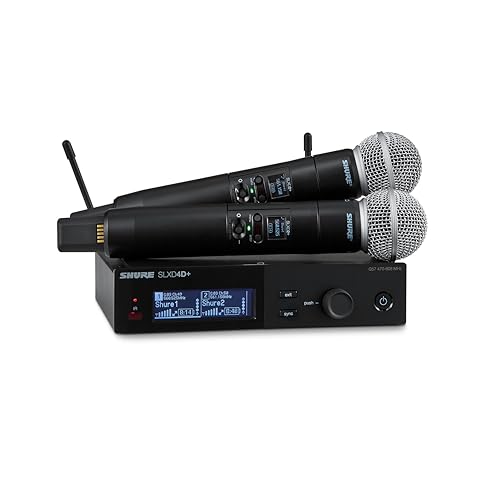
Shure SLX-D Digital Wireless System
Shure’s SLX-D is a professional-grade digital wireless system that operates in UHF bands, offering excellent range and interference resistance. It is ideal for houses of worship, corporate events, and educational settings. The system is rack-mountable and expandable, with easy frequency scanning and a robust metal construction.
Pros
- Professional reliability
- Excellent audio clarity
- Expandable for multi-channel use
Cons
- Not portable for on-the-go
- Requires antenna distribution for many channels
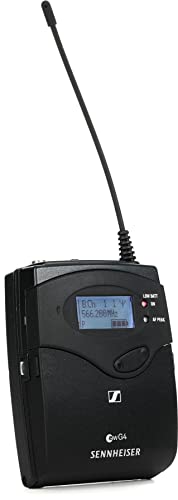
Sennheiser EW 112P G4
The Sennheiser EW 112P G4 is a classic camera-mount wireless kit that has been trusted by filmmakers for years. It operates in UHF bands, providing a strong signal and rich audio. The set includes a clip-on mic and a compact receiver that attaches to a camera. It is easy to set up and delivers dependable performance.
Pros
- Superb audio quality
- Simple operation
- Durable build
Cons
- Bulky compared to modern 2.4 GHz systems
- No recording feature

Hollyland Lark Max
The Hollyland Lark Max stands out with its built-in 8 GB storage on each transmitter, giving you a backup recording in case of signal loss. It also offers 24-bit/48 kHz audio and a range of 200 meters. The charging case provides extra battery life, making it a versatile choice for interviews and field recording.
Pros
- Built-in recording as a safety net
- Long battery life with case
- Good audio quality
Cons
- Bulkier transmitters
- Menu navigation can be confusing

Comica BoomX-D
The Comica BoomX-D is a budget-friendly dual-channel system that is surprisingly capable. It includes two transmitters and one receiver, perfect for two-person interviews. It has a range of 100 meters and offers both TRS and TRRS outputs for cameras and phones. While the audio is not as refined as premium mics, it is more than adequate for most online content.
Pros
- Affordable price
- Two mics included
- Works with phones and cameras
Cons
- No recording capability
- Plastic build feels less durable

Boya BY-M1
The Boya BY-M1 is not a true wireless system, but it deserves mention as a low-cost alternative. This omnidirectional lavalier mic plugs directly into a camera or phone via a 3.5mm jack. It is a simple, reliable solution for recording lectures or interviews without breaking the bank. Note that it has a long cable, not wireless.
Pros
- Very inexpensive
- No batteries required
- Good sound for the price
Cons
- Not wireless
- Cable can be cumbersome
How to pick the right one
The lineup, side by side
| # | Model | Transmission | Best for | Score | Price |
|---|---|---|---|---|---|
| 1 | Rode Wireless GO II | 2.4 GHz digital | Content creators and vloggers | 9.4 | Check price |
| 2 | DJI Mic 2 | 2.4 GHz digital | Solo creators seeking premium audio | 9.2 | Check price |
| 3 | Shure SLX-D Digital Wireless System | UHF digital | Professional live sound and presentations | 9.0 | Check price |
| 4 | Sennheiser EW 112P G4 | UHF analog | Filmmakers and videographers | 8.8 | Check price |
| 5 | Hollyland Lark Max | 2.4 GHz digital | Interviewers needing internal recording | 8.6 | Check price |
| 6 | Comica BoomX-D | 2.4 GHz digital | Budget-conscious creators | 8.2 | Check price |
| 7 | Boya BY-M1 | Wired lavalier | Extreme budget users | 8.0 | Check price |
Good to know
What is the difference between 2.4 GHz and UHF wireless microphones?
2.4 GHz systems are digital and use the same frequency band as Wi-Fi, making them more prone to interference in crowded environments. However, they are easier to use, often with automatic channel selection. UHF systems operate on lower frequencies, offering longer range and better penetration, but they require frequency coordination and are typically larger and more expensive.
How far can a wireless microphone system transmit?
The advertised range is measured in ideal conditions with line of sight. In practice, range is reduced by obstacles like walls and human bodies. For example, the Rode Wireless GO II claims 200 meters, but you might get only 50 to 100 meters in a typical room. Always test in your environment.
Do I need a wireless system that records internally?
Internal recording is a valuable backup. If your wireless signal drops or there is interference, the internal recording captures the audio directly on the transmitter. This can save your footage. Systems like the Hollyland Lark Max and DJI Mic 2 have this feature, which is especially useful for interviews where you cannot afford to miss content.
Can I use a wireless microphone with my smartphone?
Yes, many wireless systems include cables or adapters for smartphones. Some receivers have USB-C or Lightning connectors, while others use a TRRS cable that plugs into the headphone jack. Check the product specifications to ensure compatibility with your phone model.
How long do batteries last on wireless mics?
Battery life varies from around 5 to 11 hours per charge. Rechargeable systems like the Rode and DJI come with built-in batteries, while others use AA batteries. If you have long shooting days, consider a system with a charging case to extend battery life on the go.
What is the best wireless microphone for vlogging?
For vlogging, a compact system like the Rode Wireless GO II or DJI Mic 2 is ideal. They are small, easy to use, and offer good audio quality. The DJI Mic 2 has a touchscreen and comes with a charging case, making it very convenient. The Rode is more affordable and offers dual-channel recording.
Are wireless microphones legal to use?
In most countries, wireless microphones are legal to use without a license if they operate on license-free bands like 2.4 GHz. UHF systems may require a license depending on the frequency and your country. Always check local regulations before purchasing a UHF system.
Can I use multiple wireless microphones at once?
Yes, many systems support multiple channels. For example, the Shure SLX-D can be expanded to multiple channels with additional receivers. Digital systems like the Rode Wireless GO II allow you to use multiple transmitters with one receiver, though only two at a time. For more than two mics, you may need a multi-channel receiver system.
Our take
For most creators, the Rode Wireless GO II is the best choice because it balances portability, dual-channel recording, and excellent range at a reasonable price. If you need professional-grade reliability for live events, invest in the Shure SLX-D. For solo creators who want the best audio quality and a user-friendly touchscreen, the DJI Mic 2 is worth the extra cost. Skip the Boya BY-M1 if you truly need wireless, but it is a great starter if you are on a tight budget.


