Bluetooth OBD2 Scanners Ranked by Code Depth and App Support
BlueDriver Bluetooth Pro tops this list for its enhanced ABS, SRS, and transmission code reading, backed by a Repair Reports database of confirmed fixes. OBDLink MX+ suits owners who want broad third-party app support and fast data logging. FIXD OBD2 Bluetooth Scanner fits beginners who want plain-English code explanations instead of raw numbers.
Owners chasing shop-level detail get the most from BlueDriver Bluetooth Pro, which reads enhanced ABS, SRS, and transmission codes that generic scanners miss, though it costs more than basic Bluetooth dongles.
Protocol depth and app reliability vary widely across wireless scanners. We compared OBD-II protocol coverage, iOS and Android app support, bidirectional service functions, and patterns in owner feedback across current Amazon listings to sort real differences from marketing claims.
Our top picks
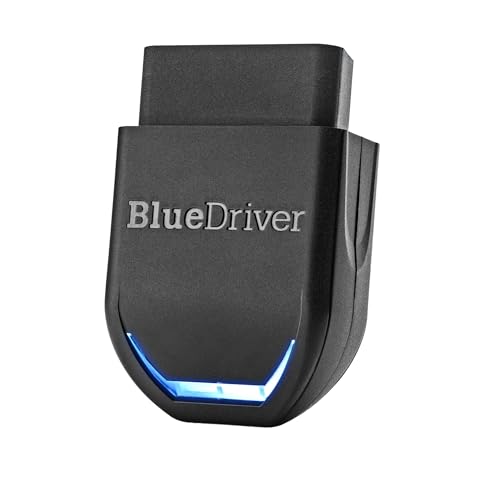
BlueDriver Bluetooth Pro OBDII Scan Tool
Bluetooth 4.0 links this scanner to the free BlueDriver app on iOS and Android. Generic codes plus enhanced ABS, SRS, and transmission codes come through on many GM, Ford, Toyota, and other makes. According to the listing, the app’s Repair Reports feature shows how other owners with the same code and vehicle fixed the problem.
Pros
- Reads enhanced ABS, SRS, and transmission codes beyond generic powertrain data
- Repair Reports feature surfaces confirmed fixes from other owners with the same code
- Free app runs on both iOS and Android
Cons
- Costs more than basic Bluetooth code readers
- Needs a phone with Bluetooth and free storage for the app

OBDLink MX+ Bluetooth Scanner
Bluetooth 4.0 LE connects OBDLink MX+ to multiple third-party apps, including Torque, Car Scanner, and RepairSolutions2. All OBD-II protocols come standard, plus additional GM and Ford enhanced PIDs for deeper system data. An ignition-off sleep mode and low standby power draw let it stay plugged in without draining the car battery.
Pros
- Works with several third-party apps like Torque and Car Scanner
- Ignition-off sleep mode limits standby power draw
- Supports enhanced GM and Ford PIDs beyond generic codes
Cons
- No dedicated proprietary app, so users pick their own third-party software
- Some advanced features depend on which paired app is used

FIXD OBD2 Bluetooth Scanner
FIXD’s own app on iOS and Android translates generic trouble codes into plain-English explanations over a standard Bluetooth link. Mileage-based maintenance reminders for oil changes and other service items come built into the same app. Enhanced manufacturer-specific codes require a separate FIXD Premium subscription.
Pros
- Plain-English explanations replace raw code numbers
- Maintenance reminders track mileage automatically
- Setup stays simple for first-time scanner users
Cons
- Enhanced manufacturer-specific codes need a FIXD Premium subscription
- Free tier limits coverage to generic OBD-II codes
Autel MaxiAP AP200 Bluetooth Scanner
The MaxiAP200 app pairs with this scanner over Bluetooth to read codes across engine, transmission, ABS, and airbag systems. AutoVIN reads the vehicle identification number automatically instead of requiring manual entry. Autel includes free lifetime app updates for this model, according to the listing.
Pros
- Checks engine, transmission, ABS, and airbag systems in one scan
- AutoVIN reads the vehicle identification number automatically
- Free lifetime app updates come included, per the listing
Cons
- Lacks bidirectional or active test functions
- Some owners report occasional Bluetooth pairing delays

Veepeak OBDCheck BLE OBD2 Scanner
Bluetooth 4.0 LE lets this scanner pair with iPhone as well as Android, unlike older classic-Bluetooth OBD dongles. No dedicated app ships with it, so it instead works with third-party apps like Torque, Car Scanner, and OBD Fusion. Coverage stops at generic OBD-II codes without enhanced manufacturer PIDs.
Pros
- Bluetooth 4.0 LE pairs with iPhone, unlike older classic-Bluetooth clones
- Compact plug design avoids blocking nearby dashboard ports
- Works with several established third-party diagnostic apps
Cons
- No dedicated app, so users must choose and manage a separate one
- Generic OBD-II coverage only, without enhanced manufacturer PIDs

Ancel BD310 Bluetooth OBD2 Scanner
The Ancel app pairs with this scanner over Bluetooth to read codes across four systems: engine, transmission, ABS, and airbag. A built-in DTC definition library explains each code inside the app without a separate lookup. Bidirectional or active test functions are not part of this model.
Pros
- Reads codes across four systems: engine, transmission, ABS, and airbag
- Built-in DTC definition library skips separate code lookups
- Lower price point than most full-system scanners
Cons
- Lacks bidirectional or active test functions
- Some owners report more in-app upsell prompts than competing apps

Foxwell BT705 Wireless Bidirectional Scanner
A color touchscreen sits on this handheld unit alongside a Bluetooth link to its companion app. Beyond reading codes across multiple systems, it performs bidirectional service functions like oil service reset, electronic parking brake service, and throttle body relearn. Per the product listing, some special functions apply only to specific vehicle makes.
Pros
- Bidirectional functions include oil reset, EPB service, and throttle relearn
- Standalone touchscreen reduces dependence on a phone app
- Covers multiple vehicle systems beyond basic engine codes
Cons
- Bulkier and pricier than phone-dongle style scanners
- Some special functions apply only to specific vehicle makes
Compared at a glance
| # | Model | Connection | Best for | Score | Price |
|---|---|---|---|---|---|
| 1 | BlueDriver Bluetooth Pro OBDII Scan Tool | Bluetooth 4.0 | Best overall | 9.4 | Check price |
| 2 | OBDLink MX+ Bluetooth Scanner | Bluetooth 4.0 LE | Best for advanced users | 9.2 | Check price |
| 3 | FIXD OBD2 Bluetooth Scanner | Bluetooth | Best for beginners | 9.0 | Check price |
| 4 | Autel MaxiAP AP200 Bluetooth Scanner | Bluetooth | Best value | 8.7 | Check price |
| 5 | Veepeak OBDCheck BLE OBD2 Scanner | Bluetooth 4.0 LE | Best budget | 8.5 | Check price |
| 6 | Ancel BD310 Bluetooth OBD2 Scanner | Bluetooth | Best for full-system code reading | 8.2 | Check price |
| 7 | Foxwell BT705 Wireless Bidirectional Scanner | Bluetooth wireless link to companion app | Best for bidirectional service functions | 8.0 | Check price |
What to look for
Bluetooth Versus Wi-Fi for Wireless Scanners Most current wireless OBD2 scanners connect over Bluetooth rather than Wi-Fi. A Bluetooth link pairs directly with a phone’s diagnostic app and holds steady inside a vehicle cabin. Wi-Fi adapters instead broadcast their own network, a workaround some older iPhone-only apps needed before Apple opened up Bluetooth LE access. All seven scanners here use Bluetooth, including BLE variants like Veepeak OBDCheck built specifically for iPhone pairing, and Bluetooth also draws less standby battery than a Wi-Fi radio.
How Much Protocol Coverage You Actually Need Every 1996-or-newer gasoline vehicle sold in the US supports generic OBD-II protocols for basic engine codes. FIXD and Veepeak OBDCheck read these generic codes reliably and clear check engine lights. Enhanced coverage adds manufacturer-specific PIDs for transmission, ABS, and airbag systems, which BlueDriver, Autel MaxiAP AP200, and Ancel BD310 support across multiple systems. An intermittent ABS light or airbag fault needs that enhanced layer, not just generic powertrain data, while a single daily driver often gets by on generic coverage alone.
Matching a Scanner to Your Phone’s App Ecosystem Some scanners ship with a dedicated app, and others rely on third-party software chosen separately. BlueDriver, FIXD, Autel MaxiAP AP200, and Ancel BD310 each pair with their own branded app and skip extra downloads. OBDLink MX+ and Veepeak OBDCheck instead connect to established third-party apps like Torque, Car Scanner, or RepairSolutions2, trading a built-in app for more flexibility. Foxwell BT705 splits the difference with a companion app plus its own onboard touchscreen, and Android owners generally get more third-party choices than iPhone owners since some legacy apps skipped iOS Bluetooth LE support.
When Bidirectional Functions Are Worth Paying For Basic code reading only pulls stored trouble codes and clears them, which covers most check-engine-light situations. Bidirectional functions actively command a system instead, resetting an oil service light, cycling the electronic parking brake, or relearning a throttle body after cleaning. Foxwell BT705 includes several of these resets, useful for owners doing their own brake pad or oil service. OBDLink MX+ supports some bidirectional tests through compatible third-party apps, though coverage varies by vehicle make, and casual owners who just want to diagnose a warning light rarely need this layer.
Good to know
What is the difference between a Bluetooth and Wi-Fi OBD2 scanner?
Bluetooth scanners pair directly with a phone’s diagnostic app and hold a stable link inside the cabin. Wi-Fi scanners broadcast their own network for the phone to join instead. Nearly every current wireless OBD2 scanner, including all seven models here, uses Bluetooth rather than Wi-Fi.
Do wireless OBD2 scanners work with both iPhone and Android?
Most modern Bluetooth OBD2 scanners support both platforms through Bluetooth Low Energy. Veepeak OBDCheck and OBDLink MX+ specifically use BLE so they pair with iPhone, unlike older classic-Bluetooth clones. Check the listing for exact app compatibility before buying.
Can a wireless OBD2 scanner clear check engine lights?
Yes, all seven scanners here read and clear generic OBD-II trouble codes that trigger a check engine light. Clearing a code doesn’t fix the underlying issue, so the light can return if the problem persists. FIXD and Ancel BD310 both display a plain description of the code before clearing it.
Is BlueDriver better than OBDLink MX+?
BlueDriver includes its own Repair Reports database showing how other owners fixed the same code on the same vehicle. OBDLink MX+ instead works across more third-party apps like Torque and Car Scanner for owners who want app flexibility. Pick BlueDriver for guided repair context, OBDLink MX+ for broader app compatibility.
What is a bidirectional OBD2 scanner and do I need one?
A bidirectional scanner sends commands to a vehicle system instead of just reading data from it. Foxwell BT705 uses this to reset oil service lights or cycle an electronic parking brake during pad replacement. Owners who only check warning lights occasionally usually skip this feature.
Which wireless OBD2 scanner works best for beginners?
FIXD OBD2 Bluetooth Scanner targets first-time users with plain-English code explanations instead of raw numbers. Its app also sends maintenance reminders based on the vehicle’s mileage. Autel MaxiAP AP200 suits beginners who also want ABS and airbag system checks.
Do wireless OBD2 scanners need a subscription?
Most of these scanners work without any subscription for basic code reading and clearing. FIXD offers a paid Premium tier for expanded code coverage beyond the free generic codes. BlueDriver’s Repair Reports feature comes included with the purchase, according to the listing, with no separate subscription.
Can these scanners read ABS and airbag codes, not just engine codes?
BlueDriver, Autel MaxiAP AP200, and Ancel BD310 all read ABS and airbag (SRS) codes in addition to engine codes. Foxwell BT705 covers these systems too and adds bidirectional service resets. FIXD and Veepeak OBDCheck focus mainly on generic engine codes instead.
How do OBD2 scanners connect without Wi-Fi?
Bluetooth 4.0 or Bluetooth Low Energy handles the wireless link on every scanner in this comparison. That link pairs the scanner directly to a phone app rather than broadcasting a separate network. BLE versions like Veepeak OBDCheck and OBDLink MX+ extend that pairing to iPhone as well as Android.
Which scanner offers the best value for casual drivers?
Autel MaxiAP AP200 checks engine, transmission, ABS, and airbag systems for less than most full-system scanners cost. AutoVIN saves time by reading the vehicle identification number automatically. Free lifetime app updates add value beyond the initial purchase, according to the listing.
The verdict
BlueDriver Bluetooth Pro earns the top spot for its enhanced ABS, SRS, and transmission code reading plus a Repair Reports database of confirmed fixes from other owners. Budget-focused buyers who just need reliable generic code reading should look at Veepeak OBDCheck BLE instead. Owners planning their own brake or oil service work get more practical value from Foxwell BT705’s bidirectional functions.