Which Wood Burning Fire Pit Actually Cuts Down Smoke?
Solo Stove Bonfire 2.0 leads this list because its secondary burn genuinely lowers smoke and the removable base speeds up ash cleanup. Smaller patios suit the Solo Stove Ranger 2.0 better. Cooks who want a searing rim in thick steel should look at the Breeo X Series 24.
Solo Stove Bonfire 2.0 tops this list because its double wall secondary burn cuts real smoke, not just marketing smoke. Version 2.0 added a removable base that turns ash cleanup into a two minute job. Pick the Solo Stove Ranger 2.0 for a smaller patio, or the Breeo X Series 24 if a cooking rim and heavier steel matter more than portability.
Smoke happens when wood particles escape before reaching combustion temperature. Double wall airflow designs fix this by preheating air and forcing it back across the flame. We compared airflow and secondary burn design, steel type and gauge, bowl diameter against group size, ash removal method, and portability. Owner feedback on smoke performance and how each finish held up after a season outdoors weighed heavily in the final order.
Our top picks

Solo Stove Bonfire 2.0
Solo Stove sized the Bonfire for a full circle of chairs, yet two people can still carry it. Double wall construction pulls air through base vents and reinjects it near the rim, which burns off particles before they become smoke. Version 2.0 added a removable base plate and ash pan, fixing the main complaint about the original.
Pros
- Noticeably less smoke than a conventional open bowl
- Ash pan makes cleanup a two minute task
- Stainless steel tolerates year round outdoor storage
Cons
- Heat radiates upward more than out to the sides
- Costs more than a plain steel fire bowl

Solo Stove Ranger 2.0
Ranger 2.0 shares the Bonfire’s airflow system in a smaller body one person can lift alone. Burn time per load runs shorter simply because the firebox holds less wood. Three or four people fit comfortably around it, rather than a full crowd.
Pros
- Fits tight patios and travels well to a campsite
- Matches the Bonfire’s smoke reduction in a smaller frame
- Reaches full heat within minutes of lighting
Cons
- Needs refueling more often than larger models
- Warms four people at most, not a full group

Breeo X Series 24 Smokeless Fire Pit
Breeo uses noticeably heavier gauge steel than the stainless competition. A wide searing rim wraps the top edge, built for cooking directly over the flame. Corten versions develop a rust colored patina that then shields the metal beneath, which suits a permanent patio spot rather than frequent moving.
Pros
- Heavier steel gauge built for decades of use
- Searing rim doubles as a real cooking surface
- Larger firebox warms a bigger seating circle
Cons
- Weight makes it impractical to relocate often
- Corten patina can stain pavers or decking underneath

TIKI Brand Patio Fire Pit
TIKI applies the same double wall principle at a lower cost. Wood packs sized to the firebox remove the guesswork over how much fuel to load. Steel gauge runs lighter than premium rivals, so gentler handling extends its life. Most versions ship with a cover, which rivals often sell separately.
Pros
- Lower cost entry into double wall airflow design
- Cover included with most versions of this pit
- Bowl size suits a full family gathering
Cons
- Steel gauge runs thinner than premium competitors
- Proprietary wood packs cost more than loose logs
Landmann Big Sky Fire Pit
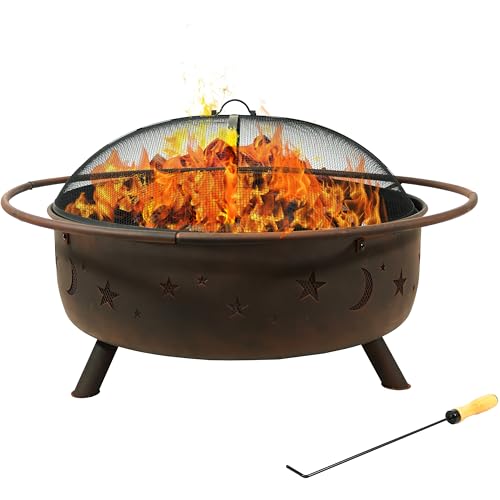
Landmann keeps the traditional open bowl format, decorated with a cutout pattern around the sides. A spark screen and poker come standard, covering basic safety needs. Heat radiates outward rather than upward, useful when warmth matters more than smoke control, though smoke still drifts with the wind as it always has on open designs.
Pros
- Radiates heat outward toward seated guests
- Spark screen and poker included at no extra cost
- Costs less than any double wall design here
Cons
- Produces noticeably more smoke than airflow designs
- Painted finish chips and rusts faster over time

Sunnydaze Northland Fire Pit
Sunnydaze builds a wider bowl aimed at bigger gardens and a full circle of seating. Steel gauge runs thicker than budget competitors, and the included screen matters where children are nearby. Smoke management on this traditional design depends mostly on seating position and wind direction.
Pros
- Wide bowl comfortably seats a large group
- Screen and cover both included in the box
- Thicker steel than entry level open bowls
Cons
- Smokes more than any double wall design here
- Heavy once assembled, awkward to reposition
Yaheetech 32 Inch Fire Pit
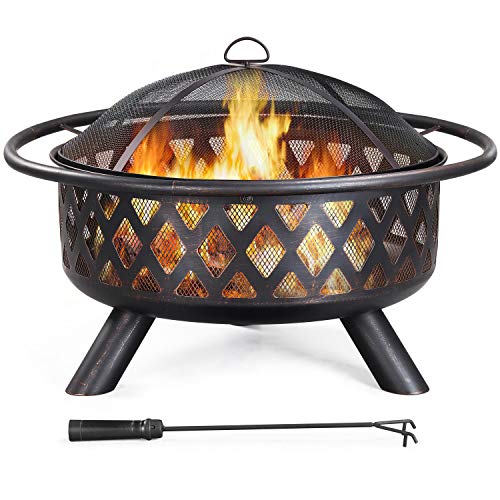
Yaheetech covers the entry level with a wide painted steel bowl. A mesh screen and poker come in the box, enough for occasional weekend use. Assembly takes under an hour, though the painted finish will not survive years of weather without a cover.
Pros
- Lowest cost complete fire pit in this lineup
- Wide bowl accepts full length logs
- Screen and poker included, nothing extra to buy
Cons
- Thin steel warps under heavy, frequent use
- Rusts quickly if left uncovered outdoors
How they compare
| # | Model | Material | Best for | Score | Price |
|---|---|---|---|---|---|
| 1 | Solo Stove Bonfire 2.0 | 304 stainless steel | Best overall | 9.4 | Check price |
| 2 | Solo Stove Ranger 2.0 | 304 stainless steel | Best for small patios | 9.2 | Check price |
| 3 | Breeo X Series 24 Smokeless Fire Pit | Corten or stainless steel | Best for cooking | 9.0 | Check price |
| 4 | TIKI Brand Patio Fire Pit | Stainless steel | Best value smokeless | 8.8 | Check price |
| 5 | Landmann Big Sky Fire Pit | Open steel bowl | Best traditional pit | 8.6 | Check price |
| 6 | Sunnydaze Northland Fire Pit | Open steel bowl | Best for larger gatherings | 8.3 | Check price |
| 7 | Yaheetech 32 Inch Fire Pit | Open steel bowl | Best budget | 8.0 | Check price |
What matters most
How do smokeless fire pits actually work? Smoke is just unburned fuel escaping too soon. A double wall fire pit pulls cool air through holes near the base, warms it as it rises between the walls, then pushes it back over the flame through upper vents. That preheated oxygen raises the burn temperature enough to consume particles that would otherwise drift off as smoke. Results still depend on the wood. Wet logs, an overloaded firebox, or a cold start will smoke until the secondary burn takes hold.
Which steel type lasts longest outdoors? Stainless steel resists corrosion and keeps its look through repeated seasons outside, which is why portable smokeless pits favor it. Corten weathers into a stable rust colored patina that then protects the metal underneath, but it stains whatever sits beneath it, so gravel or stone works better than a light colored deck. Painted mild steel costs the least and wears out fastest, since the coating burns off near the fire ring and rust starts there. Thin gauge steel also warps after repeated hot fires, regardless of finish.
What size fire pit fits your space and group? Bigger bowls warm more people but burn through wood faster and need more clearance from fences, branches, and furniture. Compact pits suit a small patio without dominating the space or pushing everyone back against a wall. Larger diameters make more sense for a full circle of chairs in an open garden. Local rules matter here too, since many areas restrict open burning by season or by drought conditions.
How do you maintain a wood burning fire pit? Seasoned hardwood produces the cleanest burn, full stop. Wood with high moisture content wastes its heat boiling off water first, which is what creates heavy smoke no matter how good the design is. Treated timber, pallets, and painted wood should never go in a fire pit. Ash needs to come out once it has fully cooled, since ash left sitting in the base traps moisture against steel and speeds up corrosion.
Questions worth asking
Are smokeless fire pits really smokeless?
They cut smoke dramatically, not completely. Secondary burn needs a few minutes to establish, so early flames still smoke a little. Wet wood or an overloaded firebox will smoke regardless of design. Compared with an open bowl, the difference remains obvious enough to justify the extra cost for most buyers.
What wood burns cleanest in a fire pit?
Seasoned hardwood with low moisture content works best. Oak, ash, and birch burn long and clean once properly dried. Save softwood for kindling only, since it spits and pops. Never burn treated, painted, or laminated wood, which releases harmful fumes.
How far should a fire pit sit from the house?
Keep it well clear of structures, fences, overhanging branches, and anything combustible. Common guidance calls for a substantial clearance in every direction, including overhead. Local codes vary, so check yours before placing one. Avoid covered patios and low tree canopies entirely.
Can you put a wood burning fire pit on a deck?
Only with a heat shield or a stand built for that purpose. Check your decking material and local rules first. Airflow designs run hot at the base, so a barrier that lifts the pit and blocks radiant heat matters. Composite decking is especially vulnerable to heat damage.
How do you clean ash out of a fire pit?
Wait until it is fully cold, which takes longer than it looks. Newer designs with a removable base plate and ash pan make this quick. Open bowls require scooping ash into a metal container by hand. Leaving ash in the pit traps moisture and speeds up rust.
Is it worth covering a fire pit?
Yes, a cover keeps rain out of the firebox and prevents standing water. It slows corrosion on every material, including stainless steel. Let the pit cool completely before covering it. Lift the cover occasionally so trapped condensation can escape.
Can you cook over a wood burning fire pit?
Some models are built for it, with a searing rim or accessory grates. Cook only over embers, never open flame, on any pit. Use hardwood rather than softwood, since resin can taint food. Skip cooking on any finish not rated for food contact.
Why does my fire pit smoke so much?
Wet or unseasoned wood is the usual cause. An overloaded firebox restricts airflow and blocks the secondary burn from forming. Base vents clogged with ash also cut off the air supply. Build a smaller fire, use dry wood, and give it time to reach temperature.
Solo Stove vs Breeo, which one lasts longer?
Breeo’s Corten and stainless builds use heavier gauge steel, which tends to outlast Solo Stove’s thinner stainless under daily outdoor exposure. Solo Stove wins on portability and weight, though. Choose Breeo for a permanent installation, and Solo Stove for something you might move or pack away.
Which fire pit is best for a small patio?
Solo Stove Ranger 2.0 fits tight spaces best, since one person can lift it and it still delivers the same double wall airflow as larger models. It suits three or four people rather than a full crowd.
The bottom line
Solo Stove Bonfire 2.0 remains the right size and design for most gardens, since reduced smoke changes how long people actually stay outside. Choose the Solo Stove Ranger 2.0 where space is tight or portability matters more. Breeo X Series 24 justifies its extra weight and cost when cooking and permanent placement matter most.