Wood Filler That Sands Smooth and Holds Stain
For paintable trim and small holes, Minwax Stainable Wood Filler leads the group. Exterior gaps and rotted sections hold up best with PC Products PC-Woody Epoxy Paste. Anyone filling large structural gaps should reach for J-B Weld KwikWood epoxy putty instead.
Wood filler is not one product. Wood fiber putty like Minwax fills small nail holes and takes stain evenly. Rotted or structurally weak wood needs a two-part epoxy such as PC-Woody instead, since standard filler cannot rebuild strength.
Picking the wrong type means a repair that shrinks, cracks, or refuses to hold paint. We compared cure time, shrinkage, stain compatibility, and indoor versus outdoor ratings, then weighed in owner reports on long-term cracking before ranking these seven.
What we recommend
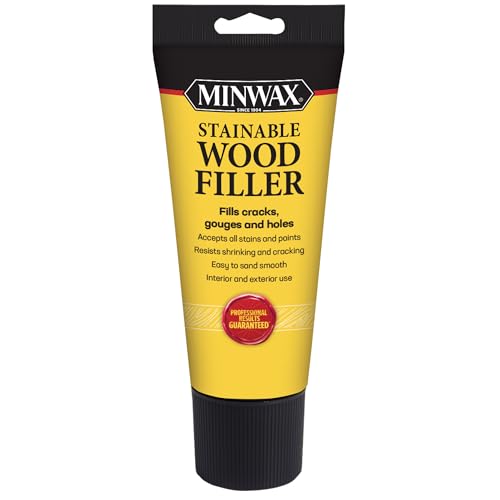
Minwax Stainable Wood Filler
This solvent-based filler accepts wood stain the same way real wood grain does, which plain latex fillers cannot match. Small nail holes and hairline cracks disappear after a light sanding. Most trim carpenters keep a can on hand for touch-ups between coats.
Pros
- Takes stain closer to real wood than latex fillers
- Sands to a smooth, paintable finish
- Fast working time suits quick touch-ups
Cons
- Strong solvent smell during application
- Not rated for outdoor or wet locations
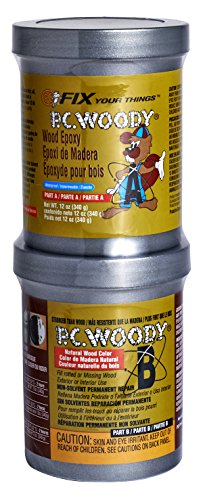
PC Products PC-Woody Wood Repair Epoxy Paste
Rotted wood needs more than filler, it needs rebuilding, and this two-part epoxy paste bonds to the sound wood left behind. It cures moisture resistant, so window sills and outdoor trim hold up after the repair. Mixing two components by hand takes more effort than squeezing a tube, but the resulting patch outlasts standard filler in wet spots.
Pros
- Rebuilds structural strength in rotted sections
- Cures moisture resistant for outdoor use
- Bonds tightly to remaining sound wood
Cons
- Requires hand-mixing two components accurately
- Full cure takes overnight, slower than single-part fillers

J-B Weld KwikWood Epoxy Putty Stick
This putty stick mixes by kneading two colored halves together until the color turns uniform. Once mixed, it stays workable for roughly fifteen to twenty minutes before setting. Cured putty can be drilled, sanded, and painted, which makes it useful for gaps that need to bear some load.
Pros
- Sandable, drillable, and paintable once cured
- Fast full cure compared to liquid epoxies
- No mixing tools needed, kneads by hand
Cons
- Short working time pressures larger repairs
- Costs more per repair than standard wood filler

FamoWood Latex Wood Filler
A water-based latex formula handles both indoor trim and exterior siding repairs. Multiple color options mean less sanding and staining afterward to match surrounding wood. Deep fills take longer to fully cure than thin surface fills, so patience matters on bigger repairs.
Pros
- Rated for outdoor exposure, unlike solvent fillers
- Color options reduce extra staining steps
- Water cleanup, no harsh solvent smell
Cons
- Deep gaps need buildup in layers or they crack
- Slower full cure than solvent-based fillers
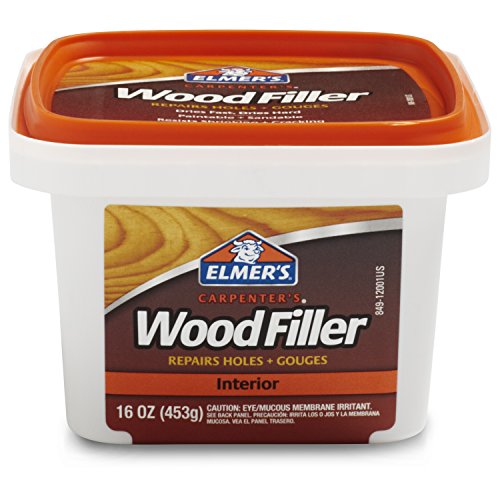
Elmer’s Wood Filler
A low-shrink acrylic formula stays flat as it dries, which limits sinking on repeat coats. It sands fast and accepts most stains and paints without special prep. Furniture repairs and cabinet touch-ups are the most common uses owners report.
Pros
- Low shrinkage limits repeat coats
- Sands smooth quickly once dry
- Affordable for small routine repairs
Cons
- Not rated for exterior exposure
- Thin consistency runs in vertical gaps

Bondo Home Solutions Wood Filler
A cream hardener mixed into the base filler kicks off a fast cure, ready to sand in fifteen to twenty minutes. That speed suits deep gouges and large holes where multiple thin coats would waste a whole afternoon. Once cured, the patch accepts paint but is not intended for staining to match wood grain.
Pros
- Fast cure handles deep repairs in one pass
- Sands and paints cleanly once hardened
- Fills large gaps without shrinking back
Cons
- Does not accept wood stain like fiber-based fillers
- Working time is short once hardener is mixed in

DAP Plastic Wood All Purpose Wood Filler
Real wood fibers mixed into a solvent base give this filler a texture close to actual wood once sanded. It works on interior and exterior surfaces alike. Owners use it for everything from furniture nicks to exterior trim before painting.
Pros
- Low cost for general purpose repairs
- Works on both interior and exterior wood
- Wood fiber content sands close to natural wood
Cons
- Strong odor during application and drying
- Shrinks more than premium latex options
How they stack up
| # | Model | Base | Best for | Score | Price |
|---|---|---|---|---|---|
| 1 | Minwax Stainable Wood Filler | Solvent-based wood fiber filler | Best overall | 9.4 | Check price |
| 2 | PC Products PC-Woody Wood Repair Epoxy Paste | Two-part epoxy paste | Best for rotted wood repair | 9.2 | Check price |
| 3 | J-B Weld KwikWood Epoxy Putty Stick | Two-part epoxy putty stick, hand-mixed | Best for structural gaps | 9.0 | Check price |
| 4 | FamoWood Latex Wood Filler | Water-based latex | Best for interior and exterior use | 8.7 | Check price |
| 5 | Elmer’s Wood Filler | Water-based acrylic | Best value | 8.4 | Check price |
| 6 | Bondo Home Solutions Wood Filler | Two-part polyester filler with cream hardener | Best for large holes and gouges | 8.2 | Check price |
| 7 | DAP Plastic Wood All Purpose Wood Filler | Solvent-based blend with wood fibers | Best budget | 8.0 | Check price |
How to choose
What to look for in a wood filler Every wood filler falls into one of two families: single-part fillers for cosmetic gaps, and two-part epoxies for structural or rotted repairs. Cosmetic fillers like Minwax and Elmer’s sand fast and take stain well. Epoxies like PC-Woody and J-B Weld KwikWood rebuild strength but need mixing and a longer cure. Match the family to the damage before comparing brands.
Filling small holes and cracks versus rebuilding rotted wood A nail hole or hairline crack only needs cosmetic filler, since no structural strength is missing. Wood that has softened from moisture or rot needs epoxy that bonds and hardens the surrounding fibers. Using cosmetic filler on rot just delays a repeat repair, since the underlying wood keeps failing. Press a screwdriver into suspect wood first to check for softness before choosing a product.
Best wood filler for outdoor and exterior repairs Exterior filler has to survive rain, temperature swings, and UV exposure without cracking loose. FamoWood Latex and PC-Woody both carry exterior or moisture-resistant ratings, unlike solvent fillers built for interior trim. Epoxy-based repairs generally outlast latex fillers on window sills and door frames exposed to standing water. Check the label for an exterior or all-weather rating before using any filler outside.
Getting a stainable finish that matches surrounding wood Only certain fillers accept stain evenly, and Minwax remains the benchmark for matching natural wood tone. Epoxy putties like J-B Weld KwikWood and Bondo cure to a uniform color that will not take stain the same way. Test the filler on a scrap piece with your actual stain before committing to a visible repair. Sanding to an even, flat surface matters more than the brand for a seamless stain match.
Frequently asked questions
Can wood filler be stained to match wood?
Fiber-based fillers like Minwax and DAP Plastic Wood take stain reasonably close to real wood grain. Epoxy putties such as J-B Weld KwikWood and Bondo cure to a solid color that resists stain, so they suit paint-grade repairs instead.
What is the difference between wood filler and wood epoxy?
Wood filler is a single-part paste meant for cosmetic gaps like nail holes and small cracks. Wood epoxy is a two-part mixture that chemically bonds and hardens, built to rebuild strength in rotted or damaged wood.
Is wood filler waterproof?
Most standard fillers are not rated for constant moisture exposure. FamoWood Latex and PC-Woody both carry exterior or moisture-resistant ratings, making them better choices for sills, door frames, and outdoor trim than interior-only fillers.
How long does wood filler take to dry?
Thin cosmetic fillers like Minwax and Elmer’s typically become sandable within thirty minutes. Two-part epoxies vary more, with J-B Weld KwikWood reaching full cure in about an hour and PC-Woody needing an overnight cure for deep repairs.
Can you use wood filler on rotted wood?
Standard filler sits on top of rot without stopping it, so the repair fails again later. Two-part epoxy like PC-Woody bonds into the remaining sound wood fibers and rebuilds strength that filler alone cannot provide.
Does wood filler shrink as it dries?
Some shrinkage is normal, especially in deep fills applied in one thick layer. Low-shrink formulas like Elmer’s reduce this, and building up epoxy or filler in thin layers on a deep gap limits sinking after it dries.
What is the best wood filler for furniture repair?
Elmer’s Wood Filler and Minwax Stainable Wood Filler both suit furniture, since low shrinkage and stain compatibility matter more indoors than outdoor durability.
Can wood filler be sanded and painted?
Yes, nearly all the fillers and epoxies here sand smooth and accept paint once fully cured. Sanding to a flush, even surface before painting matters more for a clean result than which brand you choose.
Our take
Small nail holes and trim gaps are handled well by Minwax Stainable Wood Filler, which takes stain evenly after a quick sand. Rotted sills and exterior rot call for PC Products PC-Woody instead, since it rebuilds strength that cosmetic filler cannot. For structural gaps that need to bear some load, J-B Weld KwikWood epoxy putty cures fast and sands clean.


