Wooden Baby Toys Built to Survive Teething and Drops
Melissa & Doug’s Deluxe Wooden Stacking Train ranks first, since nine numbered blocks stack, sort and pull as skills grow. Hape’s Pound & Tap Bench with Slide-Out Xylophone pairs hammering with music for toddlers wanting motion and sound. Budget shoppers do well with Melissa & Doug’s Shape Sorting Clock, solid wood without extra loose parts.
Three picks stand out here. Melissa & Doug’s Deluxe Wooden Stacking Train wins overall, since nine numbered blocks stack, sort and tow around a room as skills grow. Hape’s Pound & Tap Bench pairs hammering with music for toddlers wanting both, while the Nesting and Sorting Wooden Owl Blocks suit six month old hands best.
Wood toys vary more than they look. Paint quality, wood type and joint construction decide whether a toy survives daily drops or splinters within a year. We compared material safety, age ratings and stated dimensions across seven current listings, then weighed owner reports on chipping, choking risk and paint durability under chewing.
The best picks, ranked

Melissa & Doug Deluxe Wooden Stacking Train
Nine numbered blocks stack onto a wheeled train base, then pull apart for sorting practice. Solid wood construction and a non-toxic finish withstand years of drops, according to the listing. Once stacking feels easy, kids reuse the same blocks to practice counting.
Pros
- Pull cord extends play beyond simple stacking
- Numbered blocks introduce counting after stacking mastery
- Solid wood resists chipping under daily use
Cons
- Loose blocks pose a choking risk for kids under 2
- Paint wears at edges after years of chewing

Hape Pound & Tap Bench with Slide-Out Xylophone
A wooden mallet pounds four colored pegs through the bench top. Sliding out the base panel reveals a five-tone xylophone underneath. Weighted construction keeps the bench from skidding across hardwood floors during active play.
Pros
- Combines pounding and music practice in one toy
- Weighted base stays put on hard flooring
- Water-based paint keeps odor low
Cons
- Mallet becomes a choking risk if separated
- Pegs get lost under furniture once pounded through
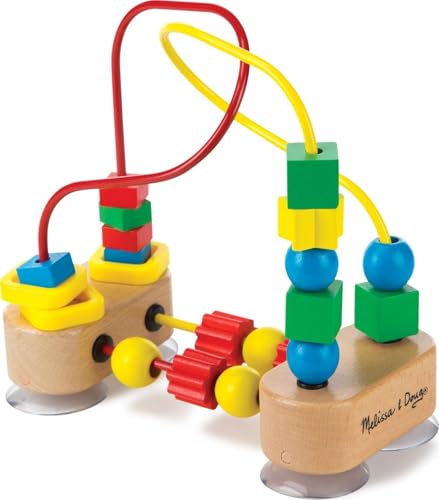
Melissa & Doug First Bead Maze
Chunky beads slide along five bent wires fixed to a stable base. Hand-eye coordination builds before a toddler speaks a full sentence. A wide base resists tipping when play gets rough.
Pros
- Fixed beads cannot be pulled off and lost
- Wide base stays stable during active play
- Varied colors and shapes hold attention across sittings
Cons
- Bulkier to transport than smaller toys
- Wire tracks bend if a toddler stands on the base

PlanToys Wooden Activity Cube
Five sides pack in separate activities, from a shape sorter to a spinning gear panel. PlanToys uses formaldehyde-free glue and pigments described as non-toxic on the listing. Once floor play fades, the cube converts into a stool.
Pros
- Five activities replace several single-purpose toys
- Non-toxic dyes suit sensitive skin
- Converts to a stool as play habits change
Cons
- Takes up more storage space than single-function toys
- Some panels attract less interest than others

Melissa & Doug Shape Sorting Clock
Ten shaped pieces double as numbers on a clock face. A wooden peg anchors two hands so toddlers practice moving them by hand. Simple construction keeps cost down without dropping solid wood material.
Pros
- Teaches shape recognition and clock reading together
- Solid wood despite the lower price point
- Compact size packs well for travel
Cons
- Clock hands do not keep real time
- Painted numbers fade under heavy wiping

Hape Baby’s First Blocks
Twelve wooden blocks fit through matching openings in a storage box lid. Rounded corners suit hands still learning to grip small objects. Beyond sorting, the same blocks stack into towers for open-ended building.
Pros
- Storage box doubles as a sorting activity
- Rounded edges suit developing grip strength
- Blocks stack for building once sorting gets easy
Cons
- Lid opening wears down with daily use
- Lid can pinch fingers if forced shut

Melissa & Doug Nesting and Sorting Wooden Owl Blocks
Six owl-shaped blocks nest inside each other by size. Babies as young as six months grasp, bang and stack them with little coordination needed. Smooth wood corners stay gentle on gums during teething.
Pros
- Rated for babies as young as 6 months
- Smooth edges suit teething and early grasping
- Nesting format matches a baby’s first motor skills
Cons
- Loses challenge once a toddler masters nesting
- Replacement pieces cost more than buying a full new set
How they stack up
| # | Model | Material | Best for | Score | Price |
|---|---|---|---|---|---|
| 1 | Melissa & Doug Deluxe Wooden Stacking Train | Solid wood with non-toxic paint | Best overall | 9.4 | Check price |
| 2 | Hape Pound & Tap Bench with Slide-Out Xylophone | Rubber wood with water-based paint | Best for musical and motor play | 9.2 | Check price |
| 3 | Melissa & Doug First Bead Maze | Solid wood base with wire tracks | Best for fine motor development | 9.0 | Check price |
| 4 | PlanToys Wooden Activity Cube | Rubberwood with non-toxic dye | Best multi-activity toy | 8.7 | Check price |
| 5 | Melissa & Doug Shape Sorting Clock | Solid wood with painted shapes | Best budget pick | 8.4 | Check price |
| 6 | Hape Baby’s First Blocks | Solid wood, non-toxic paint | Best for stacking and building | 8.2 | Check price |
| 7 | Melissa & Doug Nesting and Sorting Wooden Owl Blocks | Solid wood, non-toxic finish | Best for babies under 12 months | 8.0 | Check price |
What matters most
What Makes a Wooden Toy Safe for Babies Non-toxic, water-based finish matters most, since babies mouth almost everything within reach. ASTM F963 covers wood toys the same way it covers plastic, addressing small parts and lead content. Sanded, rounded edges count for more on wood, because a splinter does not flex the way plastic does. Check the age label closely, since blocks rated for toddlers can choke a six month old.
Wood vs Plastic for Early Play Weight sets wood apart, keeping toys from sliding off a tray or skidding across a room. Plastic flexes on impact, so it survives hard-floor drops better than solid wood. Sound differs too: a wooden block striking a wooden bench produces a duller thud than plastic on plastic. Price often runs higher for wood, though a durable piece passes down between siblings instead of cracking within a year.
Matching Wooden Toys to Age and Skill Stage Under a year, babies need large, simple shapes to grasp and bang, not small sorting pieces. Between twelve and eighteen months, cause-and-effect toys like pounding benches hold attention longest. Past eighteen months, multi-step sorting and stacking toys match a longer attention span. Buying ahead of a stage often means a toy sits untouched until skills catch up.
Caring for Wooden Toys Through Teething and Drool A damp cloth handles daily cleanup better than soaking, since standing water swells and cracks wood grain. Mild soap removes drool and food residue without stripping the finish. Dishwashers should be skipped entirely, even for toys marketed as easy to clean, because heat warps wood over repeated cycles. Full air drying prevents moisture from sitting trapped against another piece in a bin.
Frequently asked questions
Are wooden toys safer than plastic for babies?
Both materials pass safety standards when finishes are labeled non-toxic. Wood skips soft plastic additives, but any small piece from either material risks choking under three.
What age can babies start playing with wooden toys?
Grasping and nesting wooden toys suit babies from about six months, once they sit up and reach. Toys with small removable pieces should wait closer to age two, per most manufacturer labels.
How do you clean wooden baby toys?
A damp cloth with mild soap handles most spills and drool. Skip soaking or dishwashing, since standing water and heat both damage wood grain over time.
Do wooden toys pose a choking hazard?
Any piece smaller than a toilet paper tube center can pose a choking risk. Manufacturer age ratings reflect piece-size testing, so checking the label matters more than material alone.
Which wooden toy works best for teething babies?
Nesting and grasping toys with smooth, rounded edges suit teething, since nothing small comes loose to chew. The Melissa & Doug Nesting and Sorting Wooden Owl Blocks carry a rating from six months for this reason.
Are Montessori wooden toys different from regular wooden toys?
Montessori-style toys emphasize one clear skill per toy and natural, unfinished wood over bright paint. Regular wooden toys often add color and multiple functions, which some parents prefer for variety.
Do wooden toys cost more than plastic toys?
Usually yes, since solid wood and non-toxic finishing cost more to produce than molded plastic. Many parents offset this by buying fewer, durable pieces that pass down to younger siblings.
Which wooden toy brand is best: Melissa & Doug, Hape or PlanToys?
Melissa & Doug stays affordable across a wide catalog. Hape leans toward multi-function toys, and PlanToys focuses on eco-conscious materials. All three meet standard toy safety testing.
Can wooden baby toys go outside?
Occasional outdoor play works fine, but prolonged sun and moisture warp wood and fade paint faster than indoor use. Bring toys back inside after play rather than leaving them in a yard.
The bottom line
Pick the Melissa & Doug Deluxe Wooden Stacking Train for a toy that grows from stacking into pretend play, since solid wood construction handles use across siblings. Parents of a baby under a year get better mileage from the Nesting and Sorting Wooden Owl Blocks, sized for small hands and sore gums. Budget-conscious shoppers should start with the Shape Sorting Clock, solid wood at the lineup’s lowest price point.


