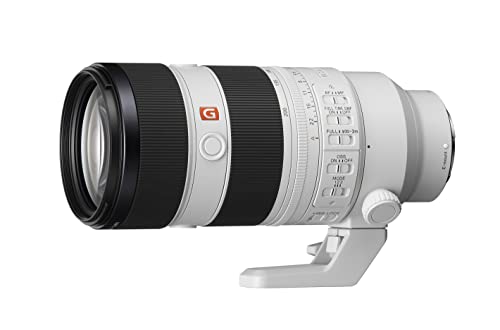
Canon 50mm f/1.8 STM Review: The Nifty Fifty Reconsidered
The Canon RF 50mm f/1.8 STM is the pick for anyone on a modern EOS R body because it delivers a fast f/1.8 aperture, pleasing background blur and genuinely sharp results for a tiny outlay. The Canon EF 50mm f/1.8 STM covers the same ground on older EF and DSLR bodies. If you want the next step up, the Canon RF 50mm f/1.4 or the third party Viltrox AF 50mm f/1.8 add build quality and slightly better optics for more money.
The Canon RF 50mm f/1.8 STM is the answer for most people shooting a Canon EOS R camera who want their first fast prime, because it pairs an f/1.8 aperture and soft background separation with sharpness that punches well above its price. The Canon EF 50mm f/1.8 STM is the equivalent choice for anyone still on an EF mount DSLR. Step up to the Canon RF 50mm f/1.4 VCM or the Viltrox AF 50mm f/1.8 when you want firmer build and cleaner edges.
The 50mm f/1.8, nicknamed the nifty fifty, has been Canon’s gateway prime for decades, and the current STM versions carry that reputation into the mirrorless era. A 50mm lens on a full frame body gives a natural field of view close to human sight, while the f/1.8 aperture lets in far more light than any kit zoom and throws backgrounds out of focus. We compared aperture behaviour, the STM focus motor, corner performance wide open, build quality and minimum focus distance, then weighed those against what owners report about focus hunting in low light and the plastic lens mount on some variants.
What we recommend

Canon RF 50mm f/1.8 STM
The RF 50mm f/1.8 STM is aimed at EOS R owners who have outgrown the kit zoom and want a proper fast prime without spending much, and it suits portraits, everyday shooting, food and low light better than any zoom in its price class. Its strengths are real: images are sharp from around f/2.8, the f/1.8 aperture separates a subject from its background nicely, and the whole lens weighs under 160 grams so it never leaves the bag behind. The honest weaknesses are a plastic barrel and metal mount that feel basic, visible vignetting and softer corners wide open at f/1.8, and an STM focus motor that can hunt and buzz in dim scenes. For the money it remains the easiest prime to recommend on the RF system.
Pros
- Sharp results from f/2.8 onward
- Very light and compact to carry
- Fast aperture for the lowest cost RF prime
Cons
- Soft corners and vignetting at f/1.8
- STM motor can hunt in low light

Canon EF 50mm f/1.8 STM
The EF version delivers the same optical formula and character on Canon DSLR bodies and, through an adapter, on EOS R cameras. It swapped the old plastic mount of the earlier f/1.8 II for a metal mount and added a quieter STM motor and a seven blade aperture for rounder bokeh. Owners report it as the natural first prime for anyone with an EF body, and it compares to the RF lens as the equal for image quality on the older mount.
Pros
- Metal mount and quiet STM focus
- Identical optical quality to the RF version
- Works on EOS R bodies via adapter
Cons
- Same soft corners wide open
- Requires an adapter on mirrorless bodies

Canon RF 50mm f/1.4 VCM
The RF 50mm f/1.4 VCM is the more serious sibling, adding a brighter f/1.4 aperture, a voice coil motor for fast quiet focus, a clickable control ring and weather sealing. It is heavier and far more expensive, so it compares to the f/1.8 as the choice for hybrid shooters and professionals who need the extra stop and the sturdier body rather than the lowest cost.
Pros
- Brighter f/1.4 aperture and better bokeh
- Fast, silent, weather sealed
- Control ring aids video work
Cons
- Several times the price of the f/1.8
- Much larger and heavier

Viltrox AF 50mm f/1.8
Viltrox makes an autofocus RF mount 50mm f/1.8 with a metal barrel and a quiet stepping motor that competes directly with Canon’s own lens. Based on specifications it offers firmer build and a control ring for a modest price rise. It compares as the value alternative for RF shooters who want something more substantial than Canon’s featherweight prime.
Pros
- Sturdier metal construction
- Includes a customisable control ring
- Competitive optical performance
Cons
- Third party support and updates vary
- Slightly heavier than the Canon

Canon RF 35mm f/1.8 Macro IS STM
For those who prefer a wider, more flexible everyday focal length, the RF 35mm f/1.8 Macro IS STM adds image stabilisation and half life size close focusing. It compares to the 50mm as the do everything prime for street, interiors and food, trading the tighter 50mm framing for versatility and IS.
Pros
- Optical image stabilisation built in
- Close focus for macro style shots
- Wider angle suits interiors and street
Cons
- Wider view is less flattering for portraits
- Costs more than the 50mm f/1.8
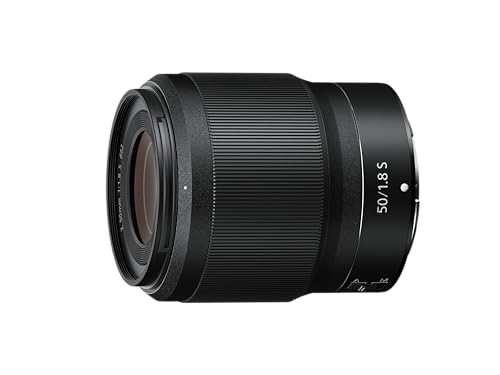
Nikon Z 50mm f/1.8 S
Nikon’s Z 50mm f/1.8 S shows what a premium standard prime looks like on a rival mirrorless system, with S line optics that stay sharp corner to corner wide open. It compares as a reminder that Canon’s f/1.8 trades some optical polish for a far lower price, since the Nikon costs several times as much and only fits Z mount bodies.
Pros
- Excellent edge to edge sharpness
- Weather resistant build
- Quiet, confident autofocus
Cons
- Only fits Nikon Z bodies
- Much more expensive than Canon’s f/1.8

Sony FE 50mm f/1.8
Sony’s own budget FE 50mm f/1.8 targets the same buyer on E mount bodies, offering a fast aperture at a low price. Owners report slower and noisier autofocus than Canon’s STM lens, so it compares as proof that Canon’s nifty fifty holds a focus speed advantage in the entry class even if the two match on aperture and price.
Pros
- Low cost fast prime for Sony
- Compact and light
- Rounded seven blade aperture
Cons
- Slower, noisier autofocus
- Only fits Sony E mount bodies
How to choose
Who should buy the Canon 50mm f/1.8 This lens is for the photographer whose camera came with a kit zoom and who wants to see what a proper fast prime does. On a full frame EOS R body the 50mm view is natural and unexaggerated, and the f/1.8 aperture opens up portraits, indoor events and low light that a slow zoom cannot reach. On an APS-C body such as an R7 or R10 the field of view is closer to a short telephoto around 80mm, which is flattering for head and shoulders portraits. If you already own faster glass or need weather sealing, look higher up the range instead.
The standout features for the money Two things justify the reputation. First is sharpness: stopped down a little to f/2.8 or f/4 the centre is genuinely crisp, easily good enough for prints and client work. Second is the size and weight, at around 160 grams the lens barely registers on the camera, which means it actually gets used. The STM motor also focuses quietly enough for casual video, and the seven blade aperture keeps out of focus highlights rounded rather than polygonal.
How it compares to the alternatives Against the RF 50mm f/1.4 VCM the f/1.8 gives up a stop of light, weather sealing and a control ring, but costs a fraction as much and weighs a quarter as much. Against the Viltrox AF 50mm f/1.8 it trades a metal barrel and a control ring for Canon’s own firmware support and lighter weight. Against rival system primes like the Nikon Z 50mm f/1.8 S it clearly gives up corner sharpness and build, but those lenses cost several times more. For a first prime the Canon wins on value rather than outright optics.
Verdict on the nifty fifty The honest reasons to buy are price, weight and image quality that outstrips any kit zoom. The honest reasons to hesitate are the plasticky feel, the soft corners and vignetting at f/1.8, and the STM motor that hunts in dim light. If you accept that you will often shoot at f/2.8 or f/4 for the best results, none of those weaknesses matter much. It remains the cheapest lens that meaningfully improves your photography, which is exactly why it has stayed in Canon’s lineup for so long.
Side by side
| # | Model | Mount | Best for | Score | Price |
|---|---|---|---|---|---|
| 1 | Canon RF 50mm f/1.8 STM | Canon RF | The one reviewed | 9.3 | Check price |
| 2 | Canon EF 50mm f/1.8 STM | Canon EF | Best for EF DSLR bodies | 9.1 | Check price |
| 3 | Canon RF 50mm f/1.4 VCM | Canon RF | Best step up | 9.0 | Check price |
| 4 | Viltrox AF 50mm f/1.8 | Canon RF | Best third party alternative | 8.8 | Check price |
| 5 | Canon RF 35mm f/1.8 Macro IS STM | Canon RF | Best wider alternative | 8.7 | Check price |
| 6 | Nikon Z 50mm f/1.8 S | Nikon Z | Best rival system prime | 8.6 | Check price |
| 7 | Sony FE 50mm f/1.8 | Sony E | Best budget rival | 8.2 | Check price |
Frequently asked questions
Is the RF or EF version of the 50mm f/1.8 better?
Optically they are essentially the same lens, so the choice follows your camera. Buy the RF 50mm f/1.8 STM for an EOS R mirrorless body and the EF 50mm f/1.8 STM for an EF mount DSLR. The EF lens can also be used on EOS R bodies with a mount adapter with no loss of image quality.
Is the Canon 50mm f/1.8 sharp enough for professional work?
Yes, once stopped down slightly. At f/1.8 the centre is good but the corners are soft, while from f/2.8 to f/5.6 the lens is sharp enough for portraits, events and product work. Many professionals keep one as a light second body or backup prime.
Why does the lens hunt for focus in low light?
The gear type STM motor is designed to be quiet and cheap rather than fast, so in very dim scenes it can rack back and forth before locking. Adding light, using a body with better low light autofocus, or switching to the centre focus point usually resolves it.
Does the 50mm f/1.8 work on Canon APS-C cameras?
It does. On an APS-C EOS R body such as the R7, R10 or R50, or on an APS-C DSLR, the crop factor gives an effective field of view around 80mm. That tighter view is well suited to portraits, though you stand a little further back than on full frame.
What is the minimum focus distance?
The RF and EF versions focus down to roughly 0.3 metres, which is close enough for tight head shots and larger food or product details, though it is not a true macro lens. For half life size reproduction the RF 35mm f/1.8 Macro is a better fit.
Is the plastic mount a problem?
The current STM versions use a metal mount, unlike the much older 50mm f/1.8 II which had a plastic one. The barrel is still lightweight plastic, so treat it gently, but the mount itself is durable enough for everyday use.
Should I buy the f/1.8 or save for the f/1.4?
Buy the f/1.8 if budget and weight matter most, since it delivers most of the image quality for a fraction of the cost. Choose the RF 50mm f/1.4 VCM only if you need the extra stop of light, weather sealing, faster focus and a control ring for video.
Can I use the 50mm f/1.8 for video?
Yes. The STM motor is quiet enough that its noise rarely reaches the built in microphone, and the f/1.8 aperture gives a filmic shallow depth of field. Bear in mind there is no image stabilisation, so a stabilised body or a gimbal helps for handheld footage.
The bottom line
The Canon RF 50mm f/1.8 STM stays the easiest prime to recommend on the EOS R system because it turns kit zoom snapshots into sharp, softly separated images for very little money and almost no added weight. The EF 50mm f/1.8 STM does the same job on DSLR and adapted bodies. Accept the plastic feel and the soft f/1.8 corners, shoot it a touch stopped down, and it rewards you. If you want more, the RF 50mm f/1.4 VCM adds a stop and a pro build, while the Viltrox AF 50mm f/1.8 offers a sturdier third party alternative.