What Age Can a Baby Travel on a Plane?
Most airlines allow babies to fly starting at 2 days old, though many require a doctor’s note for infants under 7 to 14 days, and most pediatricians and airline guidelines recommend waiting until at least 2 to 4 weeks old before the first flight. There is no single universal minimum age set by law, so the real answer depends on the airline’s policy, the baby’s health, and how comfortable the parents feel traveling with a newborn.
Why the “right” age varies so much
Airlines set their own minimum-age rules because there is no federal regulation in the United States that bans infants from flying at a certain age. According to published airline policies, most major U.S. and international carriers technically permit infants as young as 2 days old to board, provided the parent can show proof of the baby’s date of birth. Some airlines set the bar slightly higher, requiring the infant to be at least 7 days old, and a smaller number ask for a medical clearance letter if the baby is under 2 weeks old.
That said, airline policy and medical advice are not the same thing. Based on guidance commonly cited by pediatric associations and aggregated from parenting and travel forums, many doctors suggest waiting until a newborn is at least 4 to 6 weeks old before flying, mainly because a young infant’s immune system is still developing and airplane cabins concentrate a lot of people in a small, recirculated-air space. Premature babies or infants with underlying health conditions are often advised to wait even longer, sometimes until they are several months old, based on their pediatrician’s individual assessment.
What actually matters more than the calendar date
Age alone does not tell the whole story. Reviewers of family travel guides and parenting communities consistently point to a few practical factors that matter just as much as how many weeks old the baby is:
- Cabin pressure and ear discomfort. Newborns cannot intentionally pop their ears the way older babies and toddlers can by swallowing or sucking, so takeoff and landing can be uncomfortable. Feeding during ascent and descent is a commonly recommended way to help.
- Immune system exposure. A closed cabin with dozens of other passengers increases exposure to airborne germs, which is part of why many parents choose to delay travel until after the baby’s first round of vaccinations.
- Flight length and layovers. A short domestic hop is a very different experience than a long-haul international flight with connections, and many first-time flying parents choose to start with a shorter trip.
- Feeding and sleep routines. Infants who are still on a tight newborn feeding schedule may travel more smoothly than slightly older babies going through sleep regressions.
Documentation and airline-specific requirements
Because policies differ by carrier, it is worth checking the specific airline’s website before booking rather than relying on a general rule. Common requirements found across published airline policies include a note from the baby’s pediatrician confirming fitness to fly if the infant is under a certain number of days old, proof of age such as a birth certificate for international travel, and, for international flights, sometimes a passport that must be applied for well in advance since infant passport photos have their own strict requirements.
It is also worth noting that “lap infant” rules, meaning babies under 2 years old who fly on a parent’s lap without their own seat, are separate from minimum age policies. Even if an airline allows a 2-day-old infant to fly, most parents and pediatricians treat that as a technical floor rather than a practical recommendation.
Making the trip easier once you decide to fly
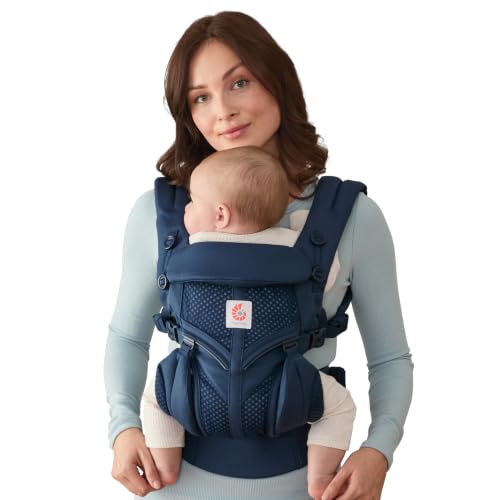
Once parents have settled on an age and airline, comfort and mobility through the airport become the next concern. Hands-free carrying options are consistently mentioned in aggregated parent reviews as one of the biggest quality-of-life improvements for navigating security lines, boarding, and layovers with a baby, which is why many travel guides point new parents toward the best baby carriers for travel when planning a first flight with an infant.
Frequently asked questions
What is the absolute minimum age for a baby to fly?
Most airlines technically permit infants as young as 2 days old, though some require the baby to be at least 7 to 14 days old, and a doctor’s note may be required for very young infants.
Do doctors recommend waiting longer than the airline minimum?
Yes, based on commonly cited pediatric guidance, many doctors suggest waiting until a baby is 4 to 6 weeks old before flying, largely due to the developing immune system and exposure to recirculated cabin air.
Does a baby need a ticket or passport to fly?
Domestic lap infants under 2 usually do not need their own seat, but proof of age is often required. International travel almost always requires the infant to have their own passport, so it is worth applying well before the trip.
What can help with ear pressure during takeoff and landing?
Feeding the baby, whether by bottle, breast, or pacifier, during ascent and descent is a widely recommended way to encourage swallowing, which can relieve the ear pressure that builds up during altitude changes.