Do Acupressure Mats Really Ease Back Pain?
ProsourceFit Acupressure Mat and Pillow Set is the best all round choice, pairing 6,210 points with a matching bolster and carry bag. Nayoya covers the same ground for less. Kanjo adds a memory foam base, which softens the first sessions for sensitive backs.
ProsourceFit Acupressure Mat and Pillow Set is the mat we suggest first, thanks to a dense point layout, a matching neck bolster and a carry bag. Watching the budget? Nayoya delivers a similar bundle for less. Sensitive back? Kanjo cushions the entry with memory foam.
Spike sharpness, base firmness and cover material change the sensation far more than the headline point count does. A mat with 6,000 gentle points feels nothing like one with 8,800 widely spaced spikes. We compared published point counts, foam types, cover fabrics and bundle contents, then weighed what owners report about intensity and how long it takes to adjust.
What to look for
How do acupressure mats work? Hundreds or thousands of small plastic points press into the skin at once, spreading body weight across many contacts instead of a flat surface. Users commonly describe warmth, then tingling, then a settled feeling after several minutes. Treat a mat as a self care and relaxation tool rather than a medical device. Sharp or lasting pain is a signal to stop, not to push through, and any persistent problem belongs with a healthcare professional.
Does spike count and spacing change the feel? Yes, and count alone tells you very little. More points spread the same body weight over more contacts, so each one presses less and the mat feels gentler. Fewer, more widely spaced spikes concentrate load and feel sharper. A 6,000 point cushioned mat and an 8,800 point firm mat can sit at opposite ends of the intensity scale. Decide how much sensation you want before comparing numbers.
Which base and cover suit a sensitive back? Base firmness matters more than the spikes above it. High density foam pushes points in assertively, while memory foam lets you sink so pressure spreads. Cover fabric changes both feel and care: cotton and linen breathe and feel natural against skin, whereas synthetic blends wipe clean more easily. Anyone starting out or with a low tolerance is better served by a cushioned base like the Kanjo.
How should a beginner start using an acupressure mat? Lie down over a thin shirt for three to five minutes at first, then work up to bare skin and longer sessions as it becomes comfortable. Getting on slowly, rather than dropping onto the mat, avoids the sharpest initial contact. Skip acupressure mats entirely if you are pregnant, have fragile or broken skin, poor circulation or a bleeding condition, and speak to a healthcare professional if you are unsure.
The top picks, ranked

ProsourceFit Acupressure Mat and Pillow Set
A full size mat and matching bolster cover back, neck and feet across 6,210 points. High density foam pushes those points in firmly, which owners describe as intense for the first few sessions before it settles. Bag, pillow and mat arrive together, so nothing else needs buying.
Pros
- Bolster pillow covers neck sessions
- Dense point layout spreads pressure widely
- Carry bag keeps the mat rolled and clean
Cons
- Firm base feels intense at first
- Cotton cover needs gentle washing

Nayoya Back and Neck Pain Relief Acupressure Mat
Nayoya bundles mat, pillow and bag at a lower outlay than most rivals with the same contents. Its 6,300 points sit on a medium firm base, which reads as slightly gentler than the ProsourceFit. Owners commonly use it for short evening sessions as part of a wind down routine.
Pros
- Full mat and pillow bundle for less
- Medium firm base eases the adjustment period
- Point count matches premium sets
Cons
- Points feel softer than premium mats
- Colours fade with repeated washing

Pranamat ECO
Lotus shaped discs replace the usual round spike clusters, spreading contact across a broader petal shape. Natural linen and coconut fibre padding replace synthetic foam throughout. Owners who use a mat several times a week report the construction holds up over years rather than seasons.
Pros
- Linen and coconut fibre instead of synthetics
- Lotus discs resist deforming over time
- Built for frequent long term use
Cons
- Sits at the top of the range on cost
- Firm intensity is unforgiving for beginners

Bed of Nails Original Acupressure Mat
Fewer contact points per square inch means each one carries more load, which is exactly why this mat feels sharper. Its 8,820 points sit on a firm base with no cushioning to soften entry. Choose it when gentler mats have stopped registering, not as a starting point.
Pros
- Delivers a noticeably stronger sensation
- Firm base transmits pressure directly
- Favoured by people who have used mats before
Cons
- Too sharp for a first mat
- Neck pillow costs extra

Kanjo Memory Foam Acupressure Mat Set
Memory foam under the spike sheet lets the body sink slightly, which spreads load and blunts the first contact. That makes the opening sessions far easier for anyone with a low tolerance. Softer entry does reduce peak intensity, and the foam adds bulk when rolling it up.
Pros
- Memory foam softens the initial contact
- Easiest starting point for a first mat
- Pillow and bag included in the set
Cons
- Cushioning reduces peak intensity
- Bulkier to roll and store

Ajna Organic Linen Acupressure Mat Set
Ajna wraps a plant fibre filling in an organic linen cover, offering natural materials without the premium outlay Pranamat commands. Linen breathes well, which helps during longer sessions. Firmness varies a little between units, according to owner reports, so the first session sets your expectation.
Pros
- Organic linen cover breathes during long sessions
- Plant fibre filling replaces synthetic foam
- Matching neck pillow included
Cons
- Linen creases and needs airing
- Firmness varies between units
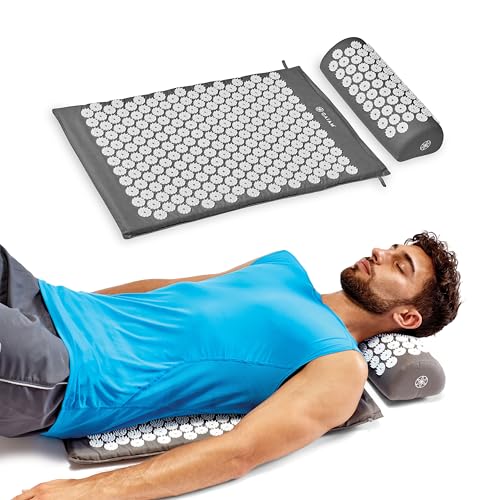
Gaiam Restore Acupressure Mat
Gaiam keeps this simple: one compact mat, medium foam, no pillow. That makes it the cheapest way to find out whether acupressure suits you before committing to a full set. Its smaller surface covers the back or the feet rather than both at once.
Pros
- Lowest cost route into acupressure
- Compact enough to store in a drawer
- Medium foam suits short daily sessions
Cons
- No neck pillow included
- Smaller surface than full size mats
The lineup, side by side
| # | Model | Spikes | Best for | Score | Price |
|---|---|---|---|---|---|
| 1 | ProsourceFit Acupressure Mat and Pillow Set | 6,210 points | Best overall | 9.4 | Check price |
| 2 | Nayoya Back and Neck Pain Relief Acupressure Mat | 6,300 points | Best value | 9.2 | Check price |
| 3 | Pranamat ECO | Lotus shaped discs | Best premium | 9.0 | Check price |
| 4 | Bed of Nails Original Acupressure Mat | 8,820 points | Best for intensity | 8.8 | Check price |
| 5 | Kanjo Memory Foam Acupressure Mat Set | Plastic points | Best for beginners | 8.6 | Check price |
| 6 | Ajna Organic Linen Acupressure Mat Set | Plastic points | Best natural materials | 8.3 | Check price |
| 7 | Gaiam Restore Acupressure Mat | Plastic points | Best budget | 8.0 | Check price |
Common questions
Do acupressure mats really help with back tension?
Many owners report feeling more relaxed and less tense after regular short sessions. Mats are a relaxation aid rather than a proven medical treatment, and responses vary widely between people.
Are acupressure mats supposed to hurt?
The first sessions feel intense and prickly, but sharp pain is not the goal. Start over a thin shirt for a few minutes, and the sensation usually settles into warmth within a week or two.
How long should I lie on an acupressure mat?
Most people begin with 5 to 10 minutes and build toward 20 to 30 as it gets comfortable. Stop sooner if you notice numbness or discomfort that lingers after getting up.
How many spikes should a good acupressure mat have?
There is no ideal number. Higher counts spread pressure and feel gentler, while fewer widely spaced spikes concentrate it. Match the layout to the intensity you actually want.
Can I use an acupressure mat every day?
Many owners do, in short sessions, without trouble. Give your skin a break if you see lasting redness or irritation, and avoid using one on broken or sensitive skin.
Should beginners choose a cushioned acupressure mat?
Yes. A memory foam or thicker base softens the entry into the spikes, which makes the first weeks far easier. The Kanjo set is the gentlest starting point in this roundup.
Who should avoid acupressure mats?
Skip them if you are pregnant, have fragile or broken skin, poor circulation, nerve issues related to diabetes, or a bleeding disorder. Check with a healthcare professional if you are unsure.
How do I clean an acupressure mat?
Most covers spot clean or hand wash and then air dry, but check the label first. Cotton and linen need gentler handling than synthetic covers, which usually wipe down easily.
Can you use an acupressure mat on your feet?
Yes, standing on one is a common way to use it, and it suits people who find lying on the back too intense. Start with socks on and build up to bare feet.
Is a mat with a pillow worth the extra?
A bolster lets you work the neck and upper shoulders, which a flat mat cannot reach properly. Most sets here include one, and buying it separately usually costs more.
Final word
ProsourceFit Acupressure Mat and Pillow Set is the pick for most people, combining a dense point layout, a neck bolster and a carry bag in one purchase. Nayoya covers the same ground for less. Beginners should start on the cushioned Kanjo, while regular users who want natural materials will get more from the Pranamat ECO.


