What Should You Look for in an Agility Ladder?
SKLZ Quick Flat Rung Agility Ladder leads because flat rungs lie down when clipped instead of rolling. Yes4All bundles cones and ground stakes with a similar 12 to 20 foot ladder. Champion Sports builds heavier webbing for squads running drills every week.
SKLZ Quick Flat Rung Agility Ladder tops this list because its flat plastic rungs stay down when a toe catches them. Yes4All includes cones and ground stakes for the same job at a lower cost. Champion Sports uses heavier webbing built for squads rather than solo sessions.
Three specifications separate a ladder that stays flat from one that becomes a trip hazard: rung profile, strap width and anchoring hardware. Round rungs roll underfoot. Narrow straps twist during setup. Without stakes, any ladder wanders across grass within four passes. We compared rung shape and thickness, webbing width, included stakes, stated surface suitability and packed size, then weighed those against durability themes in owner reviews after heavy use.
Our top picks
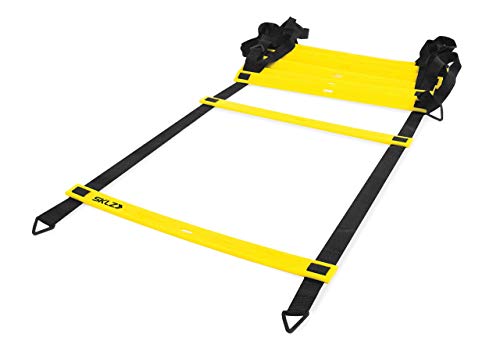
SKLZ Quick Flat Rung Agility Ladder
Flat rung profile is the reason this ladder outsells most rivals. Clip one with a toe and it stays down, so athletes commit to speed instead of hedging every step. Wide woven nylon straps resist the twisting that makes setup slow. Length stops at about 15 feet, which fits driveways and small group work.
Pros
- Flat rungs stay down when clipped
- Rungs slide along the strap for spacing changes
- Wide webbing lays flat without twisting
Cons
- 15 feet is short for team queue drills
- No ground stakes in the box

Yes4All Agility Ladder Speed Training Set
Disc cones, ground stakes and a resistance element ship alongside the ladder, turning one purchase into a small drill kit. Ladder construction is conventional, with adjustable plastic rungs and a carry bag. Cones are the lightest part of the bundle and flex more than dedicated field markers.
Pros
- Ground stakes included for grass sessions
- Cones extend drills beyond ladder patterns
- Everything packs into one supplied bag
Cons
- Bundled cones flex under a hard step
- Rung plastic is thinner than team ladders

Champion Sports Agility Ladder
Schools and clubs buy this one because the webbing and rung plastic are thicker than consumer ladders. Dozens of athletes a week put more load through equipment than three solo sessions ever will. Longer team lengths let several players queue behind one another. Bulk is the trade you accept for that build.
Pros
- Thicker rungs resist cracking under volume
- Longer options suit multi athlete queues
- Webbing survives a full competitive season
Cons
- Packs bulkier than home ladders
- Heavier to carry between fields

GHB Pro Agility Ladder
Twenty feet of ladder plus metal ground stakes makes this an easy first purchase. Rungs slide along the strap for spacing, and the stakes actually hold on turf. Refinement is absent, and heavy users report rung plastic cracking before the webbing shows wear.
Pros
- Full 20 feet at the lowest cost here
- Metal stakes hold on grass and turf
- Rungs adjust without tools
Cons
- Rung plastic cracks under heavy volume
- Webbing runs narrower than premium ladders

ZELUS Agility Ladder and Cones Set
Accessory count is the draw: ladder, a generous cone set, stakes and a carry bag arrive together. Parents and youth coaches use it to run varied sessions in a garden or on a field. Ladder quality sits mid tier, so part of what you buy is the hardware around it.
Pros
- Highest accessory count in this ranking
- One bag holds ladder, cones and stakes
- Suits mixed footwork and cutting drills
Cons
- Ladder itself is mid tier construction
- Thin cones crack in cold weather

SPRI Agility Ladder
Grip-textured webbing holds position on wood and rubber flooring, which is what studio and gym use demands. Low profile rungs sit closer to the floor and reduce trip risk indoors. Stakes are absent by design, so grass work needs weights at each end.
Pros
- Textured webbing grips gym flooring
- Low rung height cuts indoor trip risk
- Rolls small for equipment storage
Cons
- No stakes supplied for outdoor grass
- Shorter than field training ladders
Ohuhu Agility Ladder
Clearly marked rungs slide easily and the bag actually swallows the ladder again after a session. Simplicity suits someone starting footwork training before settling on a drill routine. Construction is light, so treat it as personal equipment rather than club kit.
Pros
- Fastest setup and pack down here
- Rung markings make spacing obvious
- 12 feet fits a garden or driveway
Cons
- Light build for daily team use
- Too short for long sprint sequences
How to pick the right one
What to look for in an agility ladder Rung shape comes first, then strap width, then anchoring. Flat rungs lie down when clipped and round rungs roll, which is the difference between a missed step and a rolled ankle. Wide webbing resists twisting during setup. Stakes or textured webbing keep the ladder where you put it. Length and packed size matter last, once those three are settled.
Flat rungs vs round rungs: which is safer? Flat rungs win in almost every case. A round rung that catches a toe rotates under the foot and shifts the athlete sideways at speed. Flat profiles press into the ground instead. Round rung ladders still work for slow technical patterns and warm-up footwork, so an existing one is not waste, but anyone training at full speed should buy flat.
How to anchor a ladder on grass, turf and gym floors On grass, metal stakes at both ends stop the bunching that turns every drill into a setup argument. On artificial turf, stakes still hold in the infill. On sealed wood or rubber, textured webbing does the job and stakes are useless. Avoid running an outdoor ladder on polished studio floors, where it slides on the first hard cut.
Best agility ladder length for home training and teams Fifteen feet covers standard footwork patterns and fits most driveways. Twenty feet suits longer sequences and lets several athletes queue behind each other. Measure the training area first, including run-out space past the last rung, since sprinting into a fence ends sessions early. Youth groups often do better with two short ladders than one long one.
Side by side
| # | Model | Length | Best for | Score | Price |
|---|---|---|---|---|---|
| 1 | SKLZ Quick Flat Rung Agility Ladder | About 15 feet | Best overall | 9.4 | Check price |
| 2 | Yes4All Agility Ladder Speed Training Set | About 12 to 20 feet by version | Best value | 9.2 | Check price |
| 3 | Champion Sports Agility Ladder | Heavy duty webbing and rungs | Best for coaches and teams | 9.0 | Check price |
| 4 | GHB Pro Agility Ladder | About 20 feet | Best budget | 8.7 | Check price |
| 5 | ZELUS Agility Ladder and Cones Set | About 12 to 20 feet by version | Best complete kit | 8.5 | Check price |
| 6 | SPRI Agility Ladder | Indoor gym and studio floors | Best for indoor gyms | 8.2 | Check price |
| 7 | Ohuhu Agility Ladder | About 12 feet | Best for beginners | 8.0 | Check price |
Good to know
Do agility ladders actually make you faster?
They sharpen foot placement, rhythm and change of direction. Straight-line top speed comes from sprint mechanics and force production over longer distances, so treat ladder work as one block in a program rather than the whole thing.
Are flat rungs or round rungs better?
Flat rungs, in nearly every case. They lie down when clipped instead of rolling under the foot, which keeps fast drills safe and lets beginners focus on the pattern.
What length agility ladder should I buy?
Fifteen feet for home use, twenty feet or more for teams and longer sequences. Add several yards of run-out space beyond the final rung when measuring your area.
Can agility ladders be used indoors?
Yes, if the webbing grips your floor. Gym-focused ladders such as the SPRI use textured webbing and low profile rungs. Outdoor ladders built around stakes tend to slide on sealed wood.
Are agility ladders good for kids?
They suit youth training well, since drills are short, varied and easy to turn into games. Use a shorter ladder, tighten the rung spacing and reward clean foot placement over speed.
How long should an agility ladder session last?
Ten to fifteen minutes of sharp work, usually inside a warm-up. Ladder drills load the nervous system rather than the cardiovascular system, so stop while movement is still crisp.
Do I need cones as well as a ladder?
Cones let you add reactive cuts and shuttle runs after the ladder sequence. Sets from Yes4All and ZELUS include them, which costs less than buying markers separately.
How do I stop the ladder bunching up?
Stake both ends on grass, or weight each end indoors. Pull the webbing under light tension before the first rep and re-tension between sets, which takes a few seconds.
Which agility ladder is best for a coach with a squad?
Champion Sports, because thicker rungs and heavier webbing survive dozens of athletes a week, and longer lengths keep a queue moving. Home ladders wear out fast under that volume.
Can you use an agility ladder on concrete or a driveway?
Yes, and a flat rung ladder is the safer choice there. Weight the ends since stakes will not seat, and wear cushioned trainers, because concrete offers no give during repeated fast footwork.
The verdict
SKLZ Quick Flat Rung Agility Ladder is the one to buy for genuine speed work, because flat rungs let athletes commit without guarding the ankle. Yes4All packs cones and stakes alongside a competent ladder for anyone building a first drill kit. Coaches equipping a squad should choose Champion Sports and get a full season from it.