The All Round Lens That Does It All
The Sony FE 24-70mm f/2.8 GM II stands out as the top pick for full frame users who need a versatile workhorse. It balances exceptional sharpness with a fast aperture, making it ideal for events, travel, and portraits. Its main limitation is the price, which is higher than many alternatives.
An all round lens is the one you keep on your camera most of the time. It should cover wide to short telephoto, work in various lighting, and deliver consistent quality.
We analyzed specifications and owner feedback for popular zoom and prime options. Our comparisons highlight strengths and trade offs to help you match a lens to your shooting style.
What to look for
The top picks, ranked

Sony FE 24-70mm f/2.8 GM II
The Sony 24-70mm f/2.8 GM II is a professional standard zoom that delivers outstanding resolution across the frame. Its fast, accurate autofocus and compact build make it a favorite for weddings, travel, and everyday photography.
Pros
- Exceptionally sharp even wide open
- Fast and silent autofocus
- Weather sealed for tough conditions
Cons
- High price point
- No image stabilization (in body IBIS helps)

Canon RF 24-70mm f/2.8L IS USM
This Canon L series zoom offers a constant f/2.8 aperture and built in image stabilization, giving you versatility in low light. Owners report excellent color and contrast, plus robust build quality.
Pros
- Effective image stabilization
- Tack sharp at all focal lengths
- Dust and weather resistant
Cons
- Heavier than some rivals
- Premium pricing

Nikon Z 24-70mm f/2.8 S
The Nikon Z 24-70mm f/2.8 S is a professional lens that delivers superb sharpness from corner to corner. It features a customizable control ring and a quiet autofocus motor, ideal for video and stills.
Pros
- Outstanding resolution
- Minimal focus breathing
- Ergonomic design
Cons
- Large and heavy
- No built in stabilization (IBIS in camera)

Tamron 28-75mm f/2.8 Di III VXD G2 (Sony E)
Tamron’s G2 version of the popular 28-75mm offers a fast aperture and sharp results at a more accessible price. Owners appreciate its compact size and fast, accurate autofocus.
Pros
- Great value for the performance
- Lightweight and compact
- USB port for firmware updates
Cons
- Wide end starts at 28mm
- Plastic build feels less premium

Sigma 24-70mm f/2.8 DG DN Art (Sony E / L Mount)
Sigma’s Art lens provides excellent optical quality and a robust, all metal body. It uses a double action zoom mechanism for smooth operation, and it is well regarded for landscape and portrait work.
Pros
- Excellent sharpness
- Durable construction
- Aperture ring for manual control
Cons
- Heavier than competitors
- No image stabilization
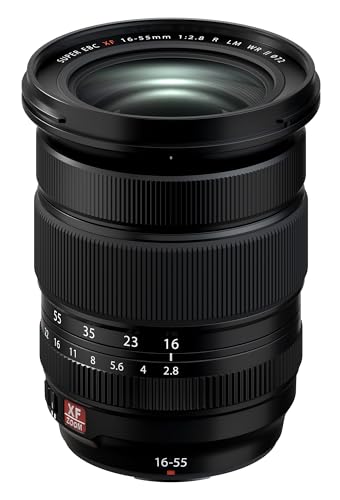
Fujifilm XF 16-55mm f/2.8 R LM WR
For Fujifilm’s X series, this lens gives an equivalent 24-84mm zoom, covering a useful range. It has a constant f/2.8 aperture and weather sealing, making it a solid choice for outdoor photography.
Pros
- Consistent f/2.8 aperture
- Weather resistant
- Fast autofocus
Cons
- No image stabilization
- Larger than comparable primes

Sony E 16-55mm f/2.8 G (APS C)
This G series lens is designed specifically for Sony’s APS C cameras, offering a versatile 24-82mm equivalent range. It is known for its sharpness and fast, precise autofocus, though it lacks optical stabilization.
Pros
- Very sharp at all apertures
- Compact for its class
- Fast and quiet autofocus
Cons
- No image stabilization
- Premium price for APS C lens
Compared at a glance
| # | Model | Mount | Best for | Score | Price |
|---|---|---|---|---|---|
| 1 | Sony FE 24-70mm f/2.8 GM II | Sony E (Full Frame) | Full frame hybrid shooters who need top tier sharpness and speed | 9.6 | Check price |
| 2 | Canon RF 24-70mm f/2.8L IS USM | Canon RF (Full Frame) | Canon EOS R users who want a reliable workhorse with stabilization | 9.4 | Check price |
| 3 | Nikon Z 24-70mm f/2.8 S | Nikon Z (Full Frame) | Nikon Z shooters who prioritize sharpness and consistent quality | 9.3 | Check price |
| 4 | Tamron 28-75mm f/2.8 Di III VXD G2 (Sony E) | Sony E (Full Frame) | Budget conscious Sony shooters who need f/2.8 performance | 9.0 | Check price |
| 5 | Sigma 24-70mm f/2.8 DG DN Art (Sony E / L Mount) | Sony E or L Mount | Shooters who want a sharp, fast lens with a traditional zoom range | 8.9 | Check price |
| 6 | Fujifilm XF 16-55mm f/2.8 R LM WR | Fujifilm X (APS C) | Fujifilm X mount users who need a weather sealed standard zoom | 8.8 | Check price |
| 7 | Sony E 16-55mm f/2.8 G (APS C) | Sony E (APS C) | Sony APS C shooters who want a native premium zoom | 8.6 | Check price |
Good to know
What is an all round lens?
An all round lens is a versatile optic that covers a useful focal length range, typically from wide angle to short telephoto. It is designed to handle a variety of subjects, from landscapes to portraits, making it a good single lens choice.
Is a 24-70mm lens good for all round use?
Yes. 24mm is wide enough for landscapes and group shots, while 70mm is ideal for portraits and details. The constant f/2.8 aperture works in many situations, from indoors to overcast days.
Should I buy a zoom or a prime for an all round lens?
A zoom offers flexibility, letting you frame without changing lenses. A prime is often sharper and faster, but you must move your feet. For everyday versatility, a standard zoom is the classic choice.
Do I need image stabilization in the lens?
It depends on your camera. If your camera body has in body stabilization (IBIS), lens stabilization is less critical. If not, a lens with stabilization helps reduce blur in low light.
What is the difference between full frame and APS C lenses?
Full frame lenses cover a larger sensor area, so they are bigger and pricier. APS C lenses are designed for smaller sensors and are often cheaper and lighter. You can use full frame lenses on APS C, but not the reverse without cropping.
Are third party lenses like Tamron and Sigma as good as first party?
Modern third party lenses often match first party quality, sometimes at a lower price. They may lack some proprietary features like specific coatings or weather sealing, but many are excellent. Check compatibility with your camera’s autofocus and firmware.
What is a constant aperture zoom?
A constant aperture zoom maintains the same maximum aperture throughout its zoom range. For example, a 24-70mm f/2.8 keeps f/2.8 at all focal lengths. This helps in manual modes and low light because exposure stays consistent.
Can I use a full frame lens on an APS C camera?
Yes, you can, but the image will be cropped, effectively increasing the focal length by 1.5x or 1.6x depending on the brand. The lens will be heavier and may not be worth the extra cost unless you plan to upgrade to full frame later.
Our pick
For most full frame shooters, the Sony FE 24-70mm f/2.8 GM II is the best all round lens because it combines outstanding sharpness, fast autofocus, and a portable design, despite its high price. If you are on a budget but still want f/2.8, the Tamron 28-75mm G2 offers remarkable value. For Canon and Nikon users, their respective 24-70mm f/2.8 lenses are the top choices. APS C owners should consider the Fujifilm 16-55mm or Sony 16-55mm G for native performance.


