Which Baby Bib Actually Stops the Drool and Mess?
Bumkins Silicone Bib ranks first thanks to wipeable food-grade silicone and adjustable snaps that fit six months through toddlerhood. OXO Tot Roll-Up Bib rolls flat for diaper bags and restaurant trips. Copper Pearl Baby Bandana Bibs pair cotton jersey with fleece backing that absorbs steady teething drool.
Three bibs cover most feeding stages between them. Bumkins Silicone Bib wipes clean in seconds, and its adjustable snaps fit babies from six months into toddlerhood. OXO Tot Roll-Up Bib folds its silicone pocket into a compact roll for a diaper bag or a restaurant high chair. Copper Pearl Baby Bandana Bibs use a cotton and fleece layer that soaks up drool without the bulk of a full-size bib.
Choosing the right bib comes down to what mess it needs to catch: drool, purees, or a toddler feeding themselves. Fabric absorbs liquid but stains, while silicone wipes clean yet adds no absorbency for a wet chin. We compared material, closure type and pocket depth, then weighed owner reports of snap durability, staining and comfort around the neck.
Before you buy
What type of bib material is best? Fabric absorbs liquid, which suits drool and milk dribble, but it stains from tomato sauce or turmeric. Silicone wipes clean and resists staining, though it adds no absorbency for a constantly wet chin. Bandana styles split the difference, pairing an absorbent fleece back with a smaller cotton face aimed at drool rather than solid food. Most households end up needing more than one type as a baby moves from milk to purees to finger food.
Snap, hook-and-loop, or pullover: which closure fits best? Snap closures, used on five of the seven bibs here, adjust in fixed steps and hold up to repeated fastening better than hook and loop. Hook-and-loop straps, found on the OXO Tot Roll-Up Bib and Bibado Bibsy, adjust more finely but wear out faster with daily use. Pullover styles skip closures entirely, though removing one from a squirming baby without pulling on the head can be tricky.
Which bib works best at each feeding stage? Newborns dribbling milk need absorbency more than a pocket, pointing toward the American Baby Company Terry Bib Set or Copper Pearl Baby Bandana Bibs. Babies starting purees benefit from a wipeable, stain-resistant surface such as the Bumkins Silicone Bib. Toddlers feeding themselves drop more food than they eat, so a deep catch pocket like the Bibado Bibsy or OXO Tot Roll-Up Bib cuts down on floor cleanup.
How long do baby bibs actually last? Silicone generally outlasts fabric, since it does not fray, pill or hold stains after repeated washing. Fabric bibs need regular laundering to stay stain-free, and waterproof-backed versions like the Green Sprouts Snap and Go can crack at the folds after a year of daily use. Multi-pack fabric sets spread that wear across several bibs instead of one, which is why they are sold in bundles.
What we recommend
Bumkins Silicone Bib
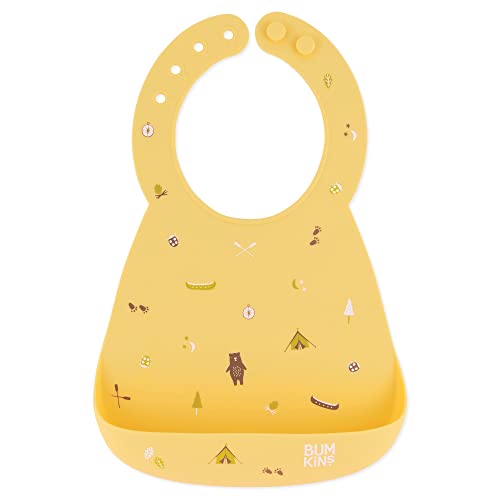
Food-grade silicone forms the entire bib, with a shallow crumb catcher at the base and three adjustable snap settings. A damp cloth wipes off tomato sauce or turmeric-stained purees without leaving a mark. Soft edges curve close to the neck, avoiding the stiff plastic feel of older silicone designs.
Pros
- Wipes clean without staining from bold-colored foods
- Three snap settings grow with the baby from six months on
- Soft silicone edge sits comfortably against the neck
Cons
- Crumb catcher is shallow for heavy self-feeders
- Comes in fewer colors and prints than fabric bibs

OXO Tot Roll-Up Bib
A silicone catch pocket pairs with a fabric neck strap that rolls into a compact cylinder for storage. A hook-and-loop clasp keeps the roll shut inside a diaper bag. During self-feeding the pocket catches dropped food, then rinses clean under running water.
Pros
- Rolls into a compact size for bags and pockets
- Deep catch pocket collects food dropped during self-feeding
- Fabric strap adjusts across different neck sizes
Cons
- Pocket needs a manual rinse after messy meals
- Bulkier than a flat fabric bib once unrolled
Green Sprouts Snap and Go Wipe-Off Bib
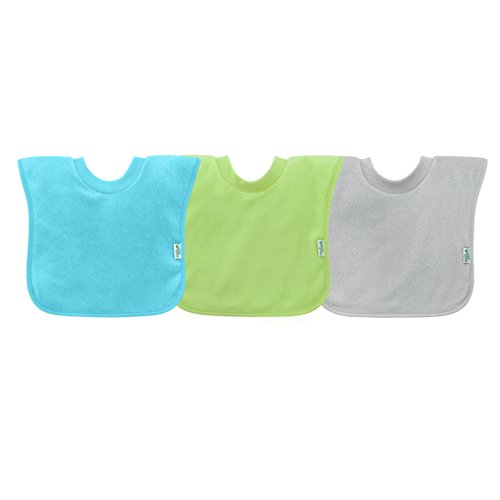
A polyester face sits over a waterproof PEVA backing, so spills wipe off instead of soaking through to clothing underneath. Two snap settings adjust the neck, and the flat design folds down for storage. It ships in multi-packs, useful for households cycling through several bibs a day.
Pros
- Waterproof backing stops soak-through to clothing
- Sold in multi-packs for daily rotation
- Flat fold packs easily into a diaper bag
Cons
- No catch pocket for dropped food
- Only two snap positions limit sizing range

Copper Pearl Baby Bandana Bibs
Cotton jersey layers over an absorbent fleece back, sized to sit low on the chest without covering an outfit. Two snap settings adjust for growth, and the bandana shape reads less like a feeding bib during outings. Fleece backing soaks up steady teething drool better than single-layer cotton.
Pros
- Fleece layer absorbs steady drool through teething months
- Compact bandana shape doubles as an outfit accessory
- Multi-pack covers several outfit changes a day
Cons
- Not built to handle solid-food messes
- Smaller coverage area than a full-size bib

Nuby Reversible Bib
A two-sided cotton-poly fabric gives one bib two prints or colors before laundry day. Snap closures adjust across three settings, and the fabric resists fraying at the edges through regular machine washing. Multi-pack sets keep a full bib rotation affordable.
Pros
- Reversible design doubles print and color options
- Edges resist fraying after repeated machine washing
- Multi-pack pricing suits daily bib rotation
Cons
- Fabric absorbs liquid but does not block soak-through
- No catch pocket for dropped food

American Baby Company Terry Bib Set
100 percent cotton terry, similar to a towel weave, soaks up milk dribble during early bottle or nursing months. Snap closures are sized small for a newborn’s neck, and the set ships in multiples for daily changes. Plain terry construction skips any pocket or waterproof layer.
Pros
- Terry weave soaks up milk dribble effectively
- Newborn-sized snap fits small necks securely
- Cotton construction suits sensitive newborn skin
Cons
- No waterproof backing once solid food starts
- Terry texture wears faster than woven cotton

Bibado Bibsy Catch-All Weaning Bib
A deep silicone pocket extends below the chest to catch food that falls during self-feeding. An adjustable hook-and-loop strap fits several months of growth, and the pocket rinses clean under the tap. The deeper design catches more mess than a flat bib, at the cost of extra bulk on the high chair tray.
Pros
- Deep pocket catches food that falls during self-feeding
- Adjustable strap fits several stages of growth
- Rinses clean under running water after meals
Cons
- Bulkier pocket can catch on a high chair tray
- Feels stiffer than fabric bibs at first use
Compared at a glance
| # | Model | Material | Best for | Score | Price |
|---|---|---|---|---|---|
| 1 | Bumkins Silicone Bib | Food-grade silicone | Best overall | 9.4 | Check price |
| 2 | OXO Tot Roll-Up Bib | Silicone pocket, fabric neck strap | Best for travel | 9.2 | Check price |
| 3 | Green Sprouts Snap and Go Wipe-Off Bib | Polyester face, waterproof PEVA backing | Best budget | 9.0 | Check price |
| 4 | Copper Pearl Baby Bandana Bibs | Cotton jersey face, fleece back | Best for drooling and teething | 8.7 | Check price |
| 5 | Nuby Reversible Bib | Reversible cotton-poly blend | Best value multi-pack | 8.5 | Check price |
| 6 | American Baby Company Terry Bib Set | 100% cotton terry | Best for newborns | 8.2 | Check price |
| 7 | Bibado Bibsy Catch-All Weaning Bib | Silicone | Best for self-feeding messes | 8.0 | Check price |
Frequently asked questions
What’s the best bib for starting solid food?
A wipeable silicone bib like the Bumkins Silicone Bib handles purees and finger food better than fabric, since it resists staining and rinses clean in seconds.
Are silicone bibs better than fabric bibs?
Silicone wipes clean and resists stains, while fabric absorbs drool more effectively, so the better pick depends on whether the baby drools or eats solid food.
How many bibs does a newborn need?
Most parents keep four to six in rotation, since fabric bibs need washing between uses and back-to-back feedings can go through several in one day.
Can silicone bibs go in the dishwasher?
Most silicone bibs, including the Bumkins Silicone Bib and Bibado Bibsy, list dishwasher-safe top rack care, though checking the specific listing is worth the extra minute.
What is a bandana bib used for?
It mainly catches drool during teething, using an absorbent fleece back under a compact cotton face that looks less like a feeding bib out in public.
Bandana bib vs regular bib for drooling, which absorbs more?
A bandana bib’s fleece backing typically absorbs more steady drool than a single-layer cotton bib of the same size.
Are bib pockets safe for babies?
Catch-all pockets are designed for supervised feeding, and most manufacturers recommend removing the bib once a baby leaves the high chair.
At what age can babies start using pocket or catch-all bibs?
Most pocket bibs are labeled for six months and up, once self-feeding starts and more food ends up outside the mouth than in it.
Do reversible bibs save money over single-print bibs?
Yes. A reversible design like the Nuby Reversible Bib doubles as two looks in one bib, stretching a multi-pack further between laundry days.
What age do babies stop needing a bib?
Most toddlers outgrow bibs somewhere between two and three years old, once table manners and coordination catch up with self-feeding.
The verdict
Bumkins Silicone Bib covers the widest range of ages and messes with its wipeable, stain-resistant build. Parents dealing mainly with drool should look at Copper Pearl Baby Bandana Bibs instead, and households deep in the self-feeding stage will get more use from the Bibado Bibsy’s deeper pocket.