6 Baby Lotions Gentle Enough for Sensitive Skin
Aveeno Baby Daily Moisture Lotion suits most babies, using colloidal oatmeal in a short, mild formula. For dryness that returns within hours, CeraVe Baby Moisturizing Lotion adds ceramides and hyaluronic acid. Reactive skin does best starting with Cetaphil Baby Daily Lotion and its shea butter base.
Aveeno Baby Daily Moisture Lotion covers everyday dryness with colloidal oatmeal and little else. CeraVe Baby Moisturizing Lotion holds longer on skin that roughens up between baths. Start with Cetaphil Baby Daily Lotion if your baby reacts to nearly every product.
Every bottle on the shelf calls itself gentle, and that word carries no regulatory weight. Real differences sit in the ingredient list: added fragrance, dyes, and whether the base is oat, ceramide or plain glycerin. We compared published ingredient lists, fragrance status, absorption speed and what owners report after weeks of daily use. Nothing here replaces advice from your pediatrician, especially with diagnosed eczema or broken skin.
The top picks, ranked

Aveeno Baby Daily Moisture Lotion
Colloidal oatmeal does the work here, in a formula short enough that most parents stop reading the label. Absorption is quick, which counts when a baby will not hold still for a full body application. Buy the fragrance free version if anyone in the house has sensitive skin.
Pros
- Short oat based formula with few variables
- Sinks in fast during a wriggly diaper change
- Stocked in most pharmacies and grocery stores
Cons
- Too light for cracked or severely dry patches
- Scented version is a poor fit for reactive skin
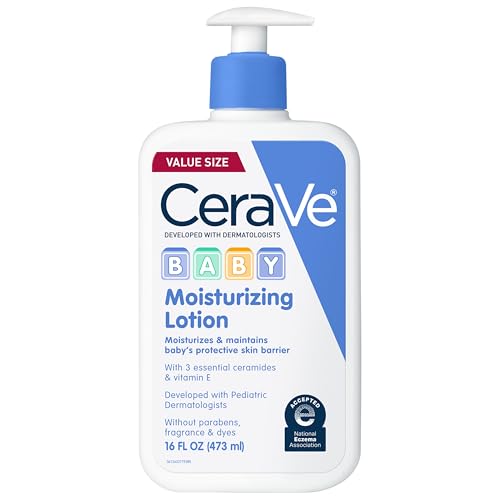
CeraVe Baby Moisturizing Lotion
Ceramides and hyaluronic acid target the skin barrier rather than coating it. That shows up on skin which turns rough again a few hours after moisturizing. Texture runs thicker than Aveeno, so rubbing it in takes a moment longer.
Pros
- Ceramide blend supports the skin barrier
- No fragrance or dye in the formula
- Holds through the gap between baths
Cons
- Thicker texture needs longer to rub in
- Large pump bottles are awkward one handed

Cetaphil Baby Daily Lotion with Shea Butter
Shea butter softens the skin without the long ingredient list most baby lotions carry. Nothing here stings on slightly irritated patches, which is why it often becomes the fallback after other bottles cause redness. Weight stays light enough for daily full body use.
Pros
- Few ingredients, so few things to react to
- Shea butter without a greasy finish
- Light enough to use head to toe daily
Cons
- Less barrier support than a ceramide cream
- Some versions in the range carry a light scent

Mustela Hydra Bebe Body Lotion
Avocado extract anchors a plant based formula that spreads over a whole body in one pass. Thickness sits between a lotion and a cream, suiting babies who are dry but not troubled. Scent is the deciding factor, so check the fragrance free line if that matters at home.
Pros
- One pump covers a large area of skin
- Plant derived actives rather than mineral oil
- Absorbs cleanly without tacky residue
Cons
- Standard bottle carries a light fragrance
- Costs more per ounce than pharmacy staples

Burt’s Bees Baby Nourishing Lotion
Shea butter and plant oils make up most of a list you can read without a chemistry background. Nothing greasy is left behind, though stubborn dryness needs something heavier. Original scent is noticeable, so newborns are better served by the fragrance free version.
Pros
- Ingredient names most parents recognize
- Leaves no film on clothing or bedding
- Fragrance free version sold alongside the original
Cons
- Underpowered against persistent dry patches
- Botanical extracts can bother very reactive skin

Eucerin Baby Eczema Relief Body Cream
Colloidal oatmeal and ceramides combine in a cream thick enough to stay on elbows, cheeks and the backs of knees. Weight is the point: this is the richer layer for flare-prone areas between episodes, not a summer all over lotion. Talk to your pediatrician before changing a diagnosed eczema routine.
Pros
- Rich enough for rough, flare-prone patches
- No fragrance or dye to complicate a flare
- Stays where you put it instead of vanishing
Cons
- Heavy for whole body use in warm weather
- Tub packaging invites dipping with dirty hands

Johnson’s Baby Lotion
Reformulation trimmed this familiar bottle to a simpler glycerin based list than older versions carried. Lightness makes it quick to apply and fine for skin that is not especially dry. Its classic scent is the reason to look elsewhere for a newborn with reactive skin.
Pros
- Cheap enough to keep a bottle in every bag
- Very light, so a whole body takes seconds
- Sold almost everywhere, including gas stations
Cons
- Signature scent rules it out for sensitive skin
- Barely registers on genuinely dry patches
What matters most
What to look for in a baby lotion Front labels lean on words like gentle and natural, neither of which is regulated. Flip the bottle and read the ingredient list instead. Fragrance, printed as parfum or fragrance, is the most common irritant in baby skincare and can hide dozens of compounds under one word. Short lists built on glycerin, colloidal oatmeal, shea butter or ceramides tend to suit young skin. Dyes add color and nothing else, so they are easy to skip.
Lotion, cream or ointment: what is the difference? Oil and water content separates the three, not marketing. Lotions hold the most water, absorb fastest and suit daily all over use. Creams carry more oil, sit heavier and hold moisture longer on rough patches. Ointments are the greasiest and most protective, usually saved for cracked areas and the diaper zone. Most families end up with a light lotion for everyday skin plus something richer for problem spots.
Which baby lotion works best for eczema-prone skin? Barrier repair matters more than richness alone once eczema is involved. Ceramide formulas such as CeraVe, and oat plus ceramide creams like Eucerin, are built for skin that loses water quickly. Fragrance free stops being optional here, and essential oils count as fragrance. Apply within a few minutes of a bath while the skin is still damp. Any diagnosed eczema deserves a plan from your pediatrician rather than a swap between bottles.
How and when to apply baby lotion Timing changes results more than parents expect. Pat dry after a bath, leave the skin slightly damp, then moisturize to seal that water in. Short lukewarm baths protect the barrier; long hot ones strip it faster than any lotion rebuilds it. Twice a day suits winter dryness, once a day covers most of the year. Persistent redness, weeping skin or cracking is a reason to call your pediatrician, not to try a fourth bottle.
Compared at a glance
| # | Model | Key ingredient | Best for | Score | Price |
|---|---|---|---|---|---|
| 1 | Aveeno Baby Daily Moisture Lotion | Colloidal oatmeal | Best overall | 9.4 | Check price |
| 2 | CeraVe Baby Moisturizing Lotion | Ceramides and hyaluronic acid | Best for very dry skin | 9.2 | Check price |
| 3 | Cetaphil Baby Daily Lotion with Shea Butter | Shea butter | Best for sensitive skin | 9.0 | Check price |
| 4 | Mustela Hydra Bebe Body Lotion | Avocado based plant extract | Best for a daily routine | 8.7 | Check price |
| 5 | Burt’s Bees Baby Nourishing Lotion | Shea butter and plant oils | Best naturally derived option | 8.5 | Check price |
| 6 | Eucerin Baby Eczema Relief Body Cream | Colloidal oatmeal and ceramides | Best for eczema-prone skin | 8.2 | Check price |
| 7 | Johnson’s Baby Lotion | Glycerin based moisturizer | Best budget | 8.0 | Check price |
Questions worth asking
When can I start using lotion on a newborn?
A plain fragrance free moisturizer is generally fine from the first weeks if the skin looks dry. Peeling in the first days usually settles on its own without help. Guidance shifts with medical history, so ask your pediatrician before starting a routine.
Is fragrance free the same as unscented?
No, and the gap matters. Fragrance free means no fragrance ingredients were added at all. Unscented can mean masking fragrances were used to cover the smell of the base. Look for the exact words fragrance free on sensitive skin.
How often should I moisturize my baby?
Once daily after the bath works for most babies. Winter air and dry skin call for twice. If skin feels rough hours later, switching to a richer cream beats adding a third application of a thin lotion.
Can I use adult lotion on a baby?
Better not to as a routine. Adult formulas often include fragrance, acids and higher preservative loads that baby skin does not need, since it is thinner and absorbs more. A plain fragrance free adult moisturizer works as a one off substitute in a pinch.
Which ingredients should I avoid in baby lotion?
Added fragrance heads the list, followed by dyes and essential oils. Plant derived does not mean non irritating, and citrus and lavender oils bother plenty of babies. Shorter lists simply give fewer chances for a reaction.
Does baby lotion help with cradle cap?
Cradle cap is a scalp condition, not ordinary dryness, so body lotion is not the answer. Gentle scalp washing and soft brushing do more. Ask your pediatrician before putting body products on the scalp.
How do I patch test a new baby lotion?
Dab a coin sized amount on the inner forearm and leave it for 24 hours. Watch for redness, bumps or scratching at the spot. Calm skin after a day means you can move to wider use. Repeat this with every new product on reactive skin.
Is organic baby lotion better?
Not automatically. Organic certification describes how ingredients were farmed, not how mild they are on skin, and plant extracts irritate some babies. A short fragrance free list from an established brand is the more useful filter.
Baby lotion vs baby oil: which is better for dry skin?
Lotion adds water and holds it in, which is what dry skin needs. Oil seals but adds no moisture of its own, so it works best applied over damp skin or used for massage. For daily dryness, reach for the lotion first.
Our take
Aveeno Baby Daily Moisture Lotion stays the easiest pick for daily use, thanks to a mild oat formula that absorbs before a baby can squirm away. Skin that dries out between baths does better under the ceramides in CeraVe Baby Moisturizing Lotion. Reactive skin should start with Cetaphil Baby Daily Lotion, and anything that will not settle belongs in front of your pediatrician.


